
How to Get Your Child to Listen the First Time
There have been evenings when one small thing was enough to push me over the edge.
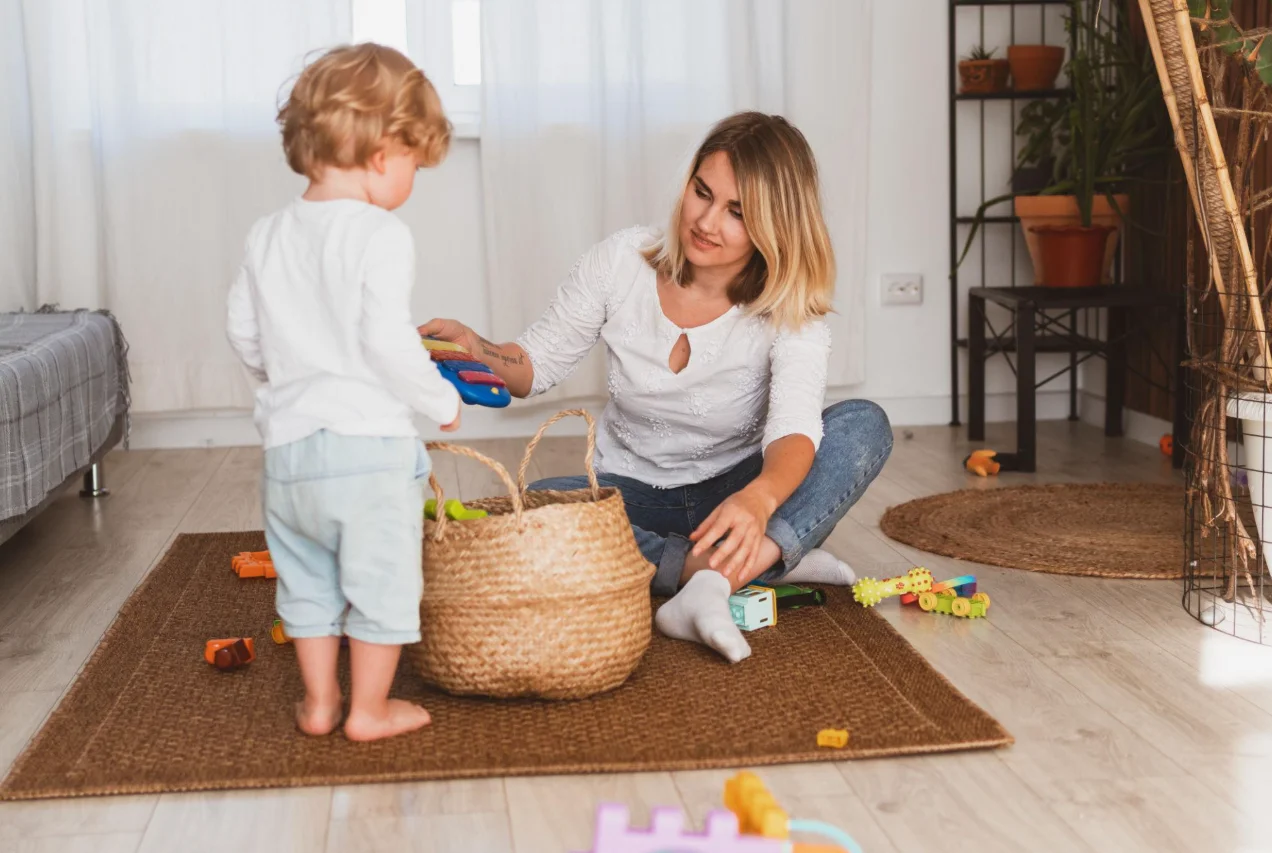
Toys were scattered across the living room. Dinner was waiting in the kitchen. I had already asked my child to put the toys away, but the playing continued. I asked again. Then a third time. By the fourth, my voice no longer sounded like a reminder. It sounded like an accusation.
What bothered me most wasn’t really the messy room. It was the feeling that I was talking to someone who couldn’t hear me at all.
I used to think the problem was my child. They knew what I wanted. They understood my words. So why weren’t they doing it?
But the more I paid attention, the more I realized there was another question worth asking: What was actually happening between us in those moments?
I was standing in the kitchen, my mind already racing through the dozen things I still needed to do. My child was sitting on the floor, completely absorbed in the little world in front of them. I wanted them to step into my rhythm immediately, while they weren’t ready to leave their own.
We were in the same house, but we weren’t really sharing the same moment.
And I began to understand that getting my child to listen wasn’t simply about finding the right words to make them do what I wanted.
Sometimes, I needed to change the way I saw my child, the way I spoke to them, and even the way I listened to myself.
As an Amazon Associate, Intelligent Mother earns from qualifying purchases.
Mom's Everyday Favorites
Thoughtful finds for busy days, family life, and a little time for yourself.

1. Before I Call It Disobedience, I Need to Understand What’s Happening
I used to be quick to conclude that my child was deliberately ignoring me.
When a reminder went unanswered, I thought they were being stubborn. When I had to repeat a request several times, I took it as a sign of disrespect. When they kept playing after I’d said it was time to clean up, I assumed they knew exactly what I wanted but simply didn’t feel like doing it.
Sometimes, that may have been true. But I’ve come to realize that the same behavior on the outside can have very different explanations underneath.
A child deeply absorbed in building something may not notice their mother’s voice from another room. Another child may hear the request but have no idea where to begin. Some children understand that playtime is over but struggle to shift from one activity to another. And some know perfectly well what is being asked of them but are testing where the boundaries lie.
From the outside, all of these situations can look like a child who isn’t listening.
I can’t understand my child by looking only at the final outcome: whether they did what I asked. I need to pay attention to everything that happens before that.
Attention, impulse control, working memory, and emotional regulation are all developing skills. Young children cannot use them as consistently as adults can. Even when a child understands a request, they may struggle to stop an enjoyable activity, shift their attention, and begin something else. A BEAUTY FIND Moisturizing cream for face and body with ceramides and hyaluronic acid.
CeraVe Moisturizing Cream
This has helped me look at those moments of resistance with a little less judgment. I no longer assume that every delay is an act of defiance.
In Good Inside, Dr. Becky Kennedy encourages parents to see behavior as a clue to what a child may be struggling with. I particularly appreciate the shift in the question this approach invites us to make. Instead of focusing only on what’s wrong with the child, I can ask what the child might be having a hard time with.
Maybe my child doesn’t know how to get started. Maybe the task is too big for their current abilities. Maybe they’re tired, hungry, or have already spent most of the day managing demands and expectations.
I also have to admit something less comfortable: sometimes, my instructions aren’t as clear as I think they are.
I look at the room and see a mess that needs to be cleaned up. My child may see dozens of toys and have no idea which one to put away first. What seems like a simple task to me may feel like a complicated series of decisions to a young child.
Understanding this doesn’t mean I intend to excuse every behavior. It simply means I want to start in the right place.
I can’t teach my child to cooperate if I haven’t first tried to understand what is making cooperation difficult.
2. I May Be Teaching My Child to Ignore the First Request
There’s something I don’t particularly enjoy admitting: sometimes, I’ve helped create the very habit I’m now complaining about.
I would remind my child once, then carry on with whatever I was doing. When nothing happened, I’d repeat myself. I might keep talking while doing something else, waiting until my patience ran out before actually walking over.
After enough repetitions, my first reminder seemed to lose its meaning. It became just another familiar sound in the house.
I started wondering: if my child knows I’ll ask three or four more times, why should they stop playing right away?
This doesn’t explain every instance of a child failing to listen. But it has made me realize how important consistency is.
A request shouldn’t be just a sound sent into the room. It needs to be communicated clearly, followed by enough time for a child to process it, and supported with appropriate guidance if they don’t know how to follow through.
I’ve also noticed how much I tend to talk when I’m already frustrated. A simple request can quickly turn into a speech about responsibility, respect, bad habits, and every other time my child has failed to listen. A BEAUTY FIND A niacinamide serum for a simple everyday skincare routine.
The Ordinary Niacinamide 10% + Zinc 1%
By the end, the thing I actually wanted them to do has been buried beneath all my feelings.
In How to Talk So Kids Will Listen & Listen So Kids Will Talk, Adele Faber and Elaine Mazlish offer practical ways to encourage cooperation through clear communication, describing problems, and giving information. One idea I find especially useful is that a parent’s words should help a child understand the situation and recognize what they can do, rather than simply communicate how disappointed the adult feels.
I’ve started paying closer attention to how I make requests. When I need my child to do something, I try to be clear enough that they understand what’s expected, rather than making them decode a long lecture.
If a task feels too big, I break it into smaller steps. If my child is deeply involved in play, I allow some transition time instead of abruptly demanding that everything stop. And if there’s no response, I check whether they’ve actually noticed and understood what I said. As an Amazon Associate, Intelligent Mother earns from qualifying purchases. Thoughtful picks related to this article.Helpful products to explore


I don’t expect every request to be followed perfectly. But I want my words to matter from the beginning, rather than becoming important only when I start getting angry.
3. I Need to Enter My Child’s World Before Expecting Them to Enter Mine
I often want my child to pay attention to me immediately. Yet there are times when I haven’t been giving them my full attention either.
I might be cooking while listening to a story. I might nod along while my eyes remain fixed on my phone. I might offer the familiar sounds of agreement without really understanding what my child is trying to tell me.
Then I expect them to drop everything the moment I need their attention.
There’s an imbalance here that I didn’t notice for a long time.
In Positive Discipline for Children with Special Needs, the authors emphasize the importance of connection before correction. A child may be more receptive to guidance when an adult takes the time to enter the child’s world, notice what interests them, and show that they are genuinely paying attention.
I don’t think this is useful only for children with special needs. In everyday family life, a child who is deeply involved in playing, reading, or exploring something also needs a little time to move away from that activity.
When I call from another room, over the sound of the TV and everything else happening in the house, I can’t simply assume my child has heard me. When I want them to stop a game they’re enjoying, I can’t expect their attention to disappear instantly just because the clock says it’s time. A BEAUTY FIND A hydrating essence for a moisture-focused skincare routine.
COSRX Advanced Snail 96 Mucin Power Essence
I’ve started moving closer before making a request. I pay attention to whether my child is actually aware of me. I try not to give instructions from across the room when they’re surrounded by distractions.
If I know an activity is about to end, I give my child some time to prepare. Predictable routines help, too. When children know what usually comes next, moving from one activity to another can feel less abrupt.
I’ve also become more interested in making routines part of the family’s everyday rhythm, rather than turning every transition into a negotiation between parent and child. In some situations, a visual schedule, a timer, or a familiar signal can help a child anticipate what’s coming.
That way, I don’t have to spend the day playing the role of the person who gives orders, while my child constantly feels pulled away from whatever they enjoy.
I’m still the parent who helps set the rhythm of our home. But I don’t need to turn every moment into a struggle to prove who’s in charge.
4. Cooperation Is Something I Have to Teach, Not Something I Can Demand
I used to think children would naturally learn to cooperate as they got older. But the more I observe my child, the more I realize that cooperation is a skill that needs to be learned.
Children aren’t automatically born knowing how to share responsibilities, wait their turn, stop an enjoyable activity, or take part in solving a problem. These abilities take time, guidance, and plenty of opportunities to practice. As an Amazon Associate, Intelligent Mother earns from qualifying purchases. Thoughtful finds for busy days, family life, and a little time for yourself.Mom's Everyday Favorites


Positive Discipline for Children with Special Needs offers an idea that has stayed with me: the goal isn’t to control the child, but to build cooperation with them.
The book describes a four-step process: understand the child’s feelings, show empathy for their perspective, share the adult’s feelings once the child is ready to listen, and then work together toward a solution.
What I find valuable is the idea that cooperation isn’t a switch a parent can simply turn on. It grows through relationships and repeated experiences.
I’ve also learned that giving children some room to make decisions can help them become more involved. That doesn’t mean every decision belongs to my child. I still need to set boundaries around safety, health, and family responsibilities.
But wherever possible, I let my child take part in solving the problem. When it’s time to clean up, they can choose which toys to put away first. When we’re getting ready to go out, they can choose between two outfits that are both appropriate. When an activity is coming to an end, they can help decide how we’ll move on to the next part of the day. A BEAUTY FIND Washable mascara for everyday makeup looks.
Maybelline Lash Sensational Sky High Washable Mascara
These small choices don’t take away my role as a parent. They help my child feel like a member of the family who contributes to shared responsibilities, rather than someone who is constantly receiving instructions.
I’ve also realized that some skills need to be taught many times before a child can use them independently. A child who hasn’t learned how to organize their belongings won’t suddenly become tidy because I’ve explained the importance of responsibility. A child who isn’t used to ending playtime will need opportunities to practice in different situations.
I need to be patient with that learning process, but patience doesn’t mean giving up on expectations.
I can be both gentle and firm. I can understand that my child doesn’t want to stop playing while still keeping bedtime in place. I can acknowledge their disappointment without changing a decision that needs to be made.
That’s the difference between cooperation and giving in.
5. Sometimes My Child Needs Me to Listen Before They Can Listen to Me
There are times when I’m so focused on getting my child to listen that I forget they have something to say, too.
When they resist, I want to explain immediately. When they cry, I want them to calm down. When they get angry, I want to end the situation as quickly as possible.
But feelings don’t disappear simply because an adult has offered a perfectly reasonable explanation.
I often think about the principles in How to Talk So Kids Will Listen & Listen So Kids Will Talk: acknowledging children’s feelings, listening before offering advice, and avoiding the temptation to dismiss their experience simply because we see the situation differently.
I don’t have to agree with everything my child wants in order to understand that they’re disappointed. And I don’t have to change a boundary just because they’re unhappy with my decision.
What’s important is learning to distinguish between feelings and actions. A BEAUTY FIND As an Amazon Associate, Intelligent Mother earns from qualifying purchases. Thoughtful picks related to this article. Daily facial moisturizer with ceramide-3 and niacinamide.
Helpful products to explore
La Roche-Posay Toleriane Double Repair Face Moisturizer

A child can feel angry about having to stop playing. That feeling isn’t something I need to punish. But if they throw things, hit someone, or do something dangerous, I still need to step in and hold the boundary.
I want my child to understand that, in our family, they are allowed to have feelings, disagree, and express themselves. But they’re also learning to take responsibility for their actions.
This isn’t a lesson I can teach through explanations alone. My child needs to see how I listen, how I handle disagreements, and how I respond when I don’t get what I want.
If I want my child to become a better listener, perhaps I need to become one, too.
Not because every conversation must end in agreement, but because I want my child to understand that disagreement doesn’t mean one person has to stay silent while the other is always right.
6. I Have to Notice My Own Reactions, Too
I’ve sometimes wondered why something as small as putting toys away could make me so angry.
If I look at the situation on its own, it isn’t particularly serious. But after a long day, when work is unfinished, dinner isn’t ready, and my mind is already overloaded, one unanswered reminder can become the last straw.
I’m not just reacting to a toy on the floor. I’m reacting to an entire day in which I feel short on time, short on help, and short on control.
And my child can end up absorbing all that stress without even realizing it.
In Mindful Discipline, Shauna Shapiro and Chris White emphasize the role of mindfulness and parental self-regulation. Discipline isn’t only about changing a child’s behavior. It also asks adults to recognize their own state of mind before they react.
I find this one of the hardest parts of parenting.
We talk so much about teaching children to manage their emotions, yet sometimes we expect them to do something that we’re struggling to do ourselves. A BEAUTY FIND Moisturizing cream for face and body with ceramides and hyaluronic acid.CeraVe Moisturizing Cream
When I notice my voice getting louder, my body tensing up, and my thoughts becoming increasingly extreme, I try to pause. I don’t always manage it. There are times when I still snap at my child, only realizing afterward that I’ve overreacted.
But I can come back and repair things.
I can acknowledge that I lost my temper, apologize for the way I behaved, and still maintain the original request if it’s something that needs to be done.
I don’t want my child to believe that adults are always right simply because they’re older. I want them to understand that everyone is responsible for their actions, including Mom.
I also don’t want to turn staying calm into another impossible standard I use to punish myself. Some days I’m tired. Some days I don’t handle things as well as I’d hoped. What matters is that I keep learning and don’t allow one difficult moment to become our family’s usual way of communicating.
7. I Don’t Want to Raise a Child Who Only Knows How to Obey
I used to think that a child who listened was a good child.
But the more I think about it, the more I realize those two things aren’t quite the same.
One child may comply because they’re afraid of being punished. Another may cooperate because they understand what’s being asked, recognize the boundaries, and are gradually learning to take responsibility.
I don’t want my child to learn to do things only to avoid making an adult angry.
I want them to listen, but also to ask questions when something isn’t clear. I want them to respect others without believing that respect means always agreeing. I want them to cooperate while feeling confident enough to express their own thoughts. A BEAUTY FIND A niacinamide serum for a simple everyday skincare routine.The Ordinary Niacinamide 10% + Zinc 1%
Of course, there are times when I have to make decisions for my child. When safety is involved, I can’t turn everything into a negotiation. Children need to understand that some boundaries are not optional.
But in everyday situations, I can create more opportunities for my child to participate, make choices, and take responsibility.
I want my child to understand that a parent’s words matter, but their own voice matters, too.
Perhaps that’s what I’m really trying to build when I work on helping my child listen the first time.
Not a home where children fall silent whenever an adult speaks, but a family where everyone can talk, listen, disagree, and still treat one another with respect.
A Child Who Feels Heard Can Learn to Listen
One day, my child will grow up.
There will be no more mornings when I have to remind them to get ready for school. No more toys scattered across the living room or moments when I have to wait for a game to end so we can make it to dinner on time.
But I know I’ll still want my child to listen.
I’ll want them to tell me about the things that make them happy, the things that hurt, and the decisions they don’t know how to make. I’ll want them to come to me when life doesn’t turn out the way they hoped.
And I wonder: are the small conversations we’re having today helping build that kind of relationship?
I can’t expect my child to become a good listener if, throughout childhood, all they’ve been asked to do is stay quiet and follow instructions.
I also can’t expect them to understand the value of respect if they’ve never experienced it within their own family. A BEAUTY FIND A hydrating essence for a moisture-focused skincare routine.COSRX Advanced Snail 96 Mucin Power Essence
So I’ll still ask my child to put the toys away. I’ll still keep bedtime, safety rules, and responsibilities that make sense for their age. But I want to do those things with more clarity, calmness, and respect.
I’m not looking for a magical sentence that will make my child listen immediately in every situation.
I’m learning to build a relationship in which my words have meaning, my child’s words are heard, and both of us have room to learn how to cooperate. As an Amazon Associate, Intelligent Mother earns from qualifying purchases. Thoughtful picks related to this article.Helpful products to explore

Because what I ultimately want isn’t a child who always listens to me the first time.
I want a child who, one day, when no one is reminding them or standing beside them, will know how to listen to others, think before acting, and take responsibility for their choices.
And I think that lesson begins with the way we treat each other today.
As an Amazon Associate, Intelligent Mother earns from qualifying purchases.
Mom's Everyday Favorites
Thoughtful finds for busy days, family life, and a little time for yourself.