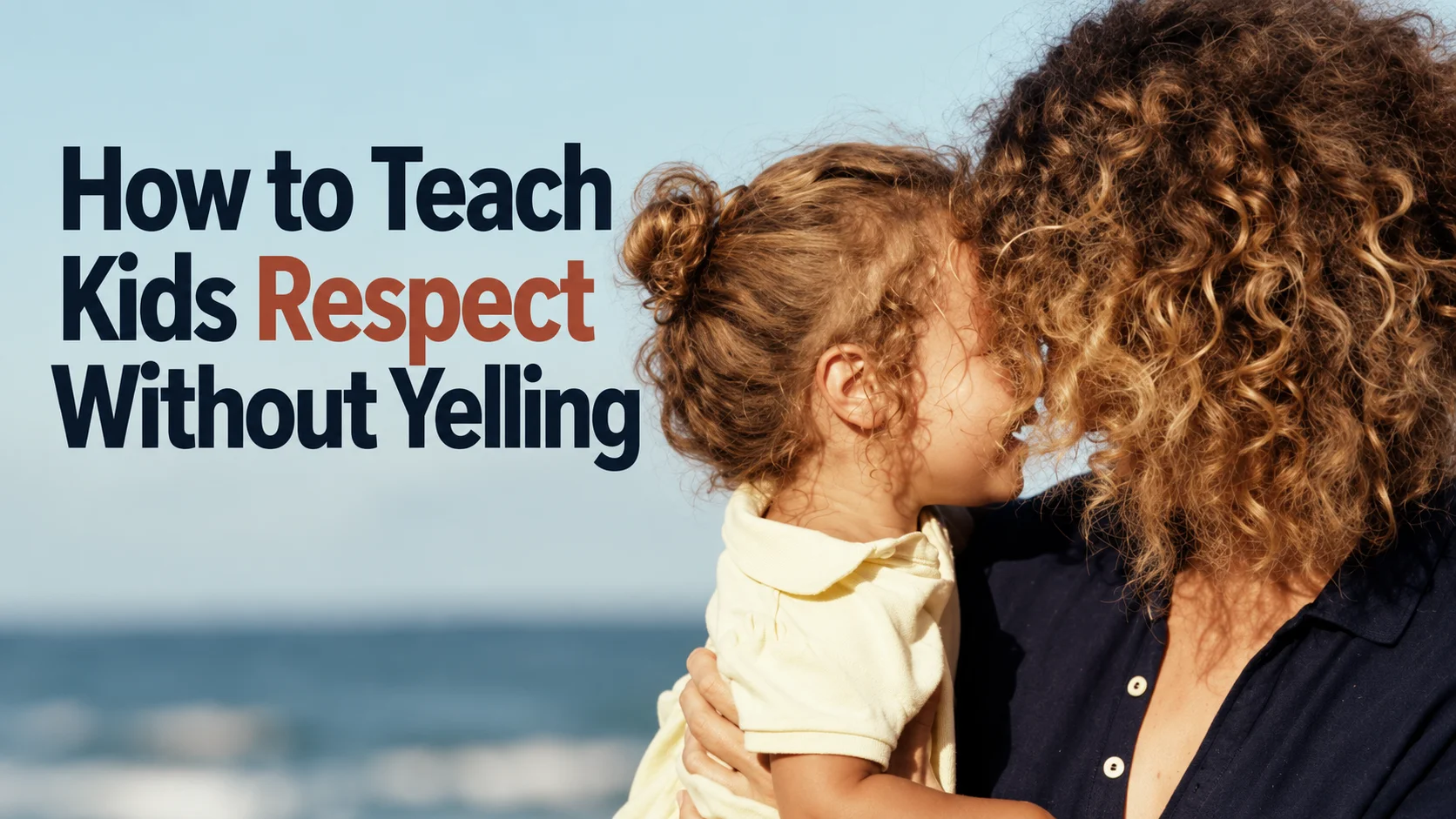
How to Teach Kids Respect Without Yelling: 15 Everyday Habits That Actually Work
“Don’t talk to me like that!”
You may have said those words more than once.
Maybe your child rolled their eyes when you asked them to clean up their toys.
Maybe they shouted “No!” from the other room.
Or maybe you simply asked them to put their shoes on, and somehow, the two of you ended up arguing about a pair of shoes as if the future of the entire family depended on them.
Then you wondered:
“How do I teach my child respect without turning every day into a battle?”
That’s a question worth pausing over.
Because when a child talks back, interrupts, rolls their eyes, refuses to listen, or shouts, “I don’t want to!”, many parents instinctively respond:
“You need to respect me.”
But there’s a problem.
A child can hear the word respect hundreds of times without really understanding what it means.
Respect isn’t just saying please and thank you.
It isn’t simply obeying adults.
And it isn’t making a child so afraid of consequences that they never dare disagree.
Respect is a skill.
Children learn that skill little by little through the way we speak to them, listen to them, set boundaries, handle anger, and treat other people when things don’t go their way.
The American Academy of Pediatrics recommends positive discipline strategies such as modeling appropriate behavior, setting clear limits, listening to children, and reinforcing good behavior rather than relying on yelling, shaming, or harsh punishment.
So if respect isn’t taught through shouting, how do we actually teach it?
Let’s start with something important.
As an Amazon Associate, Intelligent Mother earns from qualifying purchases.
Mom's Everyday Favorites
Thoughtful finds for busy days, family life, and a little time for yourself.
1. Understand That Respect Isn’t the Same as Obedience
This may be the most important shift in how we think about raising respectful children.
A child can obey because they’re afraid.
But fear isn’t respect.
Imagine your child says:
“I don’t agree.”
That doesn’t automatically mean they’re being disrespectful.
If they say:
“I don’t agree. I don’t think that’s fair.”
you may actually have a wonderful opportunity to teach them how to disagree respectfully. A BEAUTY FIND Moisturizing cream for face and body with ceramides and hyaluronic acid.
CeraVe Moisturizing Cream
A child who stays silent because they know they’ll be yelled at hasn’t necessarily learned what we really want them to learn.
The goal isn’t to create a child who always says:
“Yes, Mom.”
The goal is to help them become an adult who can say:
“I disagree, but I can still treat you with respect.”
Your child can disagree with you and still respect you.
That’s a skill they’ll carry long after they leave your home.
2. Speak to Your Child the Way You Want Them to Speak to Others
Children don’t learn only from what their parents teach.
They learn from what their parents do.
If you want your child to stop yelling when they’re angry, but every time you lose your patience you shout:
“How many times have I told you?!”
the lesson they may learn isn’t:
“I shouldn’t yell.”
It may be:
“When I’m angry, yelling is how people communicate.”
That’s why modeling matters so much. A BEAUTY FIND A niacinamide serum for a simple everyday skincare routine.
The Ordinary Niacinamide 10% + Zinc 1%
This doesn’t mean parents have to be perfect.
You will lose your patience.
You’ll have days when you’re so exhausted that all you want is to close the door and drink a cup of coffee in silence.
What matters is how you repair the moment.
You can say:
“I raised my voice at you. I’m sorry. I was really frustrated, but I could have spoken more calmly.”
That sentence is also a lesson in respect.
3. Let Your Child Disagree, but Teach Them How to Disagree
One of the things parents often call “talking back” is sometimes a child beginning to learn how to express an opinion.
The problem isn’t always what the child says.
Sometimes it’s how they say it.
Instead of:
“Don’t argue with me!”
try:
“You can disagree with me. But you need to say it respectfully.”
A BEAUTY FIND
COSRX Advanced Snail 96 Mucin Power Essence
A hydrating essence for a moisture-focused skincare routine.
View on Amazon
Then give them another way to express the same idea.
Instead of:
“That’s stupid!”
they can learn to say:
“Mom, I don’t think that’s a good idea.”
That’s a big difference.
You’re not teaching your child to stay quiet.
You’re teaching them to communicate.
4. Correct the Behavior, Not the Child’s Character
There are certain phrases that come very easily when we’re angry:
“You’re so rude.”
Or:
“You’re always selfish.”
Or:
“You’re such a bad kid.”
But try changing the sentence.
Instead of:
“You’re so rude.”
say:
“The way you spoke to Grandma was disrespectful. Try saying it again.”
A BEAUTY FIND
Maybelline Lash Sensational Sky High Washable Mascara
Washable mascara for everyday makeup looks.
View on Amazon
Instead of:
“You’re so selfish.”
say:
“Your brother wants to play with it too. Let’s figure out a way for both of you to play.”
The difference is simple:
One sentence judges the child. The other corrects the behavior.
Children need to understand what they should change without feeling that they themselves are the problem.
5. Don’t Turn “Sorry” Into a Button Children Have to Push
“Say you’re sorry. Right now!”
How many times have we said that?
The child says:
“Sorry.”
Their face is still angry.
A few minutes later, they do the same thing again.
The problem isn’t the word sorry.
The problem is that the child may not understand why their behavior hurt someone else. A BEAUTY FIND Daily facial moisturizer with ceramide-3 and niacinamide.
La Roche-Posay Toleriane Double Repair Face Moisturizer
Instead of simply demanding an apology, try asking: As an Amazon Associate, Intelligent Mother earns from qualifying purchases. Thoughtful picks related to this article.Helpful products to explore

“How do you think your friend feels?”
“What happened?”
“What could you do to make it better?”
When children understand the impact of their actions and learn how to repair mistakes, an apology begins to mean something.
That’s when manners start becoming empathy.
6. Teach “Please” and “Thank You,” but Don’t Turn Them Into a Test
Good manners still matter.
Please.
Thank you.
I’m sorry.
Excuse me.
These are basic social tools children need to learn.
But there’s a better way than constantly asking:
“What do you say?”
When your child receives a gift, you might say: A BEAUTY FIND Moisturizing cream for face and body with ceramides and hyaluronic acid.CeraVe Moisturizing Cream
“Grandma gave you something. How can we show her that we appreciate it?”
When your child interrupts someone:
“Someone is talking. What could you say before joining the conversation?”
You’re teaching the meaning behind the words, not simply training your child to say the right password.
7. Teach Children to Listen by Listening to Them
There’s an interesting contradiction in teaching children to listen.
We often say:
“Listen to me!”
while barely listening to them.
Your child says:
“But Mom…”
And we immediately answer:
“No buts!”
You don’t have to agree with your child.
But you can let them finish their thought. A BEAUTY FIND A niacinamide serum for a simple everyday skincare routine.The Ordinary Niacinamide 10% + Zinc 1%
Listening doesn’t mean your child gets to make every decision.
You can still say:
“I hear you. I understand that you don’t like this. But the decision is still the same.”
Your child learns two things at once:
My voice matters.
And boundaries still exist.
That’s very different from:
“Because I said so.”
8. Set Clear Boundaries Before You Lose Your Patience
Children need boundaries.
Respect doesn’t mean:
“You can do whatever you want.”
A family without clear boundaries can quickly become a 24-hour meeting of the United Nations.
Clear, consistent, age-appropriate rules help children understand what is expected of them.
Before going to a restaurant, you might say:
“We’re going to eat at a restaurant today. You can talk and have fun, but when someone else is speaking, we wait for our turn.”
A BEAUTY FIND
COSRX Advanced Snail 96 Mucin Power Essence
A hydrating essence for a moisture-focused skincare routine.
View on Amazon
Before visiting a friend’s house:
“You can play with the toys your friend says you can use. If you want something else, ask first.”
When children know what is expected before the situation happens, parents don’t have to turn every mistake into a battle.
9. Give Children Choices Within Reasonable Boundaries
Children aren’t miniature versions of their parents.
They have their own preferences.
Favorite colors.
Favorite foods.
Favorite clothes.
And sometimes they’ll put on two different socks and walk out the door with the confidence of a fashion designer.
Not every choice that differs from yours is disrespectful. A BEAUTY FIND Washable mascara for everyday makeup looks.
Maybelline Lash Sensational Sky High Washable Mascara
You might say:
“Do you want the blue shirt or the yellow one?”
As an Amazon Associate, Intelligent Mother earns from qualifying purchases.
Mom's Everyday Favorites
Thoughtful finds for busy days, family life, and a little time for yourself.


instead of:
“Wear the shirt I picked.”
Both sentences maintain a boundary.
But the first one gives your child some autonomy.
And when children experience having their preferences respected within reasonable limits, they also get opportunities to learn that other people have preferences too.
10. Correct Your Child Privately When You Can
Imagine you make a mistake at work.
Your boss has two choices.
A. Call you out in front of everyone.
B. Talk to you privately.
Which would you prefer?
Children are people too.
If your child behaves badly in public, you may still need to intervene. But when there isn’t an immediate safety issue, moving somewhere private can help protect your child’s dignity. A BEAUTY FIND Daily facial moisturizer with ceramide-3 and niacinamide.La Roche-Posay Toleriane Double Repair Face Moisturizer
You can say:
“I need to talk to you about what just happened. Let’s step outside for a minute.”
This isn’t about letting bad behavior slide.
It’s about correcting behavior without humiliating your child.
11. Teach Children They Don’t Have to Like Everyone to Respect Them
You can’t make your child like everyone.
They may not want to play with a particular child.
They may not like Grandma’s cooking.
They may disagree with their sibling.
What you can teach them is:
“You don’t have to like everyone. But you still need to treat people kindly.”
That’s an important lesson. A BEAUTY FIND Moisturizing cream for face and body with ceramides and hyaluronic acid.CeraVe Moisturizing Cream
Because your child’s world will keep getting bigger.
School.
Playgrounds.
Sports.
Clubs.
Eventually, the workplace.
They’ll meet people who look different, think differently, have different personalities, and see the world differently.
Respect doesn’t mean:
“Everyone has to be like me.”
It means:
“Someone can be different from me and still deserve to be treated well.”
12. Teach Children to Respect Other People’s Space and Boundaries
A child may love their baby sibling and still need to learn:
“Don’t touch someone’s body when they don’t want you to.”
A child may want to hug Grandma and still need to understand that sometimes another person doesn’t want a hug.
A friend may not want to share a toy right away.
This is where respect and personal boundaries meet. A BEAUTY FIND A niacinamide serum for a simple everyday skincare routine.The Ordinary Niacinamide 10% + Zinc 1%
Teach simple phrases such as:
“Can I hug you?”
“Can I use that?”
“Do you want to play?”
“Please stop.”
And just as importantly:
your child should also know that they can say no to physical contact that makes them uncomfortable.
Respect isn’t only about respecting other people.
It’s also about understanding that you deserve respect too.
13. Catch Your Child Being Respectful
Parents are usually very good at noticing when children do something wrong.
The child screams.
We hear it.
The child hits their sibling.
We run over.
The child talks back.
We react immediately.
But when the child waits patiently for their turn?
Silence.
When they share a toy?
Silence.
When they say:
“Thank you, Mom.”
Silence.
The AAP recommends actively noticing and reinforcing positive behavior, rather than giving attention only when children misbehave. A BEAUTY FIND A hydrating essence for a moisture-focused skincare routine.
COSRX Advanced Snail 96 Mucin Power Essence
Instead of:
“Good job!”
try:
“I noticed you waited until your sister finished talking before you spoke. That was a respectful way to listen.”
Or:
“You noticed your friend was sad and gave them your toy. I like how you paid attention to their feelings.”
Now the child knows exactly which behavior you noticed.
14. Don’t Just Teach Your Child to Respect Adults. Let Them See Adults Respecting Each Other.
Children don’t only watch how you treat them.
They watch:
How you speak to their other parent.
How you talk about a server at a restaurant.
How you react when someone makes a mistake.
How you talk about the neighbors.
How you treat grandparents.
How you speak when you’re angry.
These are lessons without a classroom. A BEAUTY FIND Washable mascara for everyday makeup looks.Maybelline Lash Sensational Sky High Washable Mascara
You can tell your child:
“We should respect everyone.”
But if they regularly watch adults mock, insult, or belittle other people, those words will have much less power.
Children don’t just listen to what we say. They watch how we live.
So if you want your child to speak more gently, start by letting them hear you speak gently to other people.
15. Remember That Respect Takes Years to Grow
This may be the hardest part for parents.
We want results now.
Teach it today.
See it tomorrow.
But children don’t work like a machine with a button labeled:
INSTALL RESPECT → 100% COMPLETE.
A four-year-old will still forget.
A seven-year-old will still talk back.
A ten-year-old may still roll their eyes.
And a teenager may occasionally make you wonder whether you accidentally raised a lawyer whose specialty is arguing every possible point. A BEAUTY FIND Daily facial moisturizer with ceramide-3 and niacinamide.La Roche-Posay Toleriane Double Repair Face Moisturizer
That doesn’t necessarily mean you’ve failed.
Your child is growing.
They’re testing boundaries.
They’re learning to regulate emotions, communicate, solve conflicts, and understand other people.
Our job isn’t to create a child with perfect behavior.
It’s to give them enough opportunities to practice better behavior.
What If You Lose Your Temper and Yell?
Some days, you’re patient.
Other days, you have absolutely nothing left.
You’ve just come home from work.
The house is a mess.
Dinner isn’t ready.
Your child has called “Mom!” approximately 47 times.
Then a cup falls onto the floor.
And you yell.
A moment later, you see your child’s face.
And you regret it.
If that has happened to you, remember this:
One moment of losing your patience does not define you as a parent.
You don’t have to pretend you’re perfect.
You can go back to your child and say: A BEAUTY FIND Moisturizing cream for face and body with ceramides and hyaluronic acid.CeraVe Moisturizing Cream
“I’m sorry I yelled. I was really frustrated, but I shouldn’t have spoken to you that way.”
Then:
“I’ll try to handle it more calmly next time.”
That doesn’t mean you’ve given up your authority as a parent.
You just showed your child something important:
Adults are responsible for their own behavior too.
Children don’t learn respect only when we teach it.
They learn it when they experience it.
They learn it when they practice it.
And they learn it when they see the people they trust live it.
Respect Starts in the Smallest Moments
You don’t need a 12-week parenting course.
You don’t need a giant behavior chart on the wall.
You don’t need to turn every dinner into a character-building seminar.
Respect is often built in ordinary moments.
When you sit down and listen to your child’s five-minute story about a dinosaur you barely understand.
When you say:
“I don’t agree with you, but I want to hear what you think.”
When you apologize because you raised your voice.
When you let your child finish their sentence.
When you don’t embarrass them in front of other people.
When you let them choose the shirt they want to wear.
When you set a boundary without yelling.
When you say “please” to your child. A BEAUTY FIND A niacinamide serum for a simple everyday skincare routine.The Ordinary Niacinamide 10% + Zinc 1%
When you say “thank you” to your child.
Those moments may look small.
But your child is watching.
And each one helps build an important idea:
The way we treat other people matters.
So the next time your child says:
“No! I don’t want to!”
you don’t necessarily have to respond:
“RESPECT ME!”
You can pause for a second.
Take a breath.
And say:
“You can disagree with me. But please say it in a respectful way.”
Because in the end, we don’t just want our children to know how to obey.
We want them to know how to become the kind of person other people feel safe, heard, and respected around.
And that lesson often begins with the way we treat our own children.
FAQ: Common Questions About Teaching Kids Respect
Is a child who doesn’t obey being disrespectful?
Not necessarily.
A child may disagree, want more independence, or be experiencing strong emotions without intentionally being disrespectful. The important thing is to teach them how to express disagreement without insulting, threatening, or hurting others.
How can I teach my child respect without yelling?
Use clear boundaries, calm language, consistent consequences, and model the behavior you want your child to learn. The AAP recommends positive discipline approaches rather than yelling, shaming, or harsh punishment.
Should I force my child to say “sorry”?
You can encourage an apology, but also help your child understand what happened and how to repair the situation. A mechanically delivered “sorry” is less meaningful than helping a child understand that someone was hurt and what they can do to make things better.
Is it disrespectful when my child says “No!” to me?
Not necessarily.
“No” can be a child’s way of expressing disagreement or a need for autonomy. You can still maintain the boundary: A BEAUTY FIND A hydrating essence for a moisture-focused skincare routine.COSRX Advanced Snail 96 Mucin Power Essence
“I know you don’t want to, but this still needs to happen. Do you want to do it now or after you put the toy away?”
I’ve yelled at my child a lot. Is it too late to change?
No.
You can start today. When you make a mistake, repair it. A sincere apology and a better response the next time can also teach your child about responsibility, self-control, and respect.
One Last Thing for Parents
Maybe the ultimate goal of teaching respect isn’t to make your child obedient.
One day, your child will grow up.
They’ll leave home.
You won’t be there to say:
“Say thank you.”
“Don’t talk like that.”
“Wait your turn.”
“Apologize to your friend.”
When that day comes, you don’t want to look back and see a child who simply knew how to follow your instructions.
You want to see an adult who knows how to:
listen when someone is speaking,
disagree without insulting,
set boundaries,
respect other people’s boundaries,
take responsibility when they’re wrong,
and treat people kindly even when nobody is watching.
That’s what we’re really trying to nurture.
Not obedience.
Character.
As an Amazon Associate, Intelligent Mother earns from qualifying purchases.
Mom's Everyday Favorites
Thoughtful finds for busy days, family life, and a little time for yourself.