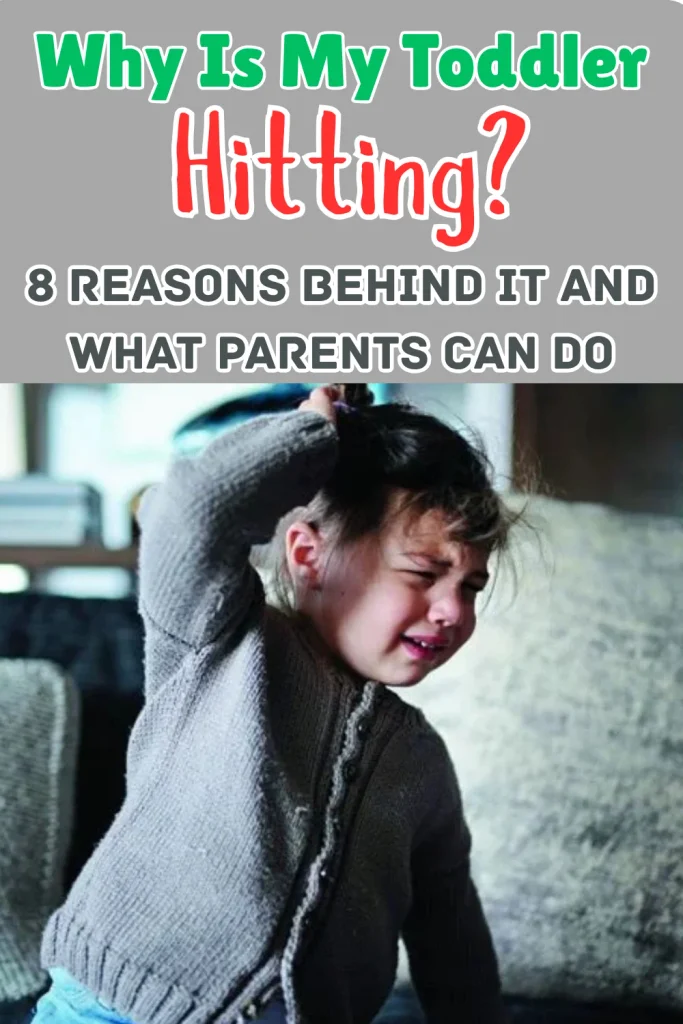
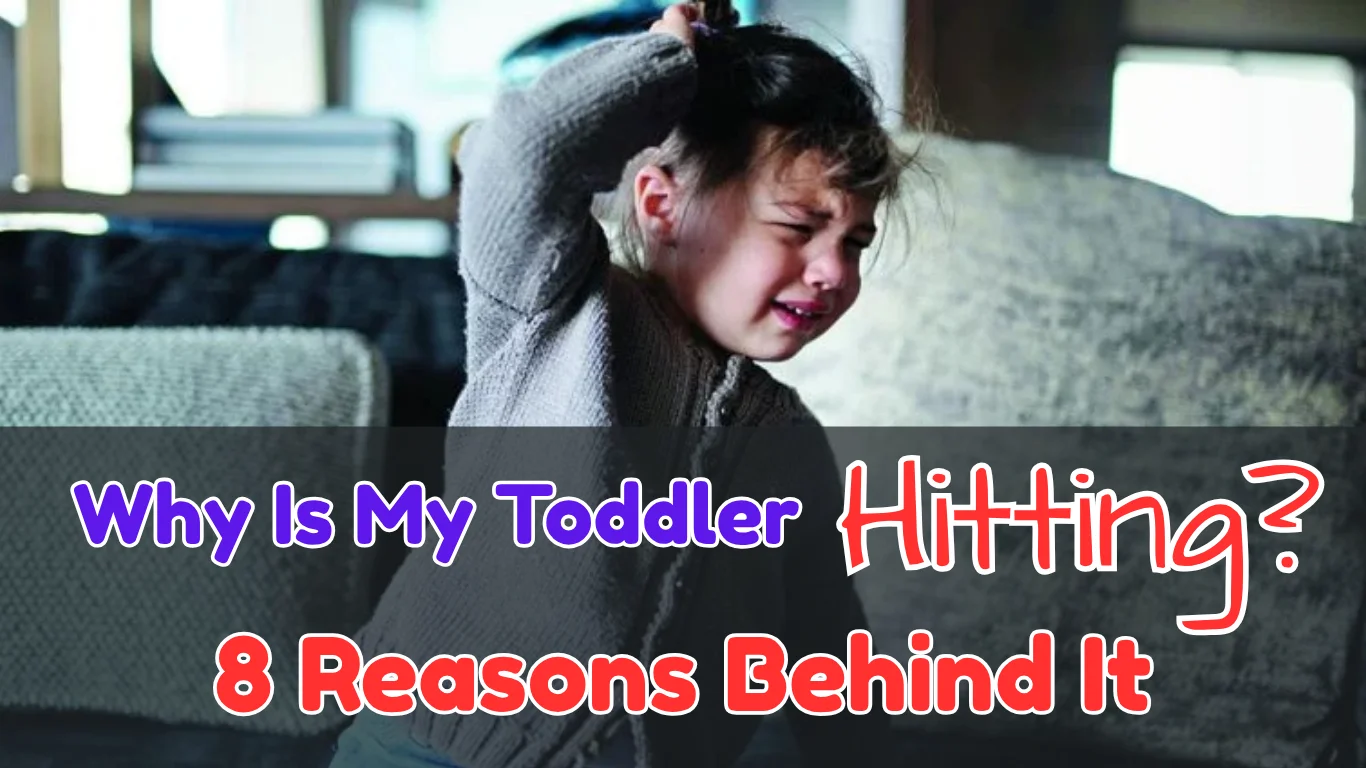
Why Is My Toddler Hitting? 8 Reasons Behind It and What Parents Can Do
You say, “Okay, sweetheart, it’s time to clean up.”
Your toddler looks at you.
You repeat yourself.
And suddenly, a tiny hand flies through the air.
Smack.
You stand there wondering what just happened.
“Why is my toddler hitting me?”
“Where did they learn this?”
“And how do I make it stop?”
If your toddler has started hitting, biting, pushing, or kicking, you are not alone. These behaviors can be upsetting, especially when that sweet little person who was cuddling with you five minutes ago suddenly turns into a very determined tiny wrestler.
But there is something important to understand:
Your toddler may not be trying to be “bad.” They may be trying to communicate with the only tools they have available in that moment.
“I’m angry.”
“That’s mine.”
“Stop!”
“I don’t like this.”
“I want it!”
“I don’t know how to handle this feeling.”
Sometimes, the hands speak before the words are ready.
And that changes how we respond.
First, Is Your Toddler Becoming Aggressive?
Not necessarily.
Hitting and biting can be a normal part of early childhood development. Toddlers are still learning how to control impulses, express big emotions, solve conflicts, and understand how their actions affect other people.
They may know that hitting is not allowed and still hit.
That can be frustrating for parents, but it is an important distinction.
Knowing a rule and being able to follow it when overwhelmed are two different skills.
Young children often need many reminders and lots of practice before self-control becomes more reliable.
The goal is not to excuse hitting.
The goal is to teach what to do instead.
A simple rule to keep in mind is:
Feelings are allowed. Hurting people is not.
Look at the Five Seconds Before the Hit
Before we talk about the eight common reasons toddlers hit, there is one habit that can make a surprisingly big difference:
Watch what happens right before the hitting starts.
The hit usually has a runway.
Maybe your toddler’s body suddenly becomes stiff.
Maybe their voice gets louder.
Maybe another child reaches for their toy.
Maybe you say, “Time to go home,” and they immediately start protesting.
Maybe they are hungry, tired, or surrounded by too much noise.
Maybe you hear:
“Mine! Mine! Mine!”
And then comes the hand.
Those few seconds are valuable.
If you learn to recognize your toddler’s early signals, you may be able to step in before the situation reaches the hitting stage.
You do not need a giant parenting spreadsheet.
Just start noticing the pattern.
What happened right before the hit?
That question can tell you a lot.
8 Reasons Your Toddler May Be Hitting
1. They Are Frustrated
Toddlers have enormous feelings and surprisingly small emotional toolboxes.
They want the blue cup.
You gave them the green one.
The blue cup is currently in the dishwasher.
This is, apparently, a national emergency.
Your toddler may scream, throw something, hit, or bite because they do not yet know how to handle frustration.
Adults struggle with frustration too. The difference is that adults usually have a much larger vocabulary and a little more practice.
A toddler may only have:
“I WANT IT!”
And when those words do not work, the body may take over.
What you can do
Stay calm and acknowledge the feeling:
“You really wanted the blue cup. You’re upset.”
Then hold the boundary:
“I know you’re angry. But I won’t let you hurt someone.”
You are doing two things at once:
You are accepting the emotion without accepting the behavior.
That distinction matters.
2. They Don’t Have the Words Yet
Sometimes hitting is a language problem disguised as a behavior problem.
A toddler may not know how to say:
“Please give that back.”
“Move away.”
“I don’t like that.”
“Can I have a turn?”
“Stop touching me.”
So instead, they push.
Or hit.
Or bite.
This is one reason toddlers often need us to teach replacement behaviors repeatedly.
What you can do
Give them the words they are missing.
Try:
“Say, ‘My turn.’”
“Say, ‘Stop.’”
“You can say, ‘Help me.’”
“You can say, ‘I don’t like that.’”
Keep it short.
This is not the moment for a seminar on emotional regulation.
Your toddler is already having a very busy afternoon.
3. They Are Hungry, Tired, or Overstimulated
Sometimes the reason is much less mysterious.
Your toddler has been awake too long.
They skipped part of lunch.
The grocery store is noisy.
They have spent two hours being passed around by relatives.
Their emotional battery is flashing red.
A tired toddler can have the emotional flexibility of a wet cracker.
Everything becomes harder.
Transitions become harder.
Sharing becomes harder.
Waiting becomes harder.
And controlling that little hand becomes harder too.
What you can do
Before assuming your toddler needs a serious behavior lesson, check the basics:
- Are they hungry?
- Are they tired?
- Have they had enough quiet time?
- Is the environment too noisy?
- Have they had too many transitions?
- Have they been expected to sit still for too long?
Sometimes the best intervention is not another explanation.
It is a snack and a nap.
4. Hitting Gets a Big Reaction
Toddlers are constantly learning about cause and effect.
“I hit Dad.”
“Dad shouted.”
Interesting.
“I hit again.”
“Everyone looked at me.”
Even a negative reaction can become powerful attention.
That does not mean your toddler is deliberately manipulating you.
It simply means they are learning that actions produce reactions.
What you can do
Keep your response calm, immediate, and predictable.
Move the child’s hand away or create space if necessary.
Then say something simple:
“I won’t let you hit.”
Avoid turning the moment into a long emotional performance.
The less dramatic the response, the easier it is to move toward teaching the replacement behavior.
When your toddler uses gentle hands, notices another child’s feelings, or uses words instead of hitting, notice that too.
“You were upset, and you used your words. That was a great choice.”
Positive attention teaches too.
5. They Are Experimenting
Toddlers are little scientists.
They are constantly testing cause and effect.
“What happens if I drop this?”
“What happens if I throw this?”
“What happens if I bite Dad?”
Unfortunately, you may become today’s research subject.
Your toddler may not understand the full emotional meaning of hitting yet. They may simply be exploring what happens next.
What you can do
Give a clear, simple response every time:
“Hitting hurts. I won’t let you hit.”
Then redirect.
Show them what they can do.
“You can tap the drum.”
“You can stomp your feet.”
“You can say, ‘No!’”
Toddlers require a lot of software updates.
One explanation rarely installs the new behavior permanently.
6. They May Be Seeking Sensory Input
Some toddlers seem especially drawn to physical actions such as biting, crashing into things, squeezing, pushing, or hitting.
For some children, strong physical sensations can be regulating or satisfying.
This does not mean every toddler who hits has a sensory issue. But if you notice a broader pattern of sensory-seeking behaviors, it may be worth paying attention.
What you can do
Offer safe ways to get appropriate physical input:
- Push a heavy box across the floor.
- Carry books or small household items.
- Jump on a safe surface.
- Play with playdough.
- Squeeze a soft ball.
- Have active outdoor play.
- Try simple pushing and pulling games.
The goal is not to reward hitting.
It is to give the body another place to put all that physical energy.
7. They Are Teething or Want to Chew
Biting deserves a slightly different look because sometimes the mouth is involved for physical rather than emotional reasons.
Teething, oral sensory needs, or the simple desire to chew can contribute to biting behavior in some toddlers.
You may notice that biting happens more often when your child is tired, upset, or chewing everything in sight.
What you can do
Stay calm and block the bite when you can.
Then redirect:
“I won’t let you bite me. You can bite this.”
Offer an appropriate teething or chewing option when needed.
And again, look for the pattern.
If biting seems unusually frequent, intense, or connected with other concerns, bring it up with your child’s pediatrician.
8. They Want Connection
This one can be easy to miss.
Sometimes a toddler hits because they are angry.
Sometimes they hit because they are overwhelmed.
And sometimes they simply want you.
A child may discover that hitting instantly brings a parent running across the room.
Not exactly the family connection strategy you were hoping to teach, but toddlers are not known for predictable plot development.
What you can do
Give connection outside the hitting moment too.
A few minutes of uninterrupted play.
A cuddle.
Reading together.
Sitting beside them while they build a tower.
Talking during ordinary routines.
You can also teach a better way to get your attention:
“If you want Mommy, touch my arm.”
“You can say, ‘Mommy, come here.’”
The lesson becomes:
You can always ask for connection. You just cannot hurt someone to get it.
What Should You Do When Your Toddler Hits?
When the hit happens, you do not need ten parenting techniques at once.
Think of the sequence as:
Safety → Calm → Boundary → Words → Practice
Step 1: Stop the Hitting
If your toddler is trying to hit, gently block the hand or move them away from the person.
Then use a short sentence:
“I know you’re really angry. But I won’t let you hurt someone.”
This is a powerful sentence because it does not label your child.
You are not saying:
“You are bad.”
“You are aggressive.”
“You are mean.”
You are saying:
“I understand your feeling. And I will keep people safe.”
That is a much healthier lesson.
Step 2: Don’t Hit Back
It can be tempting.
Especially after the fifth hit.
But hitting a child to teach them not to hit sends a confusing message:
“Hitting is wrong, so I will hit you to teach you that hitting is wrong.”
The American Academy of Pediatrics recommends positive discipline rather than physical punishment, yelling, shaming, or humiliating children.
Your child learns more from what you do than from what you say.
So when you stay calm while setting a firm boundary, you are modeling the exact skill you want your toddler to develop.
Step 3: Help Them Calm Down
A toddler who is completely overwhelmed is not ready for a long lesson.
First, help them regulate.
You might:
- Move to a quieter room.
- Hold them if they want to be held.
- Sit nearby.
- Speak slowly.
- Reduce noise and stimulation.
- Give them a little space if they do not want touch.
Remember:
Calm first. Teach second.
You cannot expect excellent emotional problem-solving from a brain that is currently on fire.
Step 4: Name the Feeling
Once your toddler is calmer, put words around what happened.
“You were angry because I took the toy.”
“You didn’t want to leave the playground.”
“You were upset when she took your truck.”
This does not mean the hitting was acceptable.
It means you are helping your toddler connect:
feeling → words → behavior
That connection is one of the foundations of emotional regulation.
Step 5: Teach What to Do Instead
This is the part parents sometimes skip.
We tell toddlers what not to do but forget to teach the replacement.
Don’t hit.
Okay.
What should I do instead?
Give them something concrete.
“Say, ‘My turn.’”
“Say, ‘Stop.’”
“Come get Mommy.”
“Use gentle hands.”
“Ask for help.”
“Stomp your feet.”
“Squeeze your hands.”
The replacement needs to be simple enough for a toddler to actually remember.
Step 6: Catch Them Being Gentle
Do not wait for hitting to happen before giving attention.
Look for the moments when your toddler gets it right.
“You gave the toy back gently.”
“You waited for your turn.”
“You were angry, but you used your words.”
“That was a gentle touch.”
This kind of specific praise helps children understand exactly which behavior you want to see again.
And yes, you may feel a little ridiculous praising someone for not hitting their sibling.
Do it anyway.
Tiny humans need a surprising amount of repetition.
What About Apologizing?
Many parents immediately say:
“Say you’re sorry!”
And sometimes the child says it.
But do they understand it?
Not necessarily.
A forced “sorry” can become a word that ends the situation rather than an expression of empathy.
Instead, teach repair.
You might say:
“Your brother is crying. Let’s see if he’s okay.”
“You hit her. Her arm hurts. Let’s get some ice.”
“You can bring him his toy.”
Over time, your toddler begins to understand something deeper:
My actions affect other people, and I can help repair the hurt.
That lesson is more valuable than simply producing the correct word on command.
Should You Use Time-Out?
Time-out is not automatically wrong, but it should not become the entire parenting strategy.
The American Academy of Pediatrics describes time-out as one possible discipline tool, particularly when a child needs a brief break after a clear warning and rule violation.
But with toddler hitting, the larger lesson is still:
I will keep people safe. Your feelings are okay. Hitting is not okay. Here is what you can do instead.
If you use time-out, keep it brief, calm, and predictable.
Do not turn it into humiliation.
Do not lecture from across the room.
And do not use it as a substitute for teaching the skill your toddler is missing.
Become a Toddler Detective
If your toddler keeps hitting, stop asking only:
“How do I stop the hitting?”
Also ask:
“What keeps happening before the hitting?”
You may begin to notice a pattern.
Maybe it happens:
- Before meals.
- Near bedtime.
- During transitions.
- When another child takes a toy.
- In crowded places.
- When your toddler is asked to stop playing.
- When you are busy talking to someone else.
- During sibling conflicts.
- After a long day.
You don’t need a spreadsheet worthy of NASA.
Just notice.
What happened?
What did my toddler want?
What were they feeling?
What happened right before the hit?
Once you understand the pattern, prevention becomes much easier.
When Should You Be More Concerned?
A few incidents of hitting during the toddler years do not automatically mean something is seriously wrong.
What matters more is the frequency, intensity, and impact of the behavior.
Consider talking with your child’s pediatrician if your toddler frequently hurts other people, the behavior is becoming increasingly intense, is difficult to manage, causes injuries, or begins interfering with childcare, play, or family life.
It is also worth seeking professional guidance if the hitting comes alongside other concerns about your child’s development or safety.
You do not need to panic.
You simply do not have to figure everything out alone.
What If My Toddler Hits Again Tomorrow?
They probably will.
And possibly the day after that.
This is where parenting can feel less like teaching a lesson and more like patiently pressing the same button on a very small elevator.
You explain.
You model.
You redirect.
You praise.
And then, somehow, your toddler hits again because their toy was the wrong shade of blue.
That does not mean your teaching failed.
Repetition is part of the teaching.
Your toddler is building a skill, not memorizing a rule.
Over time, the goal is that the pause between “I am angry” and “I hit” becomes longer.
Then comes a word.
Then a request.
Then, eventually, your toddler starts solving the problem without using their hands.
That progress may be tiny at first.
But tiny progress is still progress.
The Bigger Lesson Behind Toddler Hitting
When a toddler hits, it is easy to focus entirely on stopping the hand.
And yes, stop the hand.
Keep people safe.
Set the boundary.
But underneath the behavior is a child who is still learning how to manage frustration, communicate needs, tolerate disappointment, and live inside a world where other people also have feelings and boundaries.
That is a lot to learn.
So the goal is not simply:
“Make my toddler stop hitting.”
The bigger goal is:
“Help my toddler learn what to do when big feelings arrive.”
That takes time.
It takes repetition.
It takes boundaries.
And, occasionally, it takes a very deep breath while someone screams because you cut their sandwich into squares instead of triangles.
You are not trying to raise a child who never feels angry.
You are helping raise a child who eventually learns:
“I can be angry without hurting someone.”
And that is a skill worth teaching.
FAQ: Toddler Hitting
Is it normal for a 2-year-old to hit?
Yes. Hitting can occur during the toddler years because young children are still developing language, impulse control, emotional regulation, and social problem-solving skills. Normal does not mean you should ignore it. It means the behavior is often part of development and can be addressed through consistent teaching.
Should I punish my toddler for hitting?
Focus first on safety and teaching rather than harsh punishment. Calmly stop the behavior, state the boundary, help your child calm down, and teach a replacement behavior. Physical punishment, yelling, and shaming are not recommended.
Should I hit my toddler back so they understand it hurts?
No. Hitting back teaches a confusing lesson and models the very behavior you want your child to stop. Instead, demonstrate how to handle anger without hurting someone.
Why does my toddler hit me but not other people?
Your toddler may feel safest expressing strong emotions with a parent, or may have learned that hitting a parent gets a strong response. Look for the pattern around the behavior rather than assuming your child is intentionally targeting you.
How do I stop my toddler from hitting their sibling?
Step in quickly and separate them if necessary. State the boundary, help your toddler calm down, then teach the words or actions they can use next time. Pay attention to common triggers such as toy conflicts, tiredness, hunger, and competition for attention.
What should I say when my toddler hits?
Keep it short and calm. For example:
“I know you’re really angry. But I won’t let you hurt someone.”
Then help your child calm down and teach what they can do instead.
How long does toddler hitting usually last?
There is no exact age when hitting suddenly disappears. It generally becomes less frequent as children develop better language, impulse control, and emotional regulation. Consistent responses and teaching can help those skills develop.
When should I ask a doctor about my toddler’s hitting?
Talk with your child’s pediatrician if the aggression is frequent, severe, causes injuries, is becoming worse, is difficult to manage, or interferes significantly with your child’s relationships, childcare, or family life. Also seek guidance if you have other concerns about your child’s development or safety.