25 Screen-Free Activities for Kids When You Hear “I’m Bored”
Some afternoons start out completely ordinary.
You just finished the dishes.
Your child has already had a snack.
Toys are scattered across the floor.
And then you hear it:
“Mom, I’m bored.”
You look at the clock.
3:17 p.m.
Dinner feels very far away.
You could hand over the tablet.
You could also try to come up with something for them to do.
But you don’t always need a complicated activity.
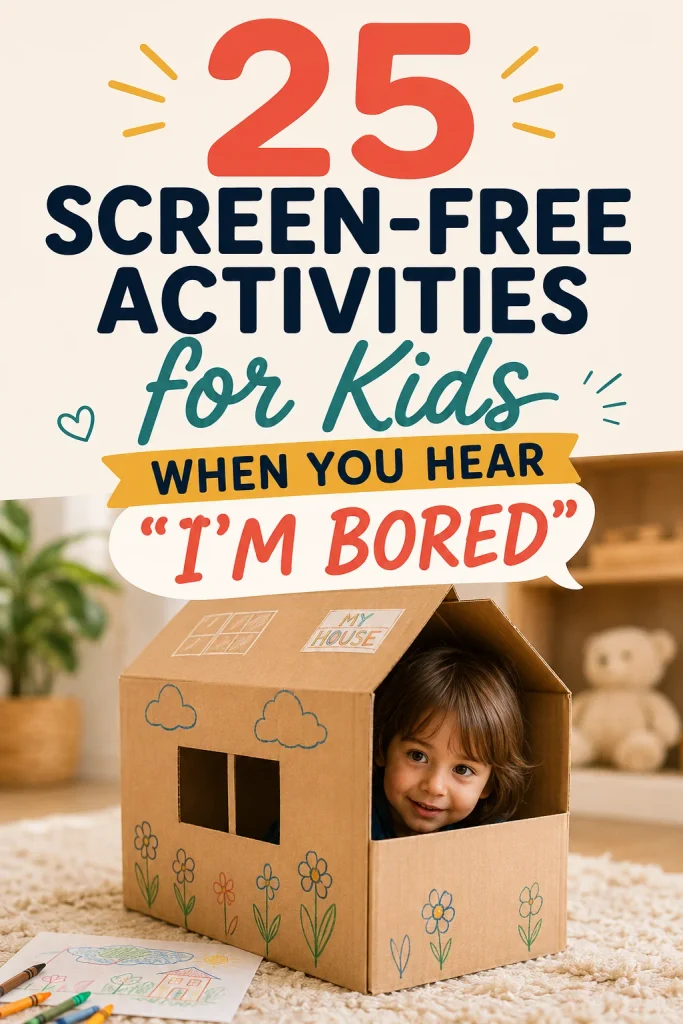
A cardboard box can become a car.
A blanket can become a secret hideout.
A few cups from the kitchen can become an entire little laboratory.
Here are 25 ideas for moments like these.
Most use things you probably already have at home.
And, perhaps most importantly, you don’t have to stand beside your child and direct every minute.
Give them an idea.
Then see what they turn it into.
25 Screen-Free Activities for Kids
As an Amazon Associate, Intelligent Mother earns from qualifying purchases.
Mom's Everyday Favorites
Thoughtful finds for busy days, family life, and a little time for yourself.
1. The Mystery Box
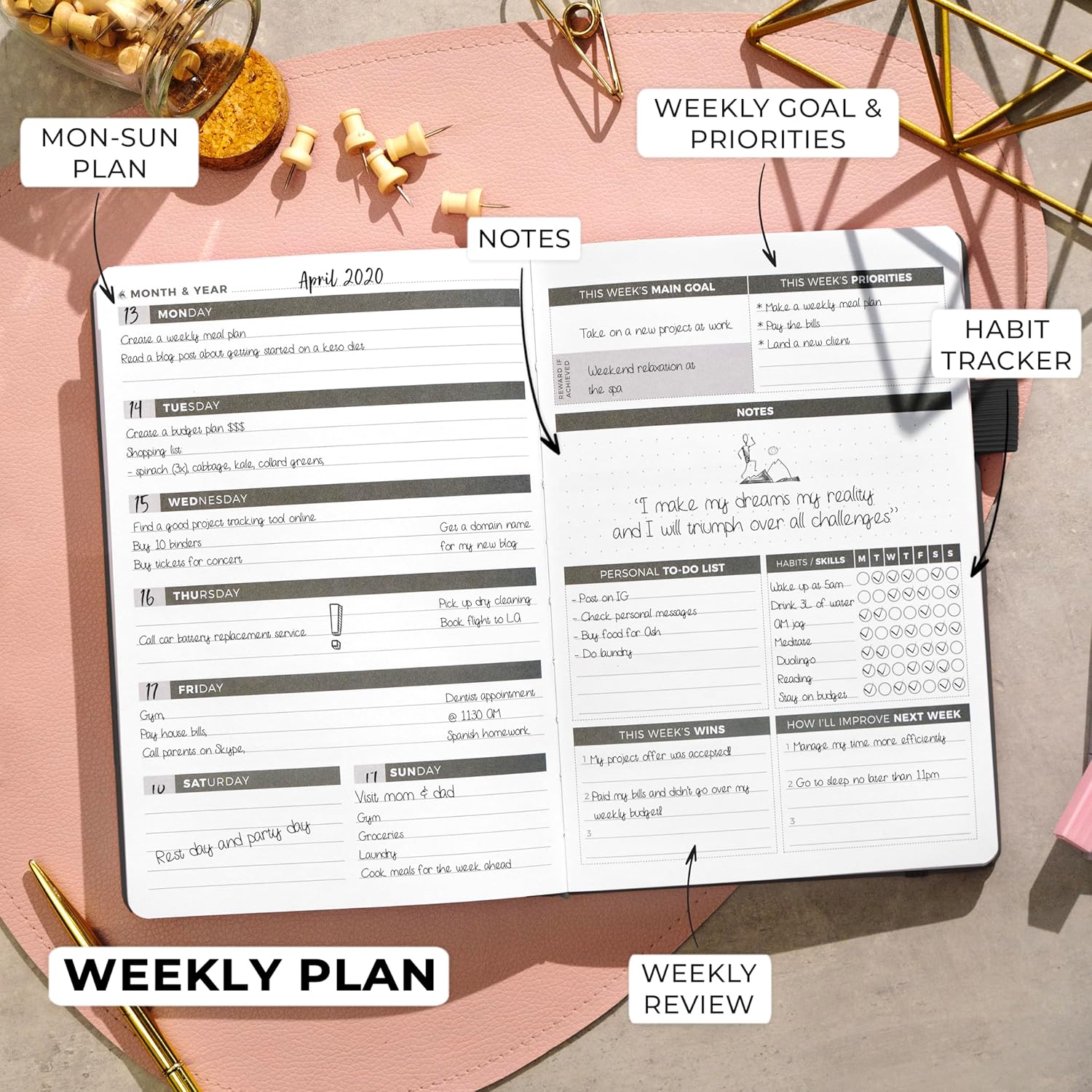
You just opened a package, and somehow your child is more interested in the box than what’s inside.
If that sounds familiar, don’t flatten the box for recycling just yet.
Put it in the middle of the room.
Don’t give your child a long list of instructions.
Just ask:
“What do you think this could be?”
How to play
- Give your child a cardboard box that’s large enough for safe play.
- Add crayons, paper, or a few pillows if you have them.
- Let your child decide what the box becomes.
- If they say, “It’s a car,” ask, “Where is it going?”
- If they say, “It’s a house,” ask, “Who lives there?”

A BEAUTY FIND
CeraVe Moisturizing Cream
Moisturizing cream for face and body with ceramides and hyaluronic acid.
View on AmazonToday it might be a fire truck.
Tomorrow, an ice cream shop.
The next day, it could be a spaceship stuck in the middle of the ocean.
Why kids like it
A box doesn’t tell a child what it is supposed to be.
That leaves plenty of room for them to decide.
Try this variation
Cut out a small window.
Now it’s a shop.
Add a blanket.
Now it’s a hospital for stuffed animals.
If there’s a cardboard box waiting to be recycled, give it one more day.
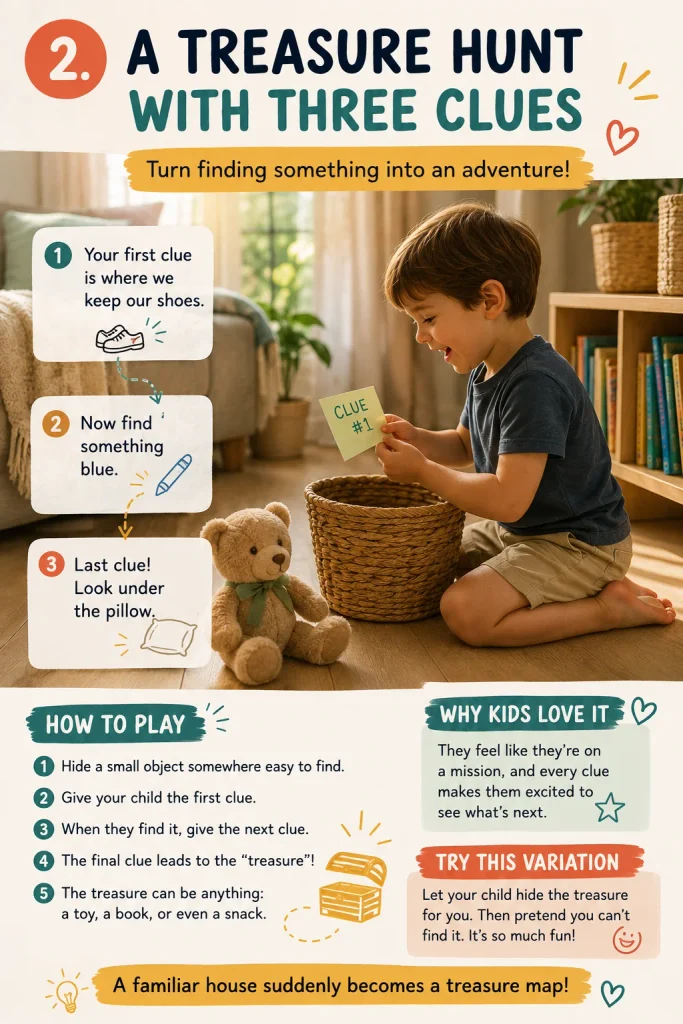
2. A Treasure Hunt With Three Clues
You’ve said, “Go find something to play with,” for the third time, and your child is still standing in the middle of the living room.
Turn finding something into an adventure.
How to play
Hide a small object somewhere easy to find.
Then give your child three clues.
For example:
“Your first clue is somewhere we keep our shoes.”
When they find it, give them the next clue:
“Now find something blue.”
The final clue leads to the “treasure.” A BEAUTY FIND A niacinamide serum for a simple everyday skincare routine.
The Ordinary Niacinamide 10% + Zinc 1%
The treasure doesn’t have to be a gift.
It could be a stuffed animal.
A book.
Or even an apple.
Why kids like it
They’re not just looking for an object.
They’re on a mission.
And every clue makes them wonder what comes next.
Try this variation
Let your child hide the treasure for you.
Then pretend you can’t find it.
“Hmm… I’m stuck. Where could the next clue be?”
A familiar house suddenly becomes a treasure map.
3. A Secret Fort Under the Table
You’re trying to fold laundry, and your child keeps crawling under your feet.
Maybe they don’t need another toy.
Maybe they need a little world of their own.
How to play
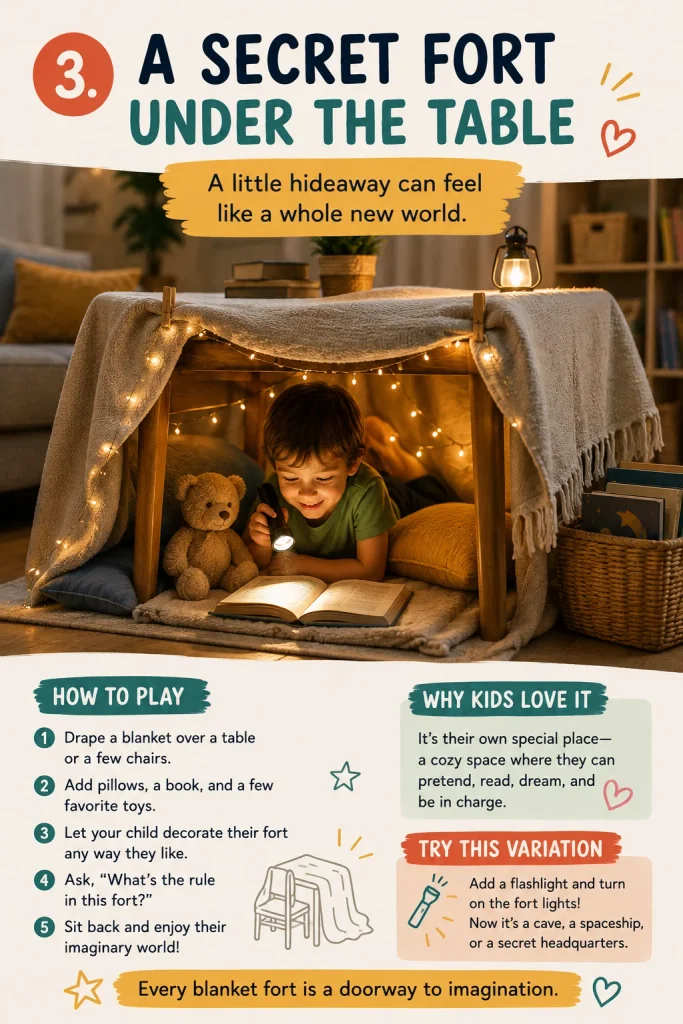
Drape a blanket over a table or a few chairs.
Add:
- two pillows;
- a favorite book;
- a few toys.
Then let your child name the fort.
Moon Station.
Bear Cave.
Dinosaur Headquarters.
Ask:
“What’s the rule in this fort?” A BEAUTY FIND A hydrating essence for a moisture-focused skincare routine.
COSRX Advanced Snail 96 Mucin Power Essence
Maybe the answer is:
“You can’t come in without the password.”
Congratulations. You now have a password to ask for every time you walk past.
Try this variation
Give your child a flashlight.
Dim the lights.
Now the fort becomes an underground cave.
Don’t worry about making the fort look perfect. Children’s forts are often best when they’re a little crooked.
4. “Find Me Something…”
You’re making dinner, and your child is running circles around the kitchen.
Try a game that takes almost no preparation.
How to play
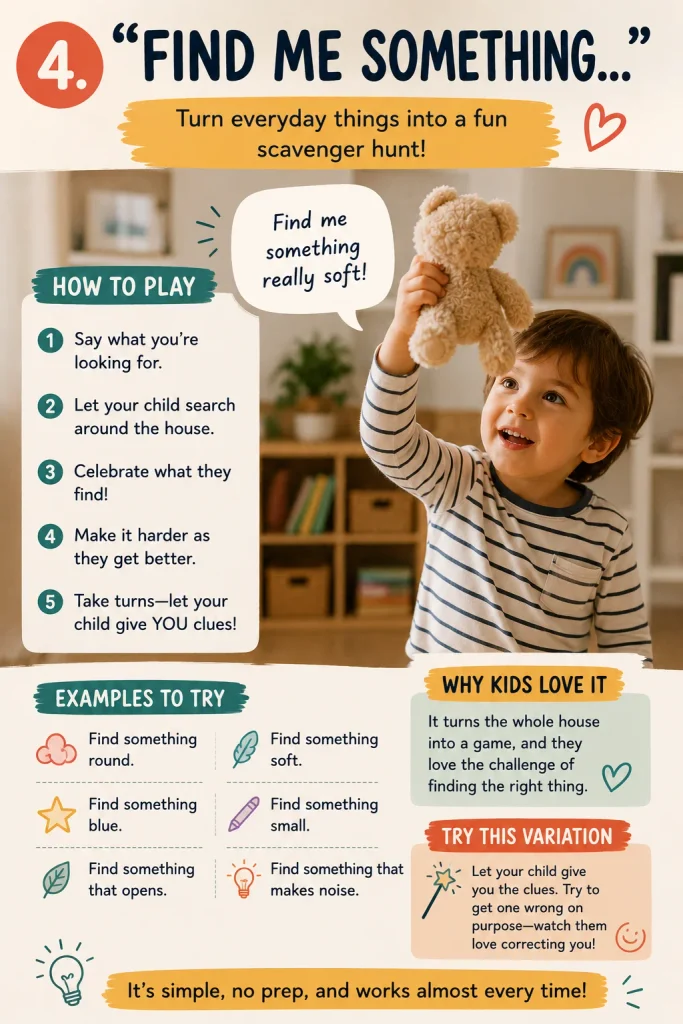
Say:
“Find me something really soft.”
Off they go.
Next:
“Now find something round.”
Then:
“Find something yellow.”
Once they get the idea, make it harder:
“Find something that’s both soft and white.”
Why kids like it A BEAUTY FIND Washable mascara for everyday makeup looks.
Maybelline Lash Sensational Sky High Washable Mascara
It turns ordinary things around the house into something worth hunting for.
A pillow isn’t just a pillow anymore.
It’s “the softest thing in the room.”
Try this variation
Let your child give you the clues.
“Mom, find something blue!”
Get one wrong on purpose.
They’ll probably love correcting you.
You don’t need to prepare anything for this one.
5. The 5 P.M. Restaurant
You’re making dinner, and your child keeps asking:
“When are we going to eat?”
Let them open a restaurant.
How to play
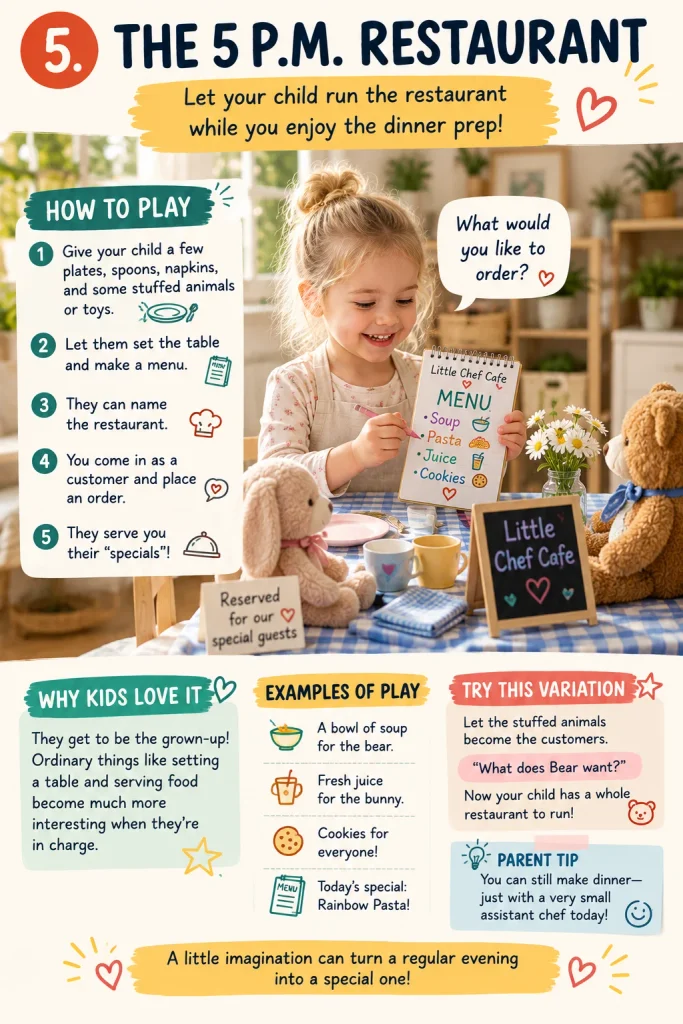
Give your child:
- a few plates;
- spoons;
- napkins;
- some stuffed animals or toys.
Let them set the table.
They can make a menu on a piece of paper.
They can name the restaurant.
Then you walk in and place an order.
“I’d like your special soup, please.”
Your child can hand you an empty bowl and pretend to serve it. A BEAUTY FIND Daily facial moisturizer with ceramide-3 and niacinamide.
La Roche-Posay Toleriane Double Repair Face Moisturizer
Why kids like it
They’re getting to be the grown-up.
Ordinary things like setting a table and serving food become much more interesting when they’re in charge.
Try this variation
Let the stuffed animals become the customers.
“What does Bear want?”
Now your child has a whole restaurant to run.
You can still make dinner. You just have a very small assistant chef today.
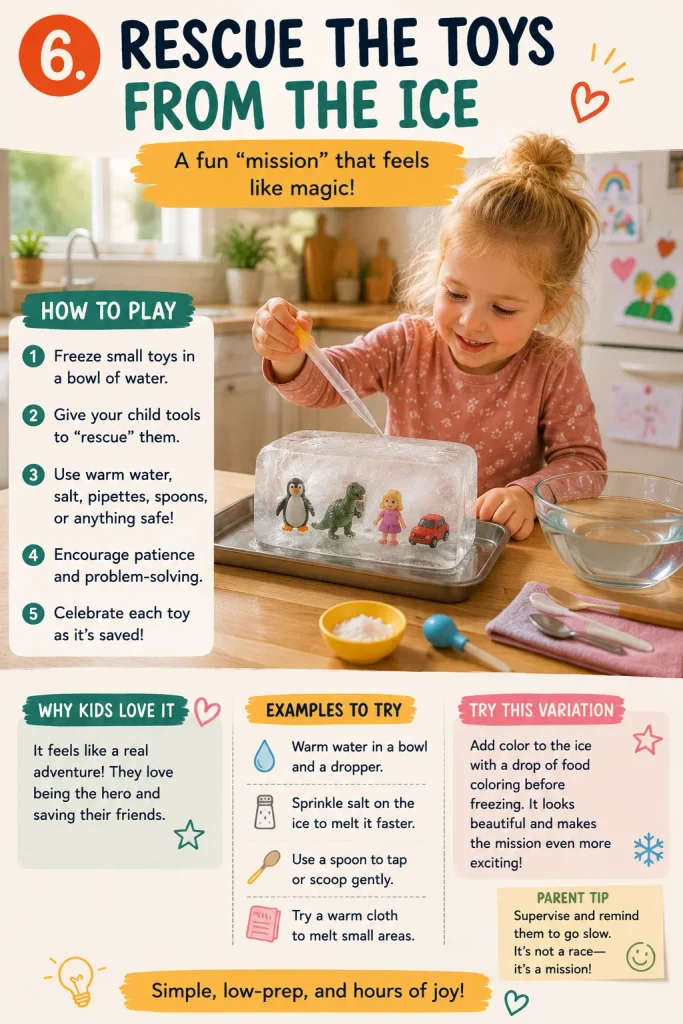
6. Rescue the Toys From the Ice
It’s a hot day. Your child is bored. And there’s a little room left in the freezer.
That’s enough.
How to play
Place a few small, age-appropriate toys in a container of water.
Freeze it.
When the block of ice is ready, take it out and say:
“We have a problem. They’re trapped.”
Let your child figure out how to rescue them.
They might try warm water. A BEAUTY FIND Moisturizing cream for face and body with ceramides and hyaluronic acid.CeraVe Moisturizing Cream
A spoon.
Or simply wait and watch.
Why kids like it
There’s a real problem to solve.
And they don’t know exactly what will happen.
Try this variation
Freeze different objects.
A toy animal.
A little car.
A colorful object.
See which one gets rescued first.
Sometimes the simplest games work because kids genuinely want to know what happens next.
7. The Stuffed Animal Café
Your child has so many stuffed animals lined up that you’re starting to wonder if your living room has become a zoo.
Don’t put them away.
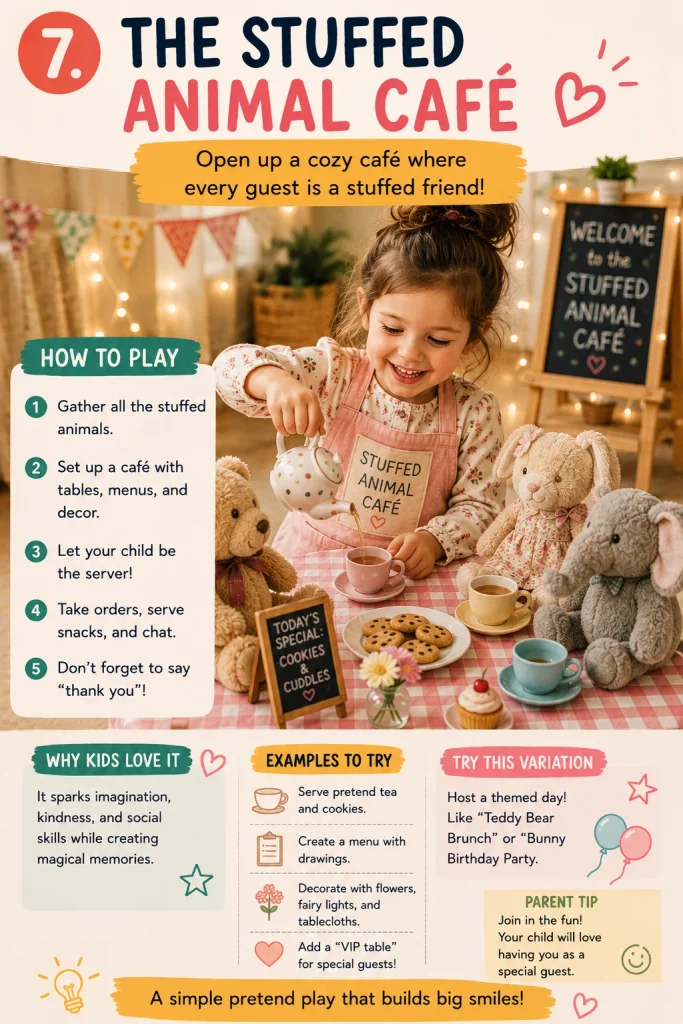
Open a café.
How to play
Line the stuffed animals up as customers.
Your child becomes the server.
Ask:
“What would Bear like to drink?”
Your child decides.
An empty cup becomes juice. A BEAUTY FIND As an Amazon Associate, Intelligent Mother earns from qualifying purchases. Thoughtful picks related to this article. A niacinamide serum for a simple everyday skincare routine.Helpful products to explore
The Ordinary Niacinamide 10% + Zinc 1%


A spoon becomes a stirrer.
A small towel becomes a napkin.
Try this variation
Give each customer a personality.
Bear is very hungry.
Bunny only wants something red.
Dinosaur can’t talk.
Now your child has to figure out how to serve each guest.
One row of stuffed animals can turn the living room into a tiny café.
8. A Sensory Box From the Kitchen
You’re cleaning the kitchen, and your child wants to touch absolutely everything.
Instead of saying “Don’t touch” for the tenth time, create a safe little area where they can explore.
How to play
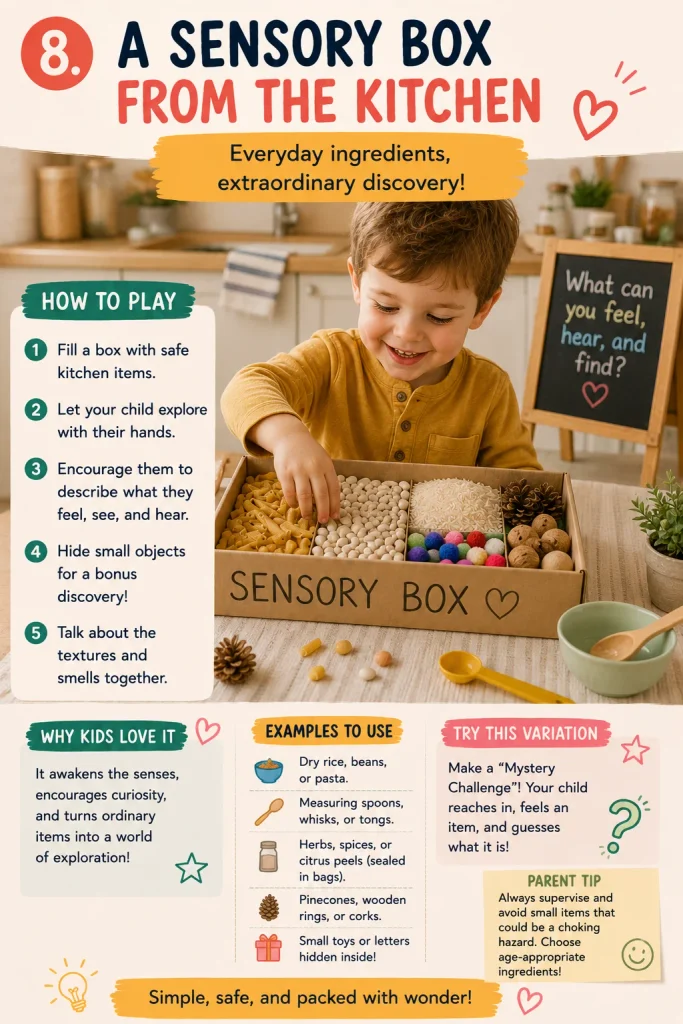
Grab a box or tray.
Add larger, age-appropriate, safe items such as:
- plastic cups;
- spoons;
- a small towel;
- empty containers;
- objects with different textures.
Let your child touch, sort, move, and compare them. A BEAUTY FIND A hydrating essence for a moisture-focused skincare routine.COSRX Advanced Snail 96 Mucin Power Essence
You can ask:
“Which one feels the softest?”
Or don’t ask anything.
Just watch.
Why kids like it
Young children are often simply trying to answer:
“What does this feel like?”
It doesn’t have to become a lesson.
Try this variation
Dim the lights, use a flashlight, and let your child search for objects with different textures.
Sometimes a spoon from the kitchen is more interesting than the new toy you just bought.
9. The Water Transfer Station
You just mopped the floor, and now your child is walking around with a cup of water.
This one belongs outside.
How to play
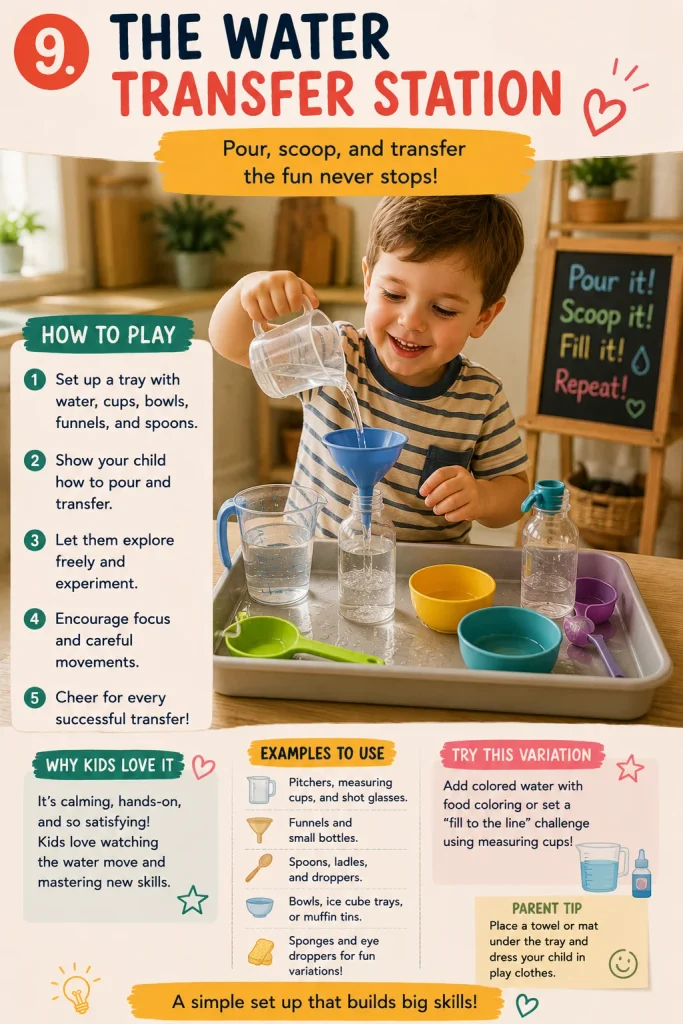
Place two larger cups or containers next to each other.
Give your child a small cup, spoon, or little scoop.
The mission is simple:
Move the water from one container to the other. A BEAUTY FIND Washable mascara for everyday makeup looks.Maybelline Lash Sensational Sky High Washable Mascara
You can say:
“Can you move all the water without spilling it?”
And if they spill it?
That’s okay.
Spilling is part of figuring it out.
Try this variation
Use containers of different sizes.
Let your child discover which one holds more.If you want to keep your floor dry, take this game outside.
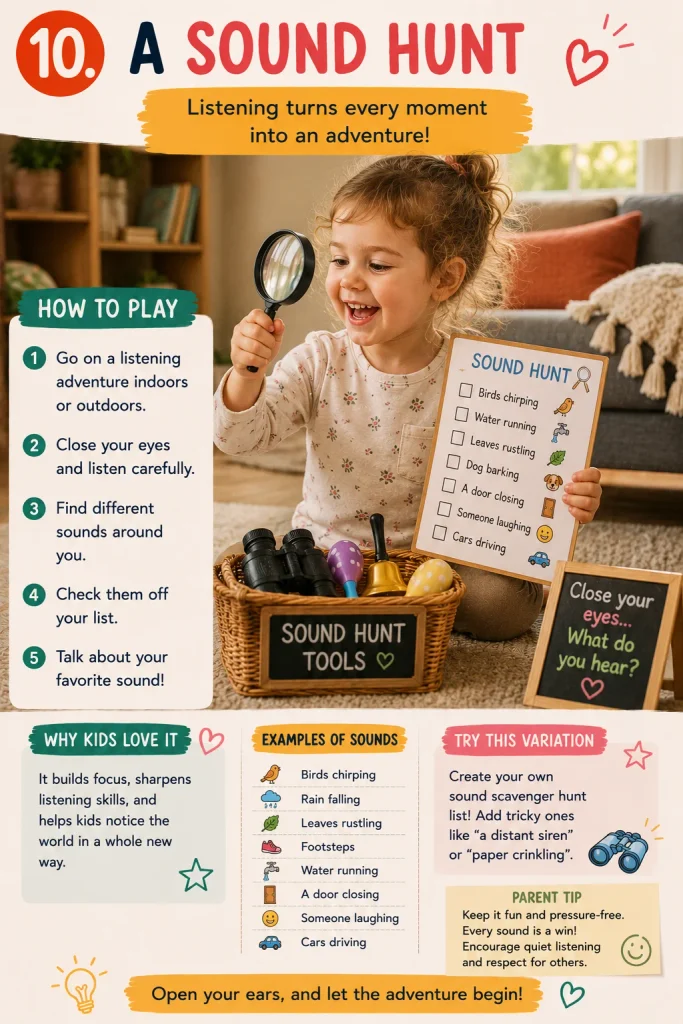
10. A Sound Hunt
The house is finally quiet, and you realize you don’t need another noisy game.
Try this instead.
Sit quietly for a minute.
Then ask:
“What can you hear?”
Maybe it’s:
- the fan;
- a car outside;
- a bird;
- running water;
- someone talking.
Walk around the house and try to find where each sound is coming from. A BEAUTY FIND Daily facial moisturizer with ceramide-3 and niacinamide.La Roche-Posay Toleriane Double Repair Face Moisturizer
Try this variation
Make a sound with a safe household object.
Let your child guess what made it.
This one is especially nice for afternoons when everyone is getting a little tired.
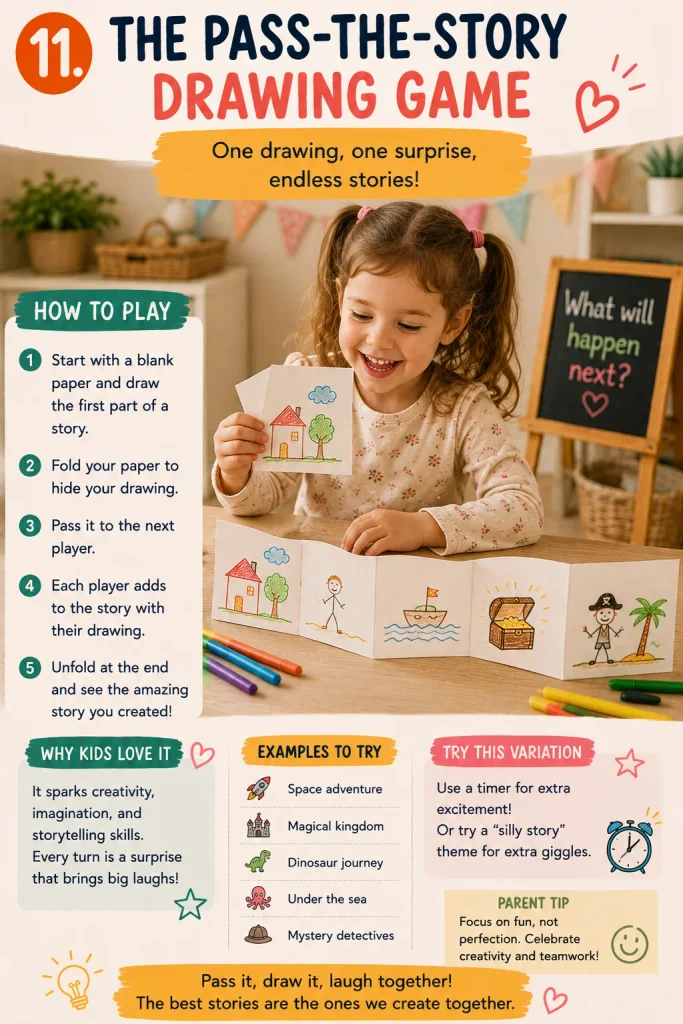
11. The Pass-the-Story Drawing Game
You’re sitting next to your child, but neither of you knows what to do next.
Grab a piece of paper.
Draw something.
A house.
A tree.
A cat.
Then say:
“Your turn.”
Your child adds something.
Then you add something.
Keep going.
Why kids like it
Nobody knows what the picture will become. A BEAUTY FIND Moisturizing cream for face and body with ceramides and hyaluronic acid.CeraVe Moisturizing Cream
A house might become a castle.
The castle might get a dragon.
The dragon might be going out to buy bread.
Try this variation
Skip the drawing.
Tell a story instead.
You say one sentence.
Your child says the next.
If the story gets completely ridiculous, you’re doing it right.
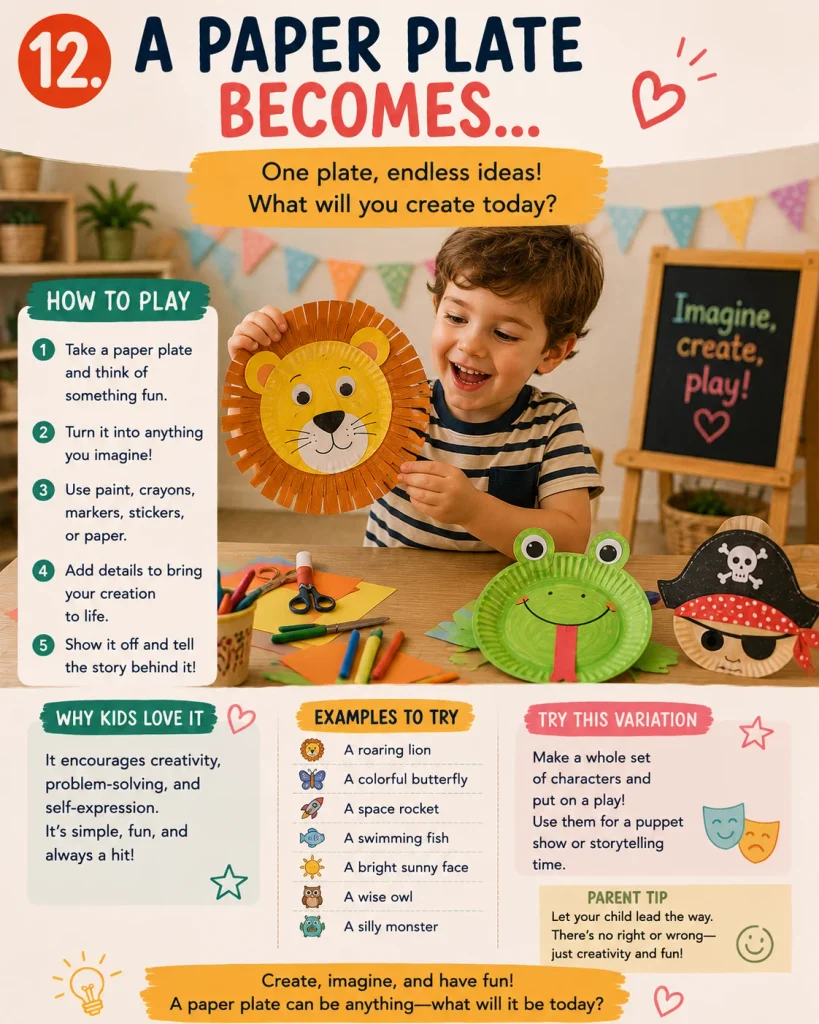
12. A Paper Plate Becomes…
You have a stack of paper plates left over from a party.
Don’t throw them away just yet.
How to play
Give your child:
- paper plates;
- crayons;
- paper;
- glue if you have it.
Then ask:
“What is this going to become today?”
A lion.
A fish.
A monster.
It doesn’t need to look like the example you found online.
Try this variation
Create an animal that has never existed before.
Let your child name it. A BEAUTY FIND A niacinamide serum for a simple everyday skincare routine. As an Amazon Associate, Intelligent Mother earns from qualifying purchases. Thoughtful finds for busy days, family life, and a little time for yourself.The Ordinary Niacinamide 10% + Zinc 1%
Mom's Everyday Favorites


Decide what it eats.
Decide where it lives.
A purple monster doesn’t need to exist in nature to deserve a place in your living room.
If your child enjoys turning simple materials into little creations, modeling dough is another activity worth keeping on hand. Children can shape their own creatures, invent funny characters, or make an entirely new world without needing to follow a perfect example.
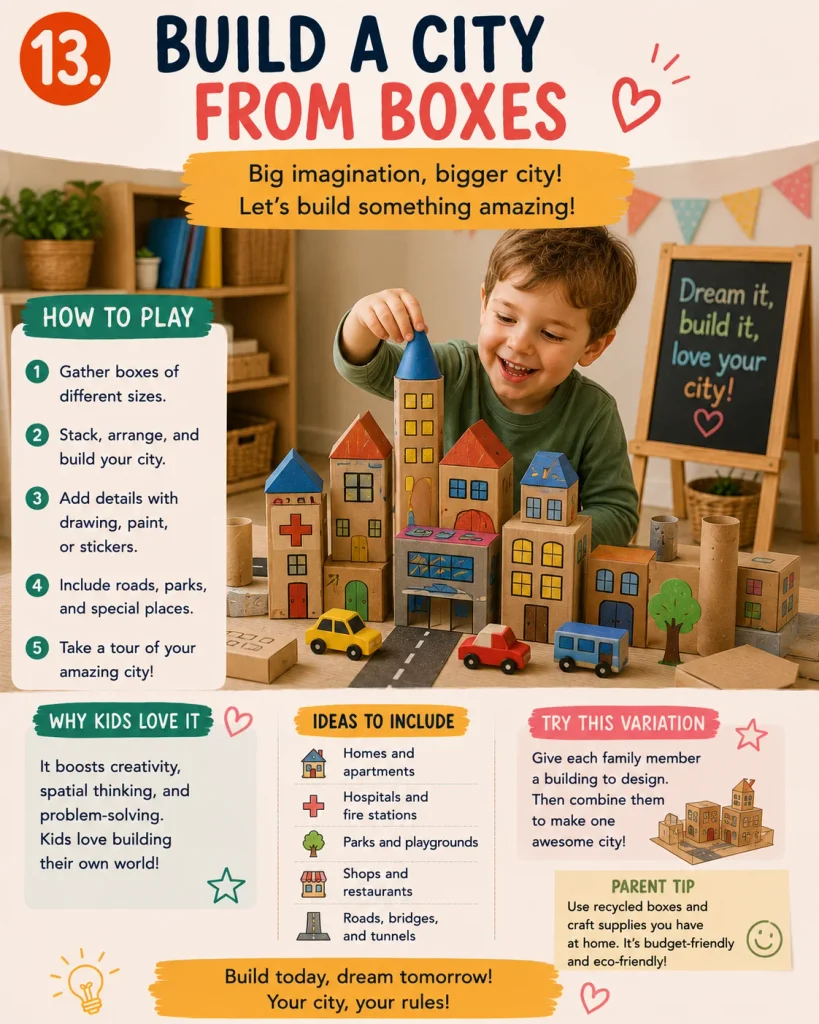
13. Build a City From Boxes
You’re about to throw a pile of small boxes into the recycling bin.
Pause.
Put them on the floor instead.
How to play
Each box becomes a building.
One is a hospital.
One is a school.
One is a house.
One is a store.
Use crayons to draw windows and doors. A BEAUTY FIND A hydrating essence for a moisture-focused skincare routine.COSRX Advanced Snail 96 Mucin Power Essence
Then ask:
“Who lives in this city?”
Try this variation
Add toy cars.
Now the city needs roads.
Your child can use painter’s tape or masking tape to make roads on the floor.By the end, you may have an entire little city taking over the living room.
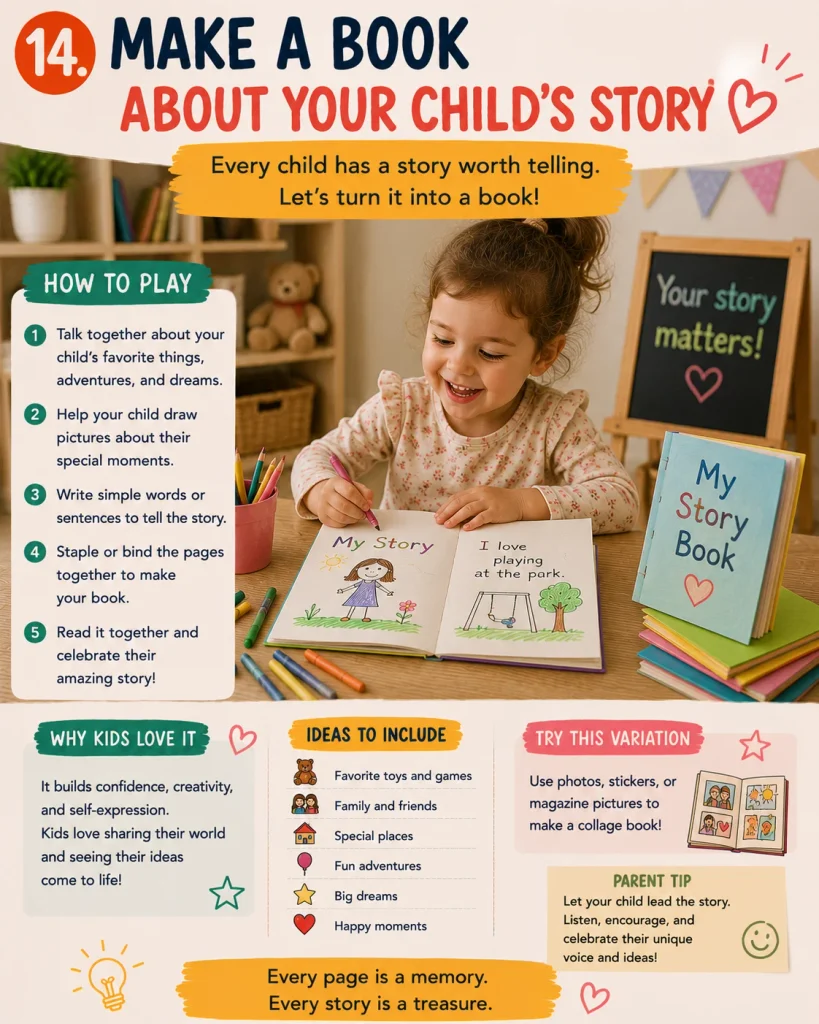
14. Make a Book About Your Child’s Story
Your child draws on paper all the time, but the pictures usually end up in a drawer.
This time, turn them into a book.
How to play
Fold a few sheets of paper together.
Ask:
“Who’s this story about?”
Let your child tell you the story.
Write down their words under each picture. A BEAUTY FIND Washable mascara for everyday makeup looks.Maybelline Lash Sensational Sky High Washable Mascara
Don’t correct the story.
If your child says:
“The cat flew to the moon to buy ice cream.”
Write exactly that.
Try this variation
Let your child name the book.
Then make a cover together.
A completely ordinary afternoon can end with a one-of-a-kind book.
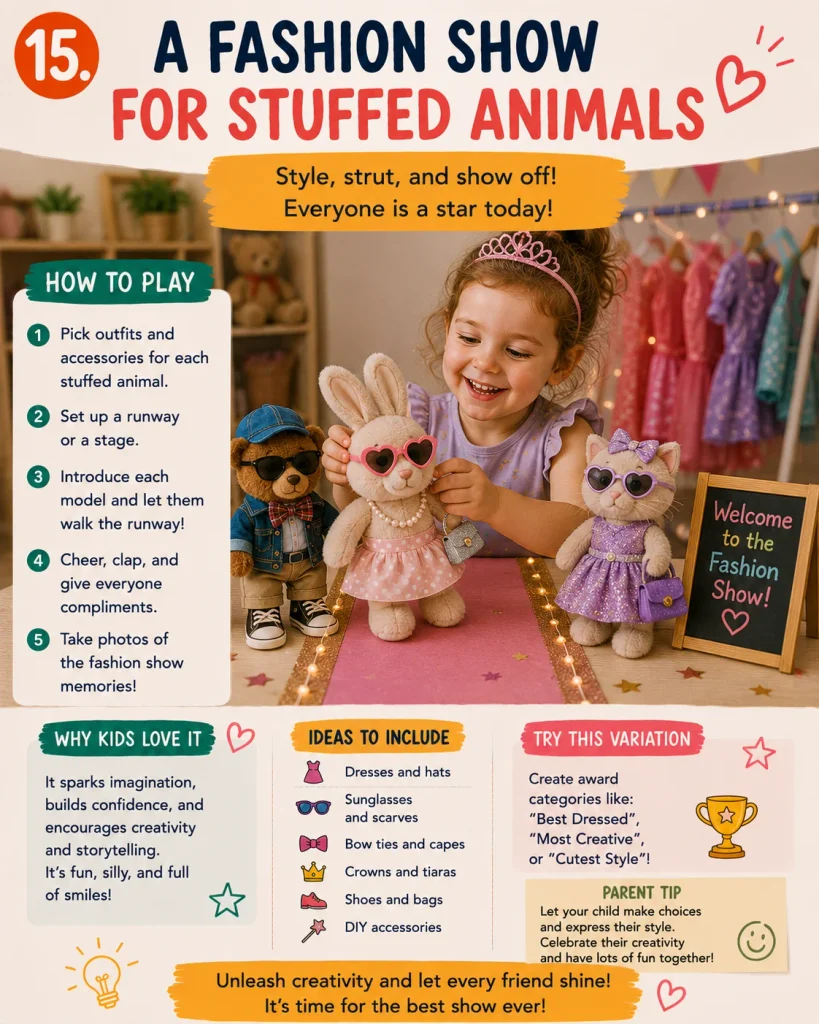
15. A Fashion Show for Stuffed Animals
Your child has changed the same stuffed bear’s outfit about ten times already.
Let’s make it official.
How to play
Give your child:
- small towels;
- clean socks;
- hats;
- ribbons if you have them.
Let them create outfits for the stuffed animals.
Then put on a fashion show.
You become the announcer: A BEAUTY FIND Daily facial moisturizer with ceramide-3 and niacinamide.La Roche-Posay Toleriane Double Repair Face Moisturizer
“And now, Bear is wearing the summer collection!”
Try this variation
Let your child name each outfit.
Or give each stuffed animal somewhere to go and decide what it should wear.
You probably don’t need to buy doll clothes. Your laundry drawer may already have everything you need.
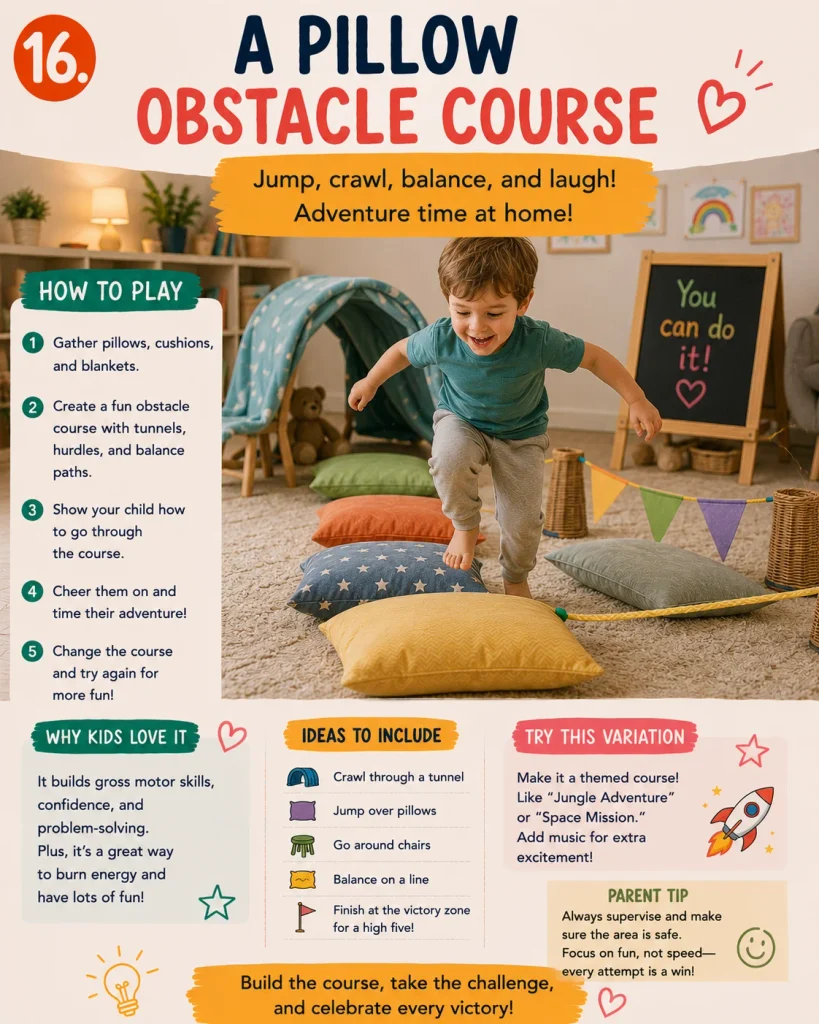
16. A Pillow Obstacle Course
It’s been a long day at home, and your child still seems to have the energy of someone who just drank three glasses of orange juice.
Don’t try to make them sit still.
Give them a course.
How to play
Put a few pillows on the floor.
For example:
Jump over the pillow → crawl under the chair → run to the wall → come back. A BEAUTY FIND Moisturizing cream for face and body with ceramides and hyaluronic acid.CeraVe Moisturizing Cream
Do one round.
Then let your child design the next one.
Try this variation
Add a rule:
“You can’t touch the floor.”
Or:
“You have to move like a bear.”
Once your child starts designing the course, you may even get to sit down for a minute.
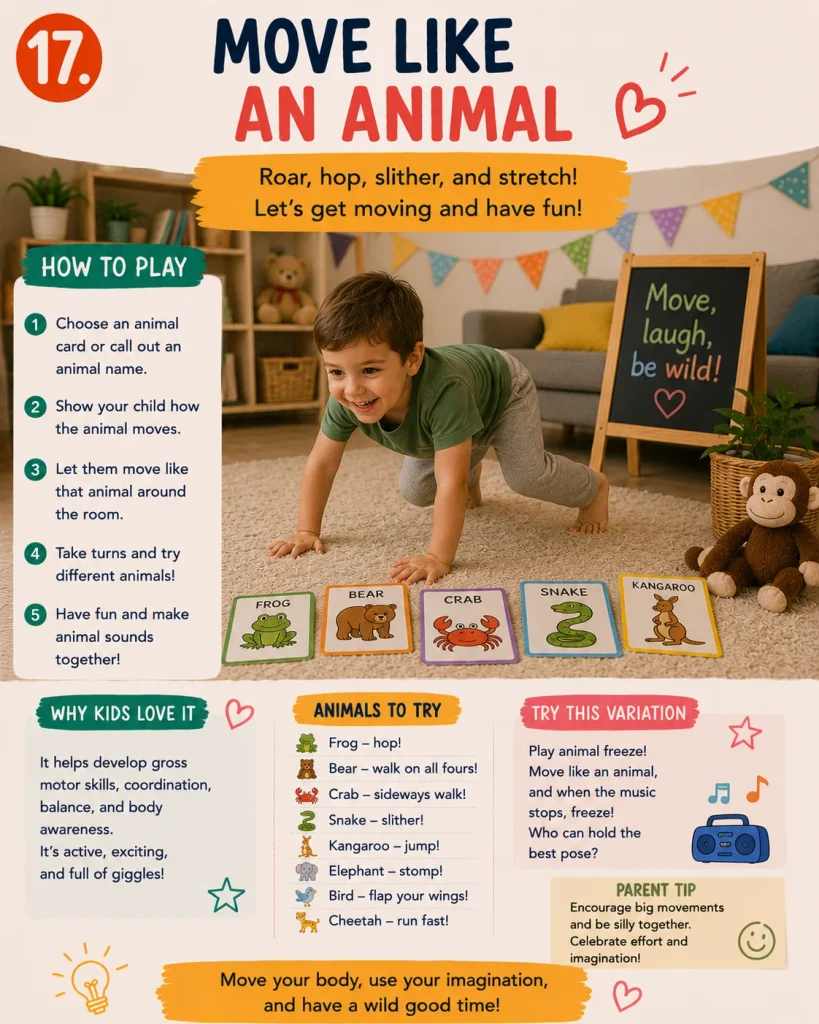
17. Move Like an Animal
Your child is running around the house, and you’re starting to consider closing every door in sight.
Turn the running into a game.
How to play
Say:
“Move like a bear.”
Then:
“Now a frog.”
Then:
“Dinosaur!”
No score. A BEAUTY FIND A niacinamide serum for a simple everyday skincare routine.The Ordinary Niacinamide 10% + Zinc 1%
No winner.
Just different ways to move.
Try this variation
Let your child give the commands.
You have to follow them.
Don’t be surprised if “Mom has to walk like a crab” becomes the most important rule in the house that day. As an Amazon Associate, Intelligent Mother earns from qualifying purchases. Thoughtful picks related to this article.Helpful products to explore


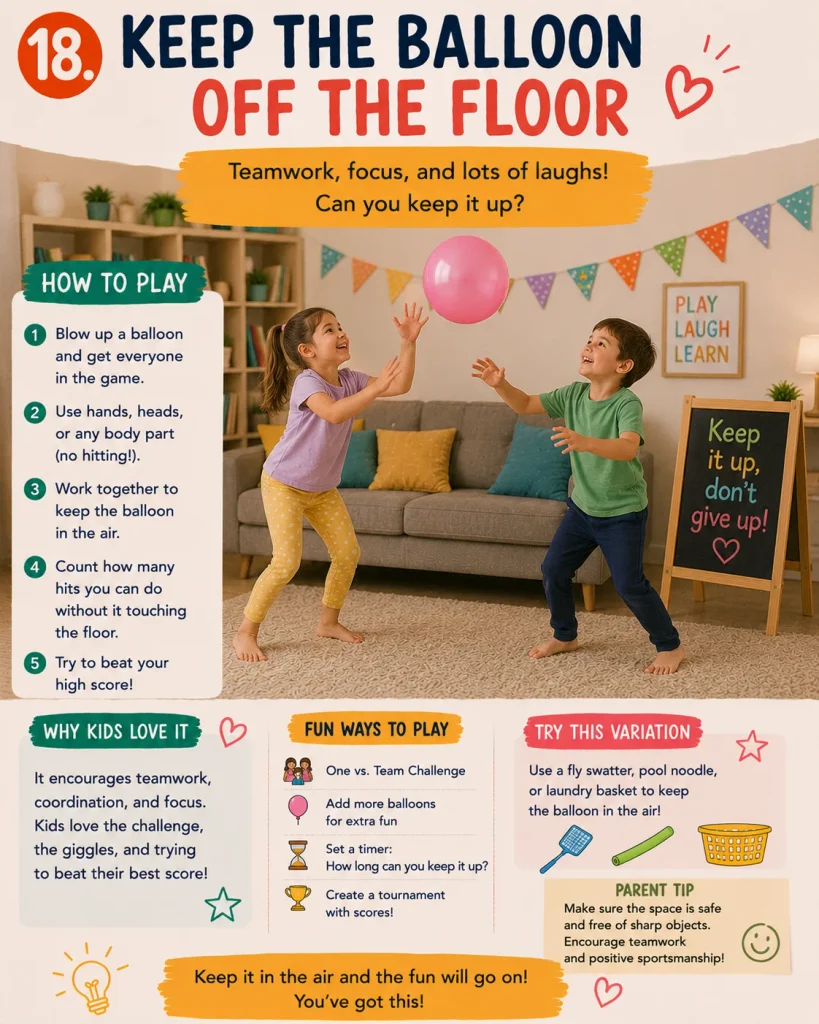
18. Keep the Balloon Off the Floor
You have one balloon left from a birthday party.
That’s enough.
How to play
Blow it up.
Set one rule:
“Don’t let it touch the floor.”
Your child has to keep tapping it back into the air. A BEAUTY FIND A hydrating essence for a moisture-focused skincare routine.COSRX Advanced Snail 96 Mucin Power Essence
If it falls?
Start again.
Try this variation
You can only use:
- your elbow;
- your head;
- one hand.
One balloon can keep a child moving for much longer than you might expect.
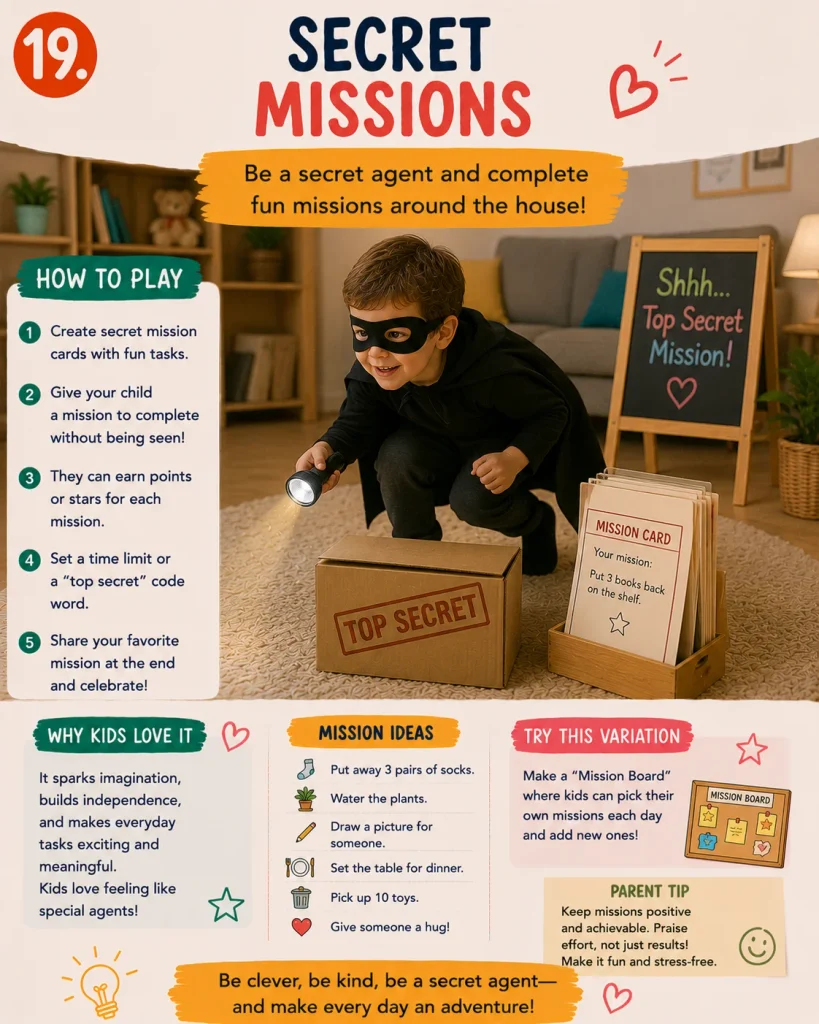
19. Secret Missions
Your child says, “I’m bored,” but you don’t have the energy to start a whole new game.
Give them a mission instead.
How to play
Say:
“Mission one: Find three red things.”
Done.
Then:
“Mission two: Find the softest thing in the house.” A BEAUTY FIND Washable mascara for everyday makeup looks.Maybelline Lash Sensational Sky High Washable Mascara
Then:
“Mission three: Bring me something you think I’ll like.”
That last one is usually the most interesting.
Try this variation
Let your child create missions for you.
A tiny list of missions can turn an ordinary afternoon into an adventure.
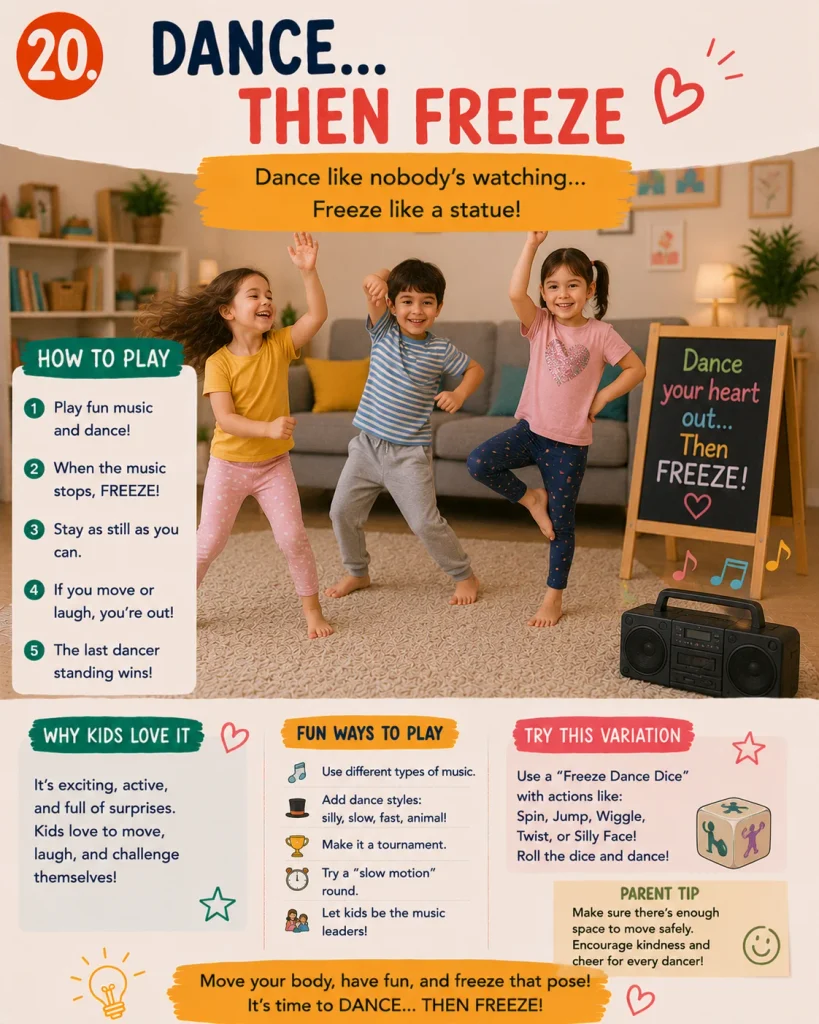
20. Dance… Then Freeze
You’re trying to clean the house, and your child keeps dancing in front of you.
Fine.
Add one rule.
How to play
Play a song.
While the music is playing:
Dance.
When it stops: A BEAUTY FIND Daily facial moisturizer with ceramide-3 and niacinamide.La Roche-Posay Toleriane Double Repair Face Moisturizer
Freeze.
Don’t move.
Try this variation
Each freeze has to be a character:
- robot;
- dinosaur;
- superhero;
- cat;
- statue.
The more seriously your child takes the pretending, the funnier it gets.
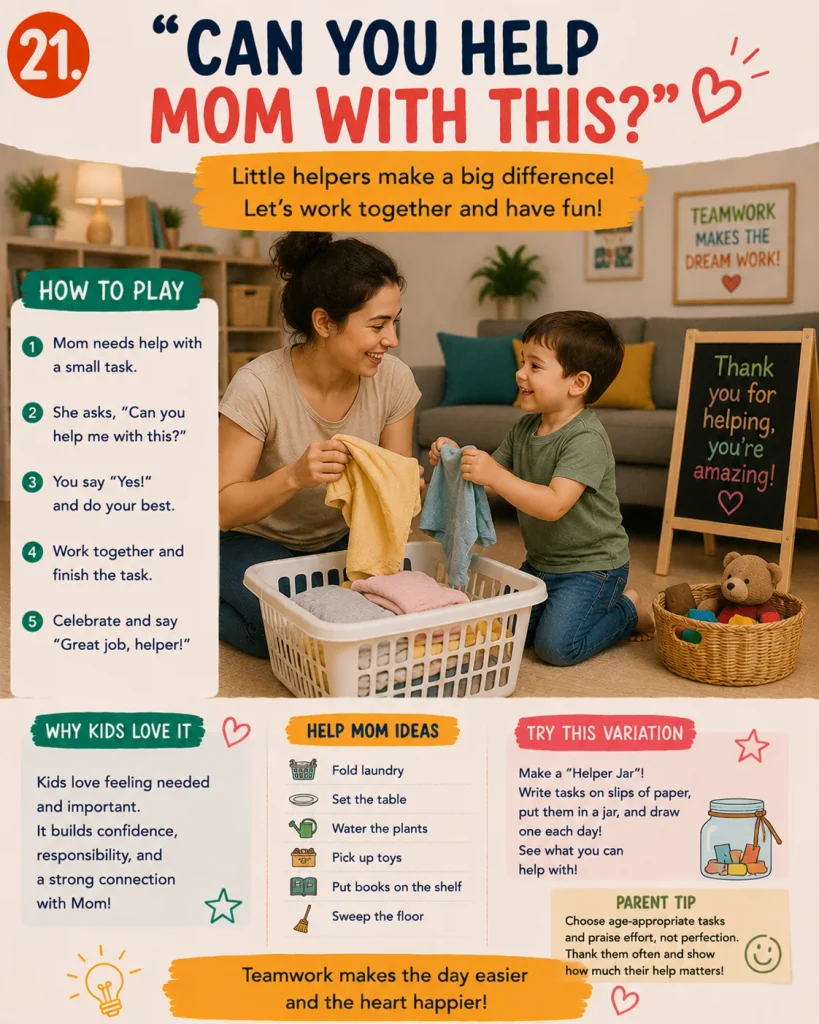
21. “Can You Help Mom With This?”
You’re making dinner, and your child keeps asking:
“What are you doing?”
This might be a good moment to give them a real job.
How to play
Let them:
- wash fruit;
- put napkins on the table;
- carry spoons;
- put clean socks in the basket.
Don’t give them five jobs.
Give them one. A BEAUTY FIND Moisturizing cream for face and body with ceramides and hyaluronic acid.CeraVe Moisturizing Cream
Then say:
“I need your help with this.”
Try this variation
Give them two choices:
“Do you want to put out the napkins or the spoons?”
A small choice can make an ordinary chore feel much more interesting.
Sometimes children don’t want a new game. They want to be part of what you’re doing.
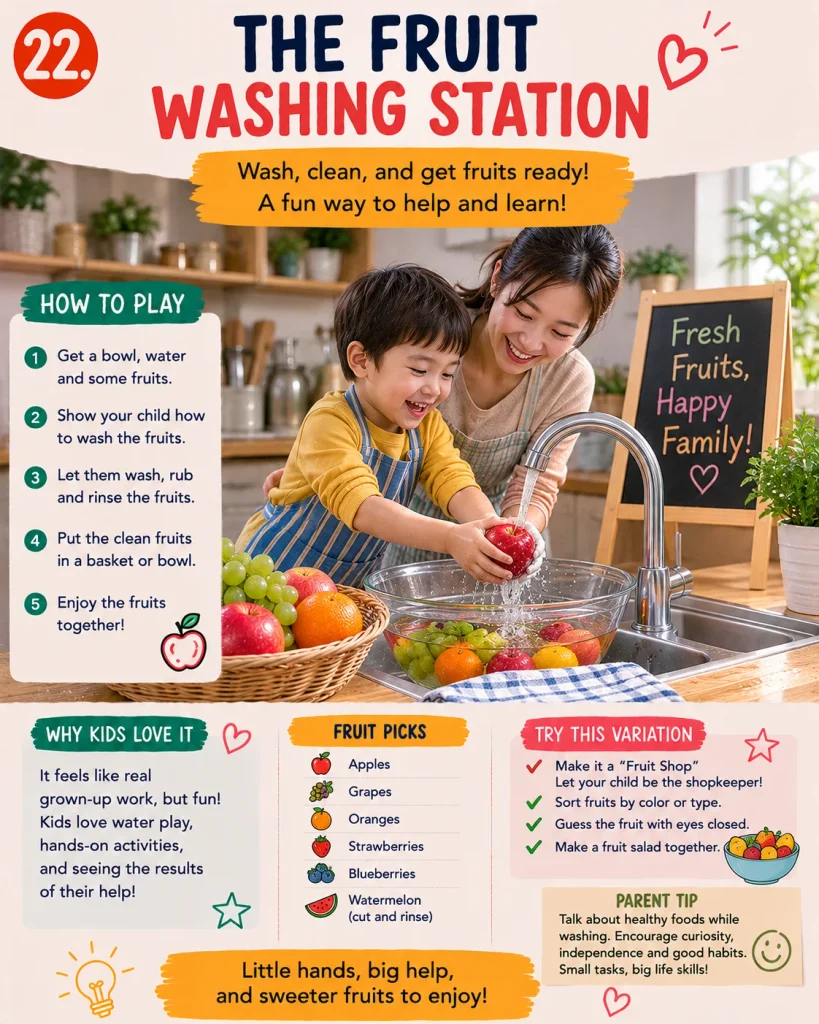
22. The Fruit Washing Station
You’re washing fruit, and your child is standing beside the sink with both hands ready to jump in.
Give them a job.
How to play
Set out a few pieces of fruit that are appropriate for your child.
Let them wash.
Then, if they want to, sort them:
“Which one is bigger?”
“Which one is red?” A BEAUTY FIND A niacinamide serum for a simple everyday skincare routine.The Ordinary Niacinamide 10% + Zinc 1%
Don’t turn it into a lesson unless your child is interested.
Just let them help.
Try this variation
Open a pretend fruit stand.
Your child is the shopkeeper.
You are the customer.
“I’d like two apples, please.”
A regular household job can become surprisingly fun when your child gets to be in charge.
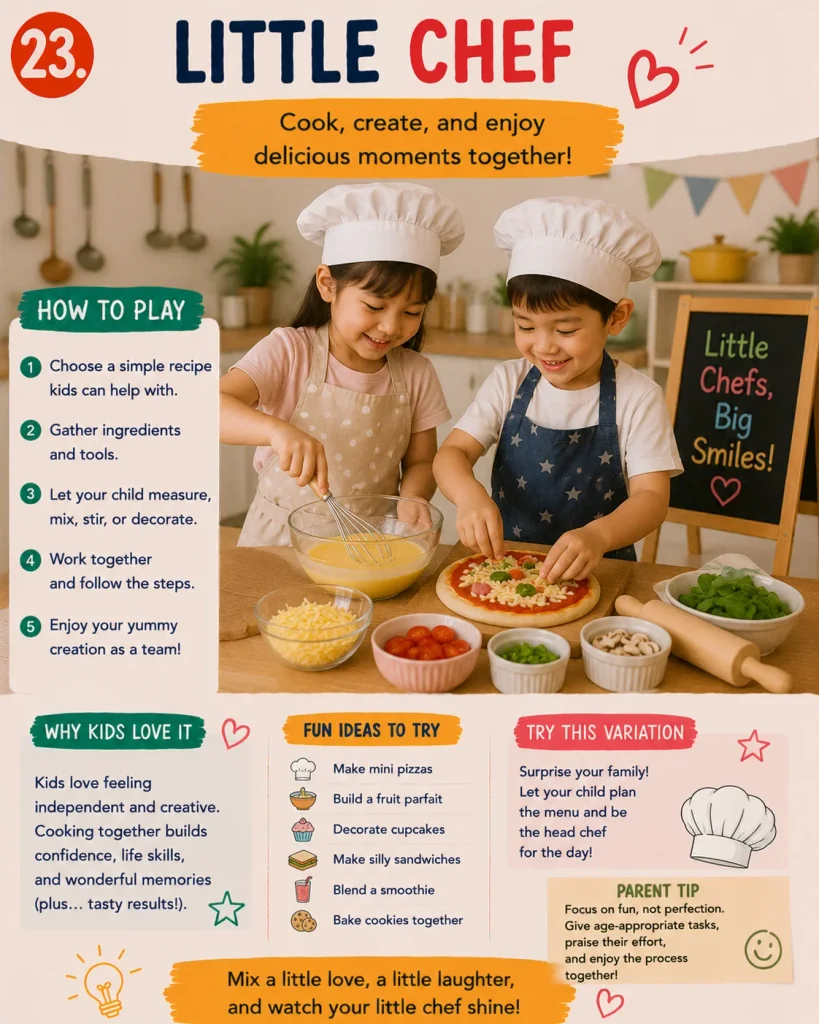
23. Little Chef
You’re cooking dinner, and your child keeps pulling on your shirt:
“Can I help?”
Instead of sending them away, give them one small job that’s appropriate for their age.
How to play
They might:
- pour an ingredient;
- stir;
- wash vegetables;
- arrange food;
- set napkins on the table.
A BEAUTY FIND
COSRX Advanced Snail 96 Mucin Power Essence
A hydrating essence for a moisture-focused skincare routine.
View on AmazonYou handle anything hot, sharp, or unsafe.
Try this variation
Let your child name the dish.
A sandwich might become:
“The Sunshine Sandwich.”
A plate of fruit could become:
“The Rainbow Garden.”
The meal doesn’t have to be perfect. A little mess can be part of the afternoon.
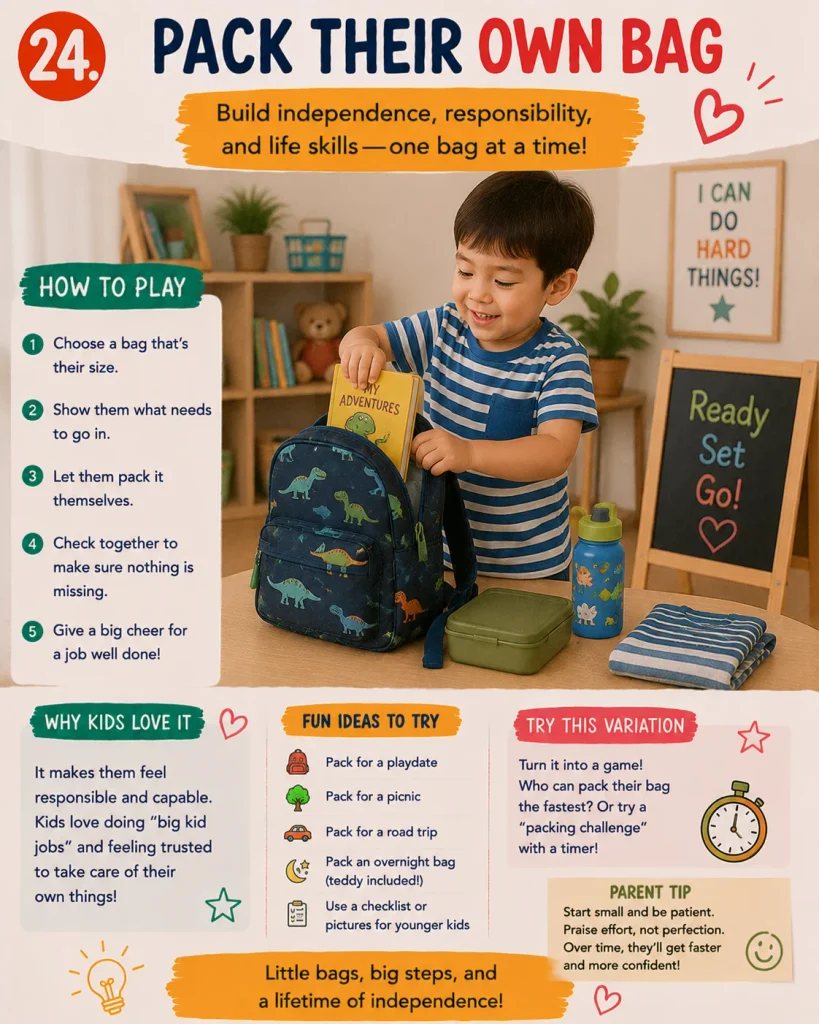
24. Pack Their Own Bag
You’re trying to get out the door, and you keep saying:
“Bring your water bottle.”
“Get your jacket.”
“Bring a book.”
Today, let your child figure it out.
How to play
Say:
“We’re going out. What do you think we need?”
Let them choose.
Then ask:
“Did we forget anything?” A BEAUTY FIND Washable mascara for everyday makeup looks.Maybelline Lash Sensational Sky High Washable Mascara
Try this variation
Pretend you’re packing for an adventure.
“If we were going to the moon, what would you bring?”
The water bottle still makes the list.
But a dinosaur might come along too.Your child won’t get everything right at first. That’s exactly why it’s worth practicing.
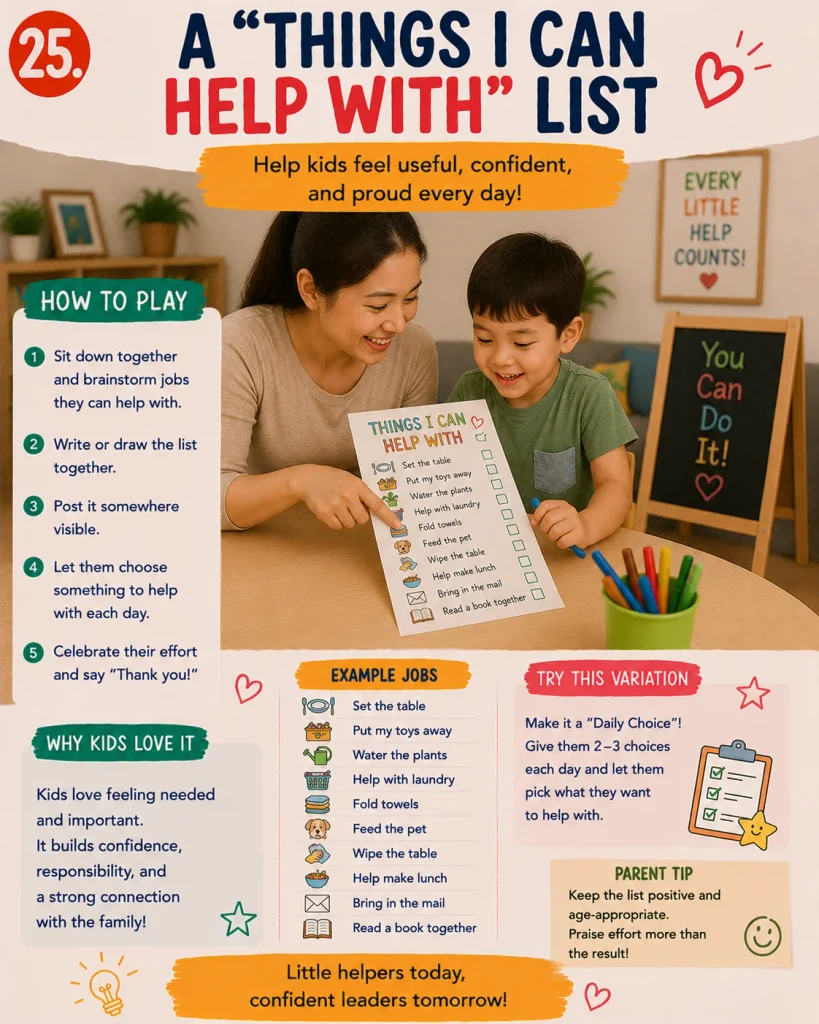
25. A “Things I Can Help With” List
Some afternoons, it feels like you’re doing everything.
Picking up toys.
Folding laundry.
Clearing the table.
While your child watches.
Try making a small list.
Not a chore chart.
Not a scoreboard.
Just:
Things I Can Help With
- Put toys away.
- Set the napkins.
- Water the plants.
- Put books away.
- Put clothes in the hamper.
- Help clear the table.
Let your child choose one.
No reward required.
No stickers.
Just:
“Thank you. That really helped me.”
Try this variation
Add one new job each week.
Let your child choose which one they want to learn.
There’s a big difference between “You have to do this” and “You can help.”
You Don’t Have to Fill Every Empty Minute
This might be the most important part of the whole list.
Your child will still get bored.
Even if you have 25 activities.
Even if you have 250.
And that’s okay.
You don’t have to become your child’s full-time entertainment director.
When your child says:
“I’m bored.”
You don’t have to hand over a tablet.
But you don’t necessarily have to rush off and build a sensory bin either.
You can say:
“I hear you. Let’s see what you can come up with.”
Then let a little space exist.
Maybe nothing happens at first.
Your child lies on the floor.
Walks around the room.
Looks out the window.
And then, a few minutes later, a pillow becomes a boat.
Two chairs become a tunnel.
An old box becomes a rocket.
And suddenly, the game has started.
We don’t always need to fill childhood with activities. Sometimes we just need to leave enough room for children to fill it themselves. A BEAUTY FIND Daily facial moisturizer with ceramide-3 and niacinamide.La Roche-Posay Toleriane Double Repair Face Moisturizer
How to Choose an Activity Based on Your Child’s Mood
You don’t need to remember all 25 ideas.
Look at your child first.
| If your child is… | Try… |
| Full of energy | A pillow obstacle course |
| Saying “I’m bored” | A treasure hunt |
| Wanting to touch and explore | A sensory box or water transfer |
| Wanting to make something | A box city or storybook |
| Wanting to play with you | The stuffed animal café |
| Ready to play independently | The mystery box or secret fort |
| Wanting to feel grown-up | A real household job |
One Last Thought for the Days You’re Tired
You don’t need a perfect house.
You don’t need a playroom overflowing with toys.
You don’t need the latest sensory kit.
And you definitely don’t need to turn every afternoon into a learning activity.
Maybe today it’s just a cardboard box.
A blanket.
A balloon.
Or your child helping you put spoons on the table.
The little years aren’t made up of perfect activities.
They’re made up of ordinary afternoons.
A slightly messy room.
A barefoot child running through the house.
A cardboard box becoming a rocket. As an Amazon Associate, Intelligent Mother earns from qualifying purchases. Thoughtful picks related to this article.Helpful products to explore

And a parent in the kitchen hearing:
“Mom, look!”
Maybe that’s the part worth remembering.
A Quick Safety Note
For activities involving water, small objects, food, ice, or anything that could pose a choking or other safety risk, choose materials that are appropriate for your child’s age and supervise closely when needed. If your child still puts small objects in their mouth, skip those materials and choose a safer alternative.
As an Amazon Associate, Intelligent Mother earns from qualifying purchases.
Mom's Everyday Favorites
Thoughtful finds for busy days, family life, and a little time for yourself.