20 Things You Can Teach Your 2-Year-Old Through Everyday Life
Your two-year-old is probably learning something new almost every day.
A new word.
A new way to open a box.
A new trick for putting on their shoes.
A new way to make you laugh.
And sometimes, it doesn’t look like learning at all.
You’re making breakfast.
Your child is standing beside you, asking questions.
You’re putting laundry away.
They want to carry the socks.
You’re walking up the stairs.
They count the steps, even though they lose track somewhere around seven.
You read the same book for the fourth time.
They already know what happens on the next page.
These ordinary moments are full of opportunities to learn.
You don’t need to turn your home into a classroom.
You don’t need flashcards for everything.
And you definitely don’t need to worry about whether your two-year-old is “ahead” or “behind.”
Children develop at different speeds.
The goal isn’t to check every box.
It’s to give them opportunities to try, talk, explore, make mistakes, and try again.
Here are 20 simple things you can start teaching your two-year-old through everyday life.
20 Things You Can Teach Your 2-Year-Old Through Everyday Life
As an Amazon Associate, Intelligent Mother earns from qualifying purchases.
Mom's Everyday Favorites
Thoughtful finds for busy days, family life, and a little time for yourself.
1. Give Them More Words
Your toddler may understand far more than they can say.
That doesn’t mean you need to sit down and teach vocabulary.
Just talk about what’s already happening.
You’re cutting an apple.
Say:
“I’m cutting the apple.”
Your child says:
“Apple.”
You can add:
“Yes. A red apple.”
That’s it.
You’re giving them another word without turning the moment into a lesson. A BEAUTY FIND Moisturizing cream for face and body with ceramides and hyaluronic acid.
CeraVe Moisturizing Cream
Talk about what you see.
What you’re doing.
Where you’re going.
What your child is holding.
You can introduce words for:
- actions;
- colors;
- animals;
- food;
- body parts;
- clothing;
- vehicles;
- sizes;
- feelings;
- weather.
If your child says, “More water,” you might respond:
“You want more water?”
You’re not testing them. You’re simply giving their little sentence somewhere to grow.
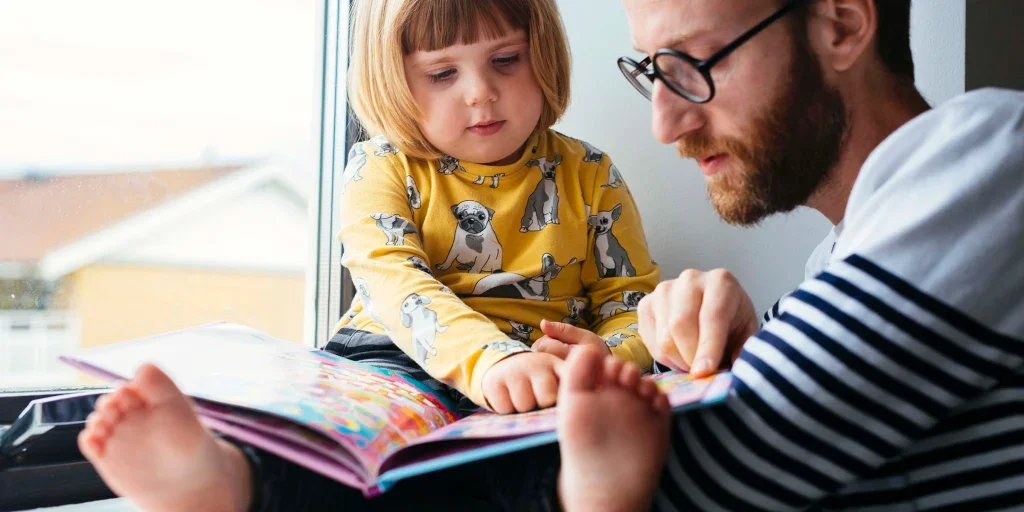
2. Teach Them How to Enjoy a Book
At two, a book isn’t just something you read to your child.
It can become a little conversation between the two of you.
Let your child turn the pages.
Point at pictures.
Ask what they see.
“Where’s the dog?”
“What color is the car?”
“What do you think happens next?”
Sometimes your child will answer. A BEAUTY FIND A niacinamide serum for a simple everyday skincare routine.
The Ordinary Niacinamide 10% + Zinc 1%
Sometimes they’ll point.
Sometimes they’ll completely ignore your question and turn to the page with the duck.
That’s fine.
Let them enjoy the book.
And don’t worry if they want to hear the same story again. For a two-year-old, knowing what happens next can be part of the fun.
3. Let Them Try Things on Their Own
This one can be surprisingly difficult.
Because watching a two-year-old put on their shoes can test the patience of almost anyone.
But independence starts with trying.
Let your child:
- choose between two shirts;
- put on their socks;
- try using a spoon;
- carry their cup;
- put toys away;
- put dirty clothes in the basket;
- wash their hands;
- help brush their hair.

A BEAUTY FIND
COSRX Advanced Snail 96 Mucin Power Essence
A hydrating essence for a moisture-focused skincare routine.
View on AmazonThey probably won’t do it perfectly.
The sock may end up on the wrong foot.
The shirt may be backwards.
The toys may somehow end up in three different places.
That’s okay.
You can help when they need you.
But give them a chance to try first.
Sometimes the best way to teach a toddler “I can do it” is to step back for a moment.
4. Let Them Pretend
Your toddler watches you all day.
You cook.
You clean.
You talk on the phone.
You take care of other people.
They notice more than you think.
And then they copy you.
A spoon becomes a microphone.
A stuffed animal becomes a baby.
A cardboard box becomes a car.
A toy kitchen becomes a restaurant. A BEAUTY FIND Washable mascara for everyday makeup looks.
Maybelline Lash Sensational Sky High Washable Mascara
Let them pretend.
You don’t need to explain how the game should work.
Ask:
“What’s happening?”
Then follow their story.
Maybe Teddy is sick.
Maybe Teddy needs a doctor.
Maybe Teddy has to go to the grocery store first.
The more room you leave for imagination, the more places the game can go.
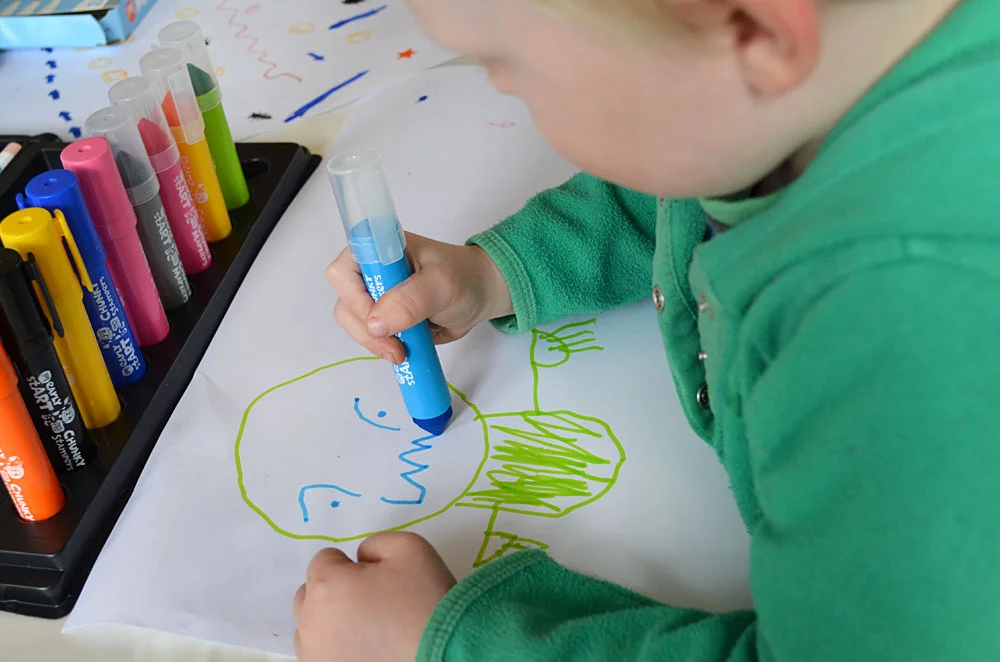
5. Give Them Paper and Let Them Make Marks
At two, a piece of paper can be surprisingly exciting.
Give your child some crayons and let them draw.
Don’t worry about making something recognizable.
A line is fine.
A circle that looks more like a potato is fine too.
Ask:
“Tell me about your picture.”
Instead of:
“What is that?” A BEAUTY FIND Daily facial moisturizer with ceramide-3 and niacinamide.
La Roche-Posay Toleriane Double Repair Face Moisturizer
The first question leaves room for imagination.
Your child might tell you it’s a house.
Then five seconds later, it’s a rocket.
Then it’s Grandma’s car.
There are no wrong answers here. As an Amazon Associate, Intelligent Mother earns from qualifying purchases. Thoughtful picks related to this article.Helpful products to explore


Drawing isn’t about producing a perfect picture.
It’s about giving those little hands a chance to experiment.
6. Count the Things You Already Have
You don’t need number flashcards.
Numbers are everywhere.
Count the stairs as you walk up.
Count the apples in the bowl.
Count the socks when you’re doing laundry.
Count the toy cars on the floor.
“One, two, three…” A BEAUTY FIND Moisturizing cream for face and body with ceramides and hyaluronic acid.CeraVe Moisturizing Cream
Your child may skip numbers.
They may say the same number twice.
They may suddenly decide that seven comes after three.
That’s part of learning.
The important thing is that they’re beginning to notice that numbers can describe how many things there are.
7. Notice Letters Without Turning It Into School
Your toddler doesn’t need to memorize the entire alphabet tomorrow.
Start with letters that actually mean something to them.
Their name is a great place to begin.
Point to the first letter and say:
“That’s the M in Mia.” A BEAUTY FIND A niacinamide serum for a simple everyday skincare routine.The Ordinary Niacinamide 10% + Zinc 1%
Then look for that letter somewhere else.
On a book.
A sign.
A cereal box.
A package.
Suddenly, letters aren’t just shapes on a worksheet.
They’re things your child can find in the real world.
And that makes them much more interesting.
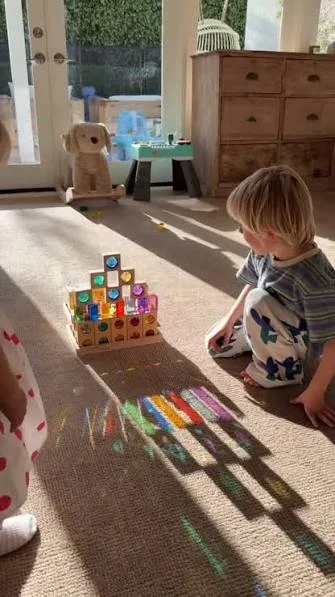
8. Build Something That Doesn’t Have to Stay Standing
Give your child blocks, cups, boxes, or whatever safe building materials you already have.
Then say:
“What should we build?”
Maybe it’s a tower.
Maybe it’s a house.
Maybe it’s a bridge.
Maybe it’s something that makes absolutely no sense. A BEAUTY FIND A hydrating essence for a moisture-focused skincare routine.COSRX Advanced Snail 96 Mucin Power Essence
Let it.
Building gives children a chance to experiment with balance, space, and cause and effect.
And eventually…
The tower falls.
Your child may laugh.
Then they’ll build another one.
Sometimes knocking it down is half the fun.
9. Solve a Little Puzzle
Puzzles are more than a quiet way to fill ten minutes.
Your child has to look.
Turn a piece.
Try it.
Notice that it doesn’t fit.
Try again.
A simple puzzle can give them plenty of opportunities to practice problem-solving and hand-eye coordination.
Start with puzzles that match their current ability. A BEAUTY FIND Washable mascara for everyday makeup looks.Maybelline Lash Sensational Sky High Washable Mascara
If it’s too easy, they may lose interest.
If it’s too difficult, they may throw the pieces across the room.
There is a sweet spot somewhere in between.
And yes, sometimes you may have to search under the sofa for the missing piece.
10. Give Their Body a Job
Two-year-olds were not designed to sit still all day.
Let them move.
Jump over a pillow.
Kick a ball.
Walk like a bear.
Climb safely at the playground.
Run across the yard.
Dance in the kitchen. A BEAUTY FIND As an Amazon Associate, Intelligent Mother earns from qualifying purchases. Thoughtful finds for busy days, family life, and a little time for yourself. Daily facial moisturizer with ceramide-3 and niacinamide.La Roche-Posay Toleriane Double Repair Face Moisturizer
Mom's Everyday Favorites


Carry something light.
Throw a soft ball.
Movement isn’t something you have to squeeze into a “learning activity.”
It’s simply part of being two.
Give them safe opportunities to use their whole body.
11. Let Them Make Some Noise
Music doesn’t have to mean a perfectly organized activity.
Put on a song.
Dance.
Clap.
Stamp your feet.
Sing badly together.
Make a drum from an empty container.
Tap two wooden spoons together. A BEAUTY FIND Moisturizing cream for face and body with ceramides and hyaluronic acid.CeraVe Moisturizing Cream
Let your child choose the next song.
Then let them invent their own rhythm.
You might hear:
Tap. Tap. Boom. Tap.
It may not sound like much to you.
To your toddler, it could be a concert.
12. Start Introducing the Potty Without Turning It Into a Battle
Around this age, some children begin showing interest in the potty.
Others want absolutely nothing to do with it.
Both can be normal.
You can introduce the idea gently.
Let your child see the potty.
Explain what it’s for.
Talk about what happens when people need to use the bathroom. A BEAUTY FIND A niacinamide serum for a simple everyday skincare routine.The Ordinary Niacinamide 10% + Zinc 1%
If they’re interested, let them sit on it.
If they’re not ready, don’t turn it into a daily battle.
The goal at first isn’t perfection.
It’s familiarity.
And when your child is ready, you’ll have already made the potty a normal part of life.
13. Give Them a Sense of “What Happens Next”
A two-year-old doesn’t understand clock time the way an adult does.
But they can begin to understand routines.
You can say:
“Five more minutes, then we’ll clean up.”
Or:
“After lunch, we’ll read a book.” A BEAUTY FIND A hydrating essence for a moisture-focused skincare routine.COSRX Advanced Snail 96 Mucin Power Essence
Or:
“First pajamas, then story time.”
The exact amount of time may not mean much yet.
The sequence does.
First this.
Then that. Eventually, those little patterns can help your child understand what comes next.
14. Teach Simple Safety Rules
Two-year-olds are curious.
They are also wonderfully unaware of many dangers.
So keep safety rules simple.
“Hold my hand in the parking lot.”
“Stop at the road.”
“Stay close to me.”
“We don’t touch the hot stove.”
“We walk inside the store.” A BEAUTY FIND Washable mascara for everyday makeup looks.Maybelline Lash Sensational Sky High Washable Mascara
You may need to say the same thing many, many times.
That’s normal.
A two-year-old isn’t being difficult because they forgot the rule.
Their brain is still learning how to stop, remember, and control an impulse.
Simple repetition matters.
15. Teach the Little Words That Make Life Easier
Please.
Thank you.
Excuse me.
Help.
Sorry. As an Amazon Associate, Intelligent Mother earns from qualifying purchases. Thoughtful picks related to this article.Helpful products to explore


Waiting your turn.
These things take time.
A two-year-old won’t suddenly become perfectly polite because you explained manners once.
Instead, model them.
If you bump into your child, say: A BEAUTY FIND Daily facial moisturizer with ceramide-3 and niacinamide.La Roche-Posay Toleriane Double Repair Face Moisturizer
“Oops. I’m sorry.”
When they hand you something:
“Thank you.”
When they want something:
“You can say, ‘Please.’”
You’re showing them what these words sound like in real life.
And eventually, they’ll start using them too.
Usually when you least expect it.
16. Teach Them to Take Care of Their Body
Toddlers can begin participating in simple hygiene routines.
Wash hands.
Brush teeth.
Wipe their face.
Blow their nose with help.
Help put dirty clothes in the hamper.
Put shoes away. A BEAUTY FIND Moisturizing cream for face and body with ceramides and hyaluronic acid.CeraVe Moisturizing Cream
Learn that we wash our hands before eating.
These aren’t glamorous lessons.
But they’re useful ones.
And children often enjoy them more when they get to participate instead of simply being told what to do.
17. Teach Them That “No” Doesn’t Always Mean “Never”
This may be one of the hardest lessons for everyone involved.
Your child wants the cookie.
You say no.
They want the toy.
You say no.
They want to climb onto something unsafe.
You say no again.
A toddler doesn’t have to like the answer.
But they can slowly learn that disappointment is survivable. A BEAUTY FIND A niacinamide serum for a simple everyday skincare routine.The Ordinary Niacinamide 10% + Zinc 1%
You can acknowledge the feeling:
“I know you really wanted it.”
Then hold the boundary.
“But we’re not having a cookie right now.”
You don’t have to win the argument.
There may not even be an argument worth having.
Sometimes your job is simply to stay calm while your child learns that a “no” can be frustrating without changing the answer.
18. Give Them a Small Routine They Can Own
Toddlers often enjoy knowing what comes next.
Create tiny routines they can participate in.
Morning might look like:
Wake up.
Use the bathroom.
Wash hands.
Get dressed.
Eat breakfast.
Bedtime might be:
Pajamas.
Brush teeth.
Choose a book.
Story. A BEAUTY FIND A hydrating essence for a moisture-focused skincare routine.COSRX Advanced Snail 96 Mucin Power Essence
Lights out.
You don’t need a complicated chart.
You can simply repeat the same sequence often enough that your child begins to recognize it.
One day, you may hear:
“Pajamas!”
before you even mention bedtime.
That’s a little sign that the routine is becoming theirs.
19. Teach Them to Finish One Small Thing
Two-year-olds have short attention spans.
That’s normal.
You don’t need to expect them to sit through a 30-minute activity.
But you can gently encourage them to finish something small.
Complete the puzzle.
Put the crayons back.
Finish the page. A BEAUTY FIND Washable mascara for everyday makeup looks.Maybelline Lash Sensational Sky High Washable Mascara
Put the blocks into the basket.
Clean up one activity before starting another.
Keep the task small enough that success is realistic.
The goal isn’t to make your toddler sit still.
It’s to help them experience:
“I started something, and I finished it.”
20. Let Them Be Your Helper
This might be one of the easiest lessons of all.
Because toddlers love doing what grown-ups are doing.
You’re cooking?
Give them a safe, age-appropriate job.
You’re putting laundry away?
Let them carry the socks.
You’re setting the table?
Let them put the napkins down.
You’re feeding the dog?
Let them help with the bowl if it’s safe.
You’re cleaning?
Give them a small cloth.
Then say:
“Thank you. You really helped me.”
They may not do the job perfectly.
That’s not really the point.
They’re learning something bigger:
“I belong here. I can contribute.”
And sometimes that’s more valuable than another worksheet.
Your Two-Year-Old Doesn’t Need to Know Everything Yet
There is a strange pressure that comes with parenting today.
You see another child who knows their colors.
Another who can count to twenty.
Another who recognizes every letter.
And suddenly you wonder:
“Should my child be doing that too?”
Take a breath.
This isn’t a race.
The list above isn’t a test your two-year-old needs to pass.
Some children will talk early.
Some will be fascinated by puzzles.
Some will want to climb everything.
Some will spend twenty minutes putting the same three blocks together.
Children develop at different rates. A BEAUTY FIND Daily facial moisturizer with ceramide-3 and niacinamide.La Roche-Posay Toleriane Double Repair Face Moisturizer
What matters is giving your child opportunities to practice, explore, communicate, move, help, and try.
You don’t need to teach everything at once.
In fact, you probably shouldn’t.
Your child is already learning from the ordinary things happening around them.
The socks they’re trying to put on.
The apple you’re cutting.
The stairs you’re walking up.
The book you’re reading again.
The blocks they’re knocking over.
The spoon they’re insisting on holding themselves.
The little job you trusted them to do.
These moments may look ordinary to you.
To a two-year-old, they’re the whole world.
One Last Thing
You don’t need a classroom at home.
You don’t need expensive educational toys.
You don’t need to turn every interaction into a lesson.
Sometimes the best learning happens when you simply slow down enough to let your child join you. As an Amazon Associate, Intelligent Mother earns from qualifying purchases. Thoughtful picks related to this article.Helpful products to explore

Let them stir.
Let them carry.
Let them ask.
Let them try.
Let them get it wrong.
Then let them try again.
Because one day, that tiny toddler who insisted on putting their own shoes on will walk out the door without asking for your help.
And you’ll realize that all those ordinary little moments were teaching them something after all.
As an Amazon Associate, Intelligent Mother earns from qualifying purchases.
Mom's Everyday Favorites
Thoughtful finds for busy days, family life, and a little time for yourself.