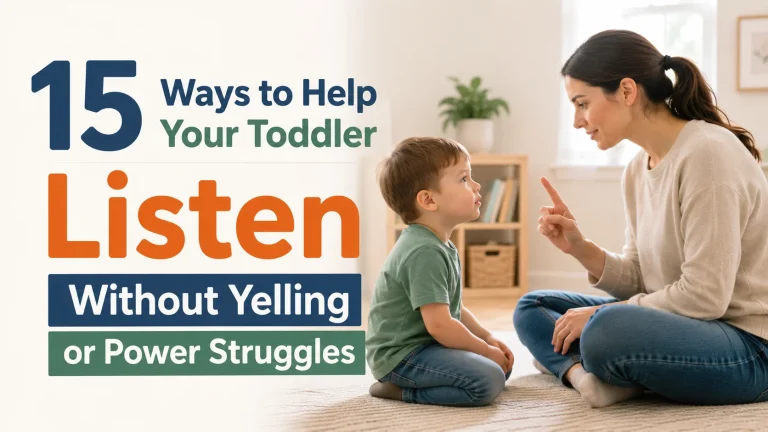

8 Easy Ways to Become a More Playful Mom
Simple ways to bring more laughter, imagination, and joy into everyday moments with your child.
There’s something funny about motherhood. Before I had children, I thought of myself as a fairly playful person. I could laugh at ridiculous things, sing along while cooking, and occasionally have entire conversations with myself in the grocery store.
Then I became a mom.
Suddenly, I was the woman constantly reminding someone not to run, not to spill water on the floor, not to play with their food, and definitely not to test whether a spoon could fly.
I’m not entirely sure when I became the operations manager of a company called Family. Apparently, I got promoted without being asked.
One afternoon, my child wanted me to play. I looked at the laundry waiting to be folded, the sink full of dishes, and my phone reminding me to answer an email. I told myself I’d finish a few things first and then sit down.
The trouble with “a few things” is that they seem to reproduce when nobody is watching. One task gets done, three more appear. By the time I look up, it’s almost bedtime.
I love my child. I want to spend time together. But if I’m being honest, I don’t always feel like playing.
Maybe you’ve felt that way, too. We know playing with our children matters, but between work, dinner, appointments, housework, and the endless list of things that need doing, getting down on the floor and pretending to be a dinosaur can feel like one more responsibility rather than a moment of fun.
So here’s a question worth pausing over:
Have we forgotten how to play, or are we simply too busy to let ourselves do it?
As an Amazon Associate, Intelligent Mother earns from qualifying purchases.
Mom's Everyday Favorites
Thoughtful finds for busy days, family life, and a little time for yourself.
Why Is It So Hard to Be a Playful Mom?
Children seem to have a magical ability to turn a cardboard box into a spaceship, a bath towel into a superhero cape, and an ordinary trip to the grocery store into an adventure.
Adults are different.
We look at the cardboard box and think about taking it to the recycling bin. We see the towel on the floor and think about another load of laundry.
Maybe the problem isn’t that we’ve lost our imagination. Maybe we’re just looking at the world through the eyes of people who have too much to do.
There are a few reasons playfulness can become harder after we become parents:
- We always feel there’s something more important to do. Play doesn’t seem to produce anything tangible. Dinner won’t magically cook itself because Mom played hide-and-seek.
- We’re exhausted. After a long day, sometimes the only game we want to play is lying perfectly still without anyone calling our name.
- We think we need to know how to play. We imagine we need exciting games, creative ideas, and endless energy. That expectation can make it harder to begin.
- We’re used to being in control. Adults like rules, goals, and sensible outcomes. Children sometimes just want to throw every pillow in the house onto the floor.

A BEAUTY FIND
CeraVe Moisturizing Cream
Moisturizing cream for face and body with ceramides and hyaluronic acid.
View on AmazonResearch has begun to explore the relationship between parental playfulness and children’s own playfulness and emotional experiences. These findings suggest that the way parents engage with their children during play deserves attention. They don’t mean that being playful will make every emotional or behavioral challenge disappear.
Perhaps the more important thing to remember is this: play isn’t a performance skill. It’s a way of being present with your child.
8 Easy Ways to Become a More Playful Mom
The good news is that you don’t need to buy new toys, sign up for acting lessons, or learn to tell jokes like a professional comedian.
You can begin right where you are, in the middle of ordinary family life.
1. Stop Trying to Be the Entertainment Director
One mistake I often make is thinking that I’m responsible for coming up with something fun for my child.
I’ll search online for ideas, gather colored paper, markers, scissors, and glue, and sometimes even put together an ambitious little plan.
Then my child takes the cardboard box that held all the supplies and puts it on their head.
And that’s it. My carefully prepared activity is over before it even begins.
Perhaps my child had the right idea all along.
Instead of always directing the play, try letting your child take the lead. Sit nearby, notice what they’re doing, and join in when they invite you.
If your child is building a little house with wooden blocks, resist the urge to show them how to make it look better. Find a place for yourself in their imaginary world. You might become a delivery person, a neighbor, or a visitor looking for somewhere to stay.
You don’t have to invent a world for your child. You can simply step into the one they’ve already created.
The CDC recommends starting with at least five minutes of child-led play each day and gradually building toward longer periods. During this time, parents can pay attention, imitate, and describe what their children are doing rather than constantly asking questions or giving directions.
It’s a practical starting point for parents who don’t have a lot of time.
2. Turn Ordinary Moments Into Opportunities for Play
Sometimes we assume that playing with our children requires us to stop everything, set aside a special block of time, and prepare an activity worth remembering.
But playfulness doesn’t always need a plan.
Think about an ordinary afternoon spent tidying the living room. You’re gathering toys scattered across the floor while your child is still absorbed in a little world of their own. Instead of immediately asking them to stop and help, you might pause, notice what they’re imagining, and find a way to join their story.
You may discover that the toys haven’t been put away because your child isn’t deliberately ignoring you. In their mind, those toys are still part of an adventure that hasn’t reached its ending. As an Amazon Associate, Intelligent Mother earns from qualifying purchases. Thoughtful picks related to this article.Helpful products to explore

Of course, the toys still need to be picked up eventually. But it doesn’t have to become a showdown between a mother who wants a clean room and a child who isn’t ready to leave an imaginary world.
I think we sometimes become so focused on getting things done that we forget to notice the person standing right beside us. A little humor, a little curiosity, and a willingness to see things from a child’s perspective can change the mood of an entire afternoon.
Not every household task needs to become a game. And you don’t have to pretend to be cheerful when you’re genuinely exhausted. But whenever you can, let a few ordinary moments become a little lighter.
3. Let Yourself Be Ridiculous
There’s something children love that many adults spend years trying to avoid: looking completely silly.
Try using a robot voice when reminding your child to brush their teeth. Pretend a shoe is offended because nobody has taken it outside. Or make up a song about picking up toys, even if the melody is so terrible that nobody would willingly listen to it twice.
I used to think I had no acting talent. After a few attempts, I discovered that I could play a chicken searching for a missing sock with astonishing commitment.
Hollywood may have missed its chance.
Humor can change the atmosphere of a situation that might otherwise become tense. In How to Talk So Kids Will Listen & Listen So Kids Will Talk, Adele Faber and Elaine Mazlish also explore the use of humor and playful communication when interacting with children.
Of course, playfulness should suit the child and the situation. Humor should never become a way to mock, embarrass, or dismiss a child’s genuine feelings.
4. Follow Your Child’s Imagination, Even When It Makes No Sense
Adults like stories that make sense.
Children don’t always share that preference.
A chair can become an elephant. A spoon can become an airplane. And sometimes, Mom has to play a banana who’s upset because she wasn’t invited to a birthday party.
Resist the urge to correct the story.
If your child imagines that the chair is an elephant, join the adventure. If the living room becomes an ocean, you can be a shark. There’s no need to make everything logical. Your child isn’t asking you to explain why a shark is living in the living room.
When children engage in pretend play, they have opportunities to experiment with ideas, language, and different ways of seeing the world. Open-ended play, where there isn’t just one right answer, allows children to create their own ideas and explore problem-solving.
In How Children Learn, John Holt emphasizes children’s natural curiosity and their ability to learn through observation, experimentation, and active engagement with the world around them. As an Amazon Associate, Intelligent Mother earns from qualifying purchases. Thoughtful finds for busy days, family life, and a little time for yourself.Mom's Everyday Favorites


Sometimes, the best way to play with your child isn’t to teach them how to play. It’s to stop being the person who knows everything for a little while. A BEAUTY FIND A niacinamide serum for a simple everyday skincare routine.
The Ordinary Niacinamide 10% + Zinc 1%
5. Create a Daily Five-Minute Play Ritual
If you feel you don’t have enough time, don’t start with the goal of playing for an hour every day.
Start with five minutes.
You might choose a small moment that naturally belongs to the two of you, perhaps after you’ve picked your child up or just before bedtime. Let it become a little pocket of the day when you put aside your phone, unfinished tasks, and the temptation to check what needs doing next.
You don’t need an elaborate activity. What matters is giving your child your attention and allowing them to lead.
The CDC suggests that parents begin with at least five minutes of child-led play each day. This short period isn’t a magic formula, but it gives families a concrete and manageable way to make connection part of their routine.
The value isn’t in the exact number of minutes. It’s in helping your child know that there’s a moment in the day when Mom is truly there with them.
6. Use Playfulness When Things Get Difficult
Play isn’t only for moments when everything is going well.
Sometimes, it can make a difficult situation feel a little less tense.
When your child resists getting ready or struggles to move on from an activity, a playful approach may help ease the transition. A silly voice or a small imaginative twist can sometimes invite cooperation more gently than another round of reminders.
In Good Inside, Dr. Becky Kennedy discusses using playfulness to encourage cooperation, including role reversals and moments when a parent pretends not to notice something a child is doing.
But not every boundary should become a joke. When you need to say no, you still need to say no. When a child is hurt, frightened, or genuinely upset, they may need comfort and understanding rather than a comedy performance.
Playfulness can open a door. It cannot replace empathy, boundaries, or parental responsibility.
7. Let Your Child Teach You How to Play
This may be one of the simplest ways to become a more playful mom.
Let your child explain the game in their own way. Pay attention to the rules they invent, the characters they create, and the role they want you to play.
You might be surprised by how seriously children take their own little systems.
In one imaginary game, Mom may be required to sit perfectly still because she’s been turned into a chair. In another, she may have to eat a bowl of pretend soup made from three leaves and a stone.
Don’t try to make the game perfect.
Let your child be the guide sometimes. This doesn’t mean giving up your role as a parent. It simply gives your child the experience of having a voice and knowing that their ideas matter to someone they love. As an Amazon Associate, Intelligent Mother earns from qualifying purchases. Thoughtful picks related to this article.Helpful products to explore

We’re so used to teaching our children that we sometimes forget they can teach us a thing or two. For example, how to build a castle out of three pillows and a blanket without consulting a single instruction manual.
8. Give Yourself Permission to Be an Imperfect Playmate
There’s something I want to make very clear: you don’t have to be a cheerful mom every moment of the day.
Some days you’re tired. Some days you don’t want to dance, run around the house, or hear another story about dinosaurs.
That doesn’t make you a bad mother.
You can rest and play later. You can also choose quieter ways to spend time together, such as reading, doing a puzzle, drawing, or simply lying beside each other and telling stories.
Don’t turn playfulness into another standard you use to judge yourself.
We already have enough things on our to-do lists. We don’t need another one telling us to laugh at least ten times a day.
Playfulness isn’t always loud. Sometimes it’s simply sitting beside your child, being curious about what they’re doing, and allowing yourself to enjoy a few minutes without needing to accomplish anything.
A Small Philosophical Question: When Did We Stop Playing?
Watch a child at play.
They don’t wonder whether the game will improve their academic record. They don’t worry that they’re wasting time. They don’t wonder whether the tower they’re building from wooden blocks will have any practical value in the future.
They’re simply building a tower. And in that moment, the tower is their whole world.
Adults often live somewhere else. We’re always thinking about what’s next, tomorrow, next week, the bills that need paying, and the things we haven’t finished.
We eat dinner while thinking about work. We take our children out and check our phones. We sit beside them while our minds have already traveled to the next day.
Perhaps play isn’t just an activity for children. It can also be a way for adults to return to the present moment.
In The Mustard Seed, Osho offers reflections on lightness, laughter, and the possibility of experiencing life without being so tightly bound by our usual patterns of thought. I’d like to borrow that spirit and ask myself a question:
If life isn’t just a list of things to get done, could we give ourselves a little time to enjoy it?
Not every moment needs a purpose.
Not every game needs to teach a child a skill.
And not every minute spent together needs to become a memory worthy of Instagram.
Sometimes, a mother and her child just need to laugh at something ridiculous.
And that’s enough.
You Don’t Have to Become a Different Mom
I don’t think the goal of becoming a more playful mom is to change your entire personality.
If you’re naturally quiet, you don’t need to become an entertainer.
If you don’t enjoy energetic games, you don’t need to run around the house as if you’re competing in the Olympics.
If you love reading, read with your child. If you enjoy cooking, invite them into that part of your world. If you like taking walks, let your curiosity guide the two of you along the way.
Playfulness comes in many forms.
It might be a funny voice when you call your child in the morning. It might be an imaginary story on the way home. Or it might simply be allowing yourself to draw a truly terrible cat without erasing it and starting over. A BEAUTY FIND A hydrating essence for a moisture-focused skincare routine.
COSRX Advanced Snail 96 Mucin Power Essence
You don’t have to become a different mom.
Just give yourself permission to be a little less serious from time to time.
Because childhood isn’t made only of vacations, presents, or carefully planned activities.
It’s also made of small moments: a ridiculous dance in the kitchen, a blanket turned into a castle, or the sound of Mom laughing at a story that makes absolutely no sense.
And perhaps, when our children are older, we’ll realize that those moments didn’t just make their childhood happier.
They helped us remember how to enjoy life, too.
Frequently Asked Questions
1. How can I become a more playful mom if I’m naturally serious?
Start with activities that feel comfortable to you. You don’t have to be loud, silly, or energetic. Reading together, drawing, cooking, telling stories, and following your child’s ideas are all ways to bring more playfulness into your relationship.
2. How much time should I spend playing with my child each day?
You can start with five minutes of focused, child-led play each day and gradually increase the time if it works for your family. Consistency and genuine attention matter more than trying to create a perfect play session.
3. What if I don’t enjoy playing pretend with my child?
You don’t have to enjoy every type of play. Try different activities until you find something you both like. You can also let your child lead while you take a smaller role. A BEAUTY FIND Washable mascara for everyday makeup looks.
Maybelline Lash Sensational Sky High Washable Mascara
4. Can playful parenting help with difficult behavior?
Playfulness can sometimes make everyday transitions and requests feel less confrontational. However, it isn’t a solution for every behavior or situation. Children still need clear boundaries, emotional support, and consistent guidance. As an Amazon Associate, Intelligent Mother earns from qualifying purchases. Thoughtful picks related to this article.Helpful products to explore

5. What are some easy ways to play with my child without toys?
You don’t need special toys or equipment. Imaginative storytelling, movement, music, and child-led games can all create opportunities for connection. The best place to start is often with something your child is already curious about.

As an Amazon Associate, Intelligent Mother earns from qualifying purchases.
Mom's Everyday Favorites
Thoughtful finds for busy days, family life, and a little time for yourself.