
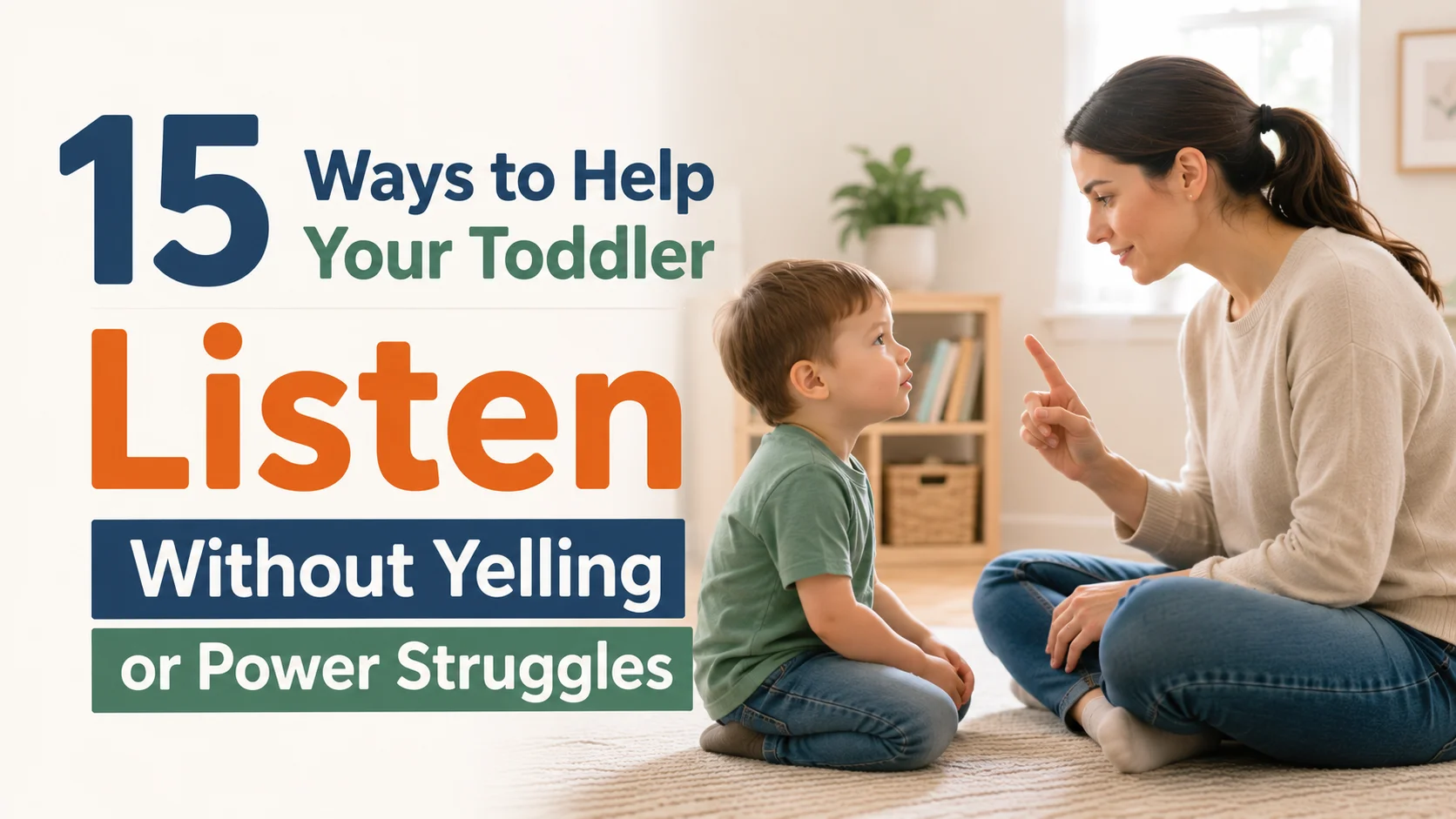
15 Ways to Help Your Toddler Listen Without Yelling or Power Struggles
There comes a stage of motherhood when you may start questioning your own ears.
You say:
“Honey, put your toys away.”
Nothing.
You say a little louder:
“Did you hear Mommy?”
Still nothing.
You walk over.
“I said, put your toys away.”
Your child looks at you.
Then…
picks up one little car and runs away.
You stand there.
The car is running.
The child is running.
And your patience is starting to run too.
If this sounds familiar, don’t worry. You are not the only mother who has ever spoken to a toddler who appears to have suddenly switched into Airplane Mode.
But there is something important we need to understand:
A child who doesn’t listen isn’t necessarily a child who doesn’t know how to listen.
Those are two very different things.
First, Take This Thought Out of Your Head
“My child is deliberately trying to drive me crazy.”
Sometimes, yes, your toddler may be testing a boundary.
But very often, the story is more complicated.
Young children are still learning how to listen, shift their attention, understand instructions, control their emotions, and regulate their behavior.
These aren’t fully installed features.
They’re skills under construction.
Imagine handing a bicycle to a child and saying:
“Go.”
You can be very serious about it.
But if the child hasn’t learned how to balance yet, the problem isn’t attitude.
The skill simply isn’t there yet.
Listening and following instructions work much the same way.
As an Amazon Associate, Intelligent Mother earns from qualifying purchases.
Mom's Everyday Favorites
Thoughtful finds for busy days, family life, and a little time for yourself.
15 Ways to Help Your Toddler Listen Without Yelling or Power Struggles

A BEAUTY FIND
CeraVe Moisturizing Cream
Moisturizing cream for face and body with ceramides and hyaluronic acid.
View on Amazon1. Your Child Is Playing. You’re Interrupting Another World.
This is one of the easiest things for parents to misunderstand.
You call:
“Tommy, time for a bath!”
Tommy is building a tower.
You see:
A child playing with a few blocks.
Tommy sees:
A major architectural project currently under construction.
You’re talking about the bathroom.
His brain is in Paris.
Young children can have a particularly hard time shifting their attention when they’re deeply involved in something interesting. Asking them to stop something enjoyable and immediately do something else can be surprisingly difficult. A BEAUTY FIND A niacinamide serum for a simple everyday skincare routine.
The Ordinary Niacinamide 10% + Zinc 1%
So instead of:
“Turn the TV off NOW!”
try:
“Tommy, we’re turning the TV off in five minutes.”
Then remind him when the time is getting close.
You’re giving his little brain a bridge from one activity to another.
A warning before transitions, along with something simple like a timer, can make those transitions easier.
2. Don’t Turn One Sentence Into a Memory Test
One common mistake adults make is saying too much.
“Go put your toys away, then get your pajamas, brush your teeth, bring your book into the bedroom, and don’t forget to…”
By the end of the sentence, you’ve handed your toddler an entire project-management system. A BEAUTY FIND A hydrating essence for a moisture-focused skincare routine.
COSRX Advanced Snail 96 Mucin Power Essence
And the little brain on the other side may simply be thinking:
“…”
Keep instructions short, clear, and specific.
Instead of:
“Clean your whole room and get ready for bed.”
Try:
“Put the car in the box.”
Wait.
Then:
“Now put the block away.”
One step.
One task.
One small win.
3. Tell Them What to Do, Not Only What Not to Do
This is a small change with a surprisingly big difference.
Instead of:
“Don’t run!”
try:
“Walk.”
Instead of:
“Don’t hit your sister!”
try:
“Use gentle hands.”
Instead of:
“Don’t throw the toy!”
try:
“Put the toy down.” A BEAUTY FIND Washable mascara for everyday makeup looks.
Maybelline Lash Sensational Sky High Washable Mascara
When you only say what a child shouldn’t do, you still leave them wondering what they should do instead.
Don’t run.
Don’t hit.
Don’t jump.
Their little brain still has to figure out:
“Okay… so what am I supposed to do?”
A positive direction gives them somewhere to go.
4. Get Into Their Line of Sight
You can shout from the kitchen:
“MAYA! GO BRUSH YOUR TEETH!”
Maya is in the living room.
Half of her attention is on the toy.
The other half is on the cookie.
And Mom’s voice is floating somewhere between the two. A BEAUTY FIND Daily facial moisturizer with ceramide-3 and niacinamide.
La Roche-Posay Toleriane Double Repair Face Moisturizer
Try something different. As an Amazon Associate, Intelligent Mother earns from qualifying purchases. Thoughtful picks related to this article.Helpful products to explore

Walk over.
Get down to your child’s level.
Say their name.
Wait for them to look at you.
Then give the instruction.
Not a ceremony.
Just:
“Maya.”
“Look at Mommy.”
“It’s time to brush your teeth.”
That’s enough.
5. But Don’t Turn Connection Into Endless Negotiation
This is where I want Intelligent Mother to be different.
We can be gentle without becoming weak.
If your child needs to wash their hands before dinner, don’t ask:
“Do you want to wash your hands?”
If there really isn’t a choice, you’ve just opened the door to:
“No.” A BEAUTY FIND Moisturizing cream for face and body with ceramides and hyaluronic acid.CeraVe Moisturizing Cream
Instead:
“It’s time to wash your hands.”
But you can still offer a little control:
“Do you want the blue soap or the yellow one?”
The task doesn’t change.
The child simply gets a little ownership over how it happens.
That’s the difference between:
“Do you want to do this?”
and:
“How would you like to do this?”
6. Sometimes Your Child Doesn’t Need More Words. They Need You to Stop the Behavior.
This is one of the ideas I particularly like from Janet Lansbury’s approach.
Sometimes a child is too overwhelmed, impulsive, or dysregulated to absorb a long explanation.
You might say:
“I understand that you want to pull your sister.”
But if your child is still pulling her, you need to stop the hand. A BEAUTY FIND A niacinamide serum for a simple everyday skincare routine.The Ordinary Niacinamide 10% + Zinc 1%
You can say:
“I won’t let you hurt your sister.”
Then calmly and firmly intervene.
Respectful parenting does not mean standing six feet away and delivering a fifteen-minute lecture while your child climbs onto the table.
You’re the parent.
You are allowed to set a boundary with action.
No hitting.
No humiliation.
No screaming.
But stop the unsafe behavior.
7. A Calm Mother Can Still Have Very Firm Boundaries
There’s a common misunderstanding about gentle parenting:
“If I’m gentle enough, my child will eventually cooperate with everything.”
No.
Children need gentleness.
But they also need boundaries.
If you set a boundary and repeatedly don’t follow through, your words slowly lose their meaning.
Imagine a road sign that says:
STOP.
Tomorrow:
Maybe stop. A BEAUTY FIND A hydrating essence for a moisture-focused skincare routine.COSRX Advanced Snail 96 Mucin Power Essence
The next day:
STOP, unless you cry.
Nobody knows what the sign means anymore. As an Amazon Associate, Intelligent Mother earns from qualifying purchases. Thoughtful finds for busy days, family life, and a little time for yourself.Mom's Everyday Favorites


Children need consistency too.
If you say:
“If you throw the toy, the toy will be put away.”
then follow through.
You don’t need:
“I told you already!”
“How many times do I have to say it?”
“I’m warning you for the last time!”
Just:
“You threw the toy. The toy is going away now.”
Calm.
Brief.
Consistent.
8. Don’t Turn Every Boundary Into a Power Struggle
A child says:
“NO!”
You say:
“YES!”
Child:
“NO!”
You:
“YES!”
Child:
“NO!”
You:
“I SAID YES!”
Congratulations.
You have both entered a competition that nobody remembers signing up for. A BEAUTY FIND Washable mascara for everyday makeup looks.Maybelline Lash Sensational Sky High Washable Mascara
And five minutes later, you’re both exhausted.
The goal isn’t to win the argument.
The goal is to hold the boundary.
Those are two very different things.
You don’t need to defeat your toddler.
You need to remain the adult.
9. Give Your Child Some Power Where It Is Safe
Toddlers want independence.
That’s a normal part of growing up.
And sometimes it arrives in one very familiar sentence:
“I do it myself!”
Of course.
Even if “doing it myself” means taking fourteen minutes to put on one sock.
Give your child small choices:
“Blue shirt or yellow shirt?” A BEAUTY FIND Daily facial moisturizer with ceramide-3 and niacinamide.La Roche-Posay Toleriane Double Repair Face Moisturizer
“Walk to the bathroom or hop?”
“Brush your teeth first or put your pajamas on first?”
Not everything is a choice.
You don’t ask:
“Do you want to sit in your car seat?”
when the only safe answer is yes.
You’re giving your child autonomy inside the safe fence you’ve built.
10. Notice the Good Stuff
Here’s something parents often miss.
We tend to notice children when they’re doing something wrong.
Child throws a toy.
Mom appears.
Child screams.
Mom appears.
Child hits their sibling.
Mom appears.
But when the child quietly listens and puts the toy away?
Mom is washing dishes. A BEAUTY FIND Moisturizing cream for face and body with ceramides and hyaluronic acid.CeraVe Moisturizing Cream
Positive attention matters.
Instead of simply saying:
“Good job!”
try being specific:
“I like how you put the car away when Mommy asked.”
You’re telling your child:
“I noticed that.”
And you’re showing them exactly which behavior is worth repeating.
11. But Don’t Turn Praise Into a Reward Machine
Praise doesn’t have to mean:
“If you brush your teeth, I’ll give you candy.”
“If you clean your toys, you get the iPad.”
“If you listen, I’ll buy you something.”
If every good behavior requires payment, the child can eventually start thinking: A BEAUTY FIND A niacinamide serum for a simple everyday skincare routine.The Ordinary Niacinamide 10% + Zinc 1%
“What do I get?”
Instead, sometimes the best praise is simply:
“You did it.”
Or:
“I saw how hard you tried.”
You’re helping the child experience competence, not just collect prizes.
12. During a Tantrum, Don’t Try to Teach a Philosophy Lesson
This is where many parents get stuck.
The child is crying.
Screaming.
On the floor.
You begin:
“You need to understand that Mommy cannot buy this toy because today we already…”
No.
Not right now.
Your child’s brain is busy dealing with a giant wave of emotion. A BEAUTY FIND A hydrating essence for a moisture-focused skincare routine.COSRX Advanced Snail 96 Mucin Power Essence
Toddlers often understand more than they can express, and their growing desire for independence can make frustration even bigger.
So you can say:
“You’re really angry.”
“You wanted that toy.”
“But we’re not buying it today.”
Then hold the boundary.
No TED Talk required.
13. Sometimes the Problem Is Simply Hunger or Exhaustion
There are days when you look at your child and wonder:
“What happened to my sweet little human?”
Check the basics.
Have they eaten?
Did they sleep?
Have they had too much stimulation?
Adults get cranky when they’re hungry too. A BEAUTY FIND Washable mascara for everyday makeup looks.Maybelline Lash Sensational Sky High Washable Mascara
Children aren’t magically immune.
The difference is that an adult can say:
“I need something to eat.”
A toddler may say:
“AAAAAAAAAA!”
The message can occasionally be the same.
The delivery needs work. 😄
14. Teach Listening When Everyone Is Calm
This is an important idea.
Don’t wait for the middle of a meltdown to teach your child how to listen.
Practice when things are easy.
You can use a simple sequence:
STOP → LOOK → OK → DO
Stop.
Look at Mommy. A BEAUTY FIND Daily facial moisturizer with ceramide-3 and niacinamide.La Roche-Posay Toleriane Double Repair Face Moisturizer
Show that you’ve heard.
Then do the instruction.
Practice with tiny, everyday requests.
You’re building the skill before you need it.
You don’t teach a child to swim for the first time when the boat is sinking.
You practice before the emergency.
15. And Finally, Look at Yourself
This may be the hardest part.
You want your child to speak calmly?
Let them see you speak calmly.
You want them to listen?
Listen to them.
You want them to manage their anger?
Let them see you managing yours.
That doesn’t mean you have to become a saint.
You will lose your patience.
You will have days when you shout:
“HOW MANY TIMES HAVE I TOLD YOU?”
And then you’ll see your child’s face.
And think:
“Okay. Mommy needs to practice this lesson too.”
That’s okay.
You can apologize.
You can say:
“Mommy yelled earlier. I was really frustrated, but I shouldn’t have yelled. Next time, I’ll try to stay calmer.” A BEAUTY FIND Moisturizing cream for face and body with ceramides and hyaluronic acid.CeraVe Moisturizing Cream
You have just taught your child something no flashcard can teach:
People make mistakes. People take responsibility. People can repair what they have done.
When Should “Not Listening” Concern You More?
Not every listening problem is simply normal toddler behavior.
If your child frequently doesn’t respond when their name is called, seems unable to understand simple language, or you have other concerns about hearing, communication, or development, talk with your pediatrician or another qualified professional.
Don’t be too quick to label a child “stubborn” when they may actually be struggling to understand or process what is being said.
A Firm Mother Isn’t the Same as a Loud Mother
This may be the message I most want mothers to remember.
Being firm doesn’t mean being frightening.
A firm mother can say:
“I know you don’t like this. But the answer is still no.”
A firm mother can comfort her child after a tantrum without changing the boundary. A BEAUTY FIND A niacinamide serum for a simple everyday skincare routine.The Ordinary Niacinamide 10% + Zinc 1%
A firm mother can stop a child’s hand when they’re about to hurt someone.
A firm mother can say:
“I love you. And I won’t let you do that.”
No screaming.
No threats.
No humiliation.
Just certainty.
Your Child Doesn’t Need a Perfect Mother
Your child needs a mother they can predict.
When Mom says no, she means no.
When Mom says I’ll help you, she helps.
When the child is upset, Mom doesn’t disappear.
When the child crosses a boundary, Mom doesn’t retaliate.
When Mom makes a mistake, Mom knows how to apologize.
That’s a special kind of safety.
Not:
“Mom always gets everything right.”
But:
“Whatever happens, Mom is still the grown-up. She’s still here. And she knows what to do next.”
Your toddler doesn’t need to operate like a Swiss watch. A BEAUTY FIND A hydrating essence for a moisture-focused skincare routine.COSRX Advanced Snail 96 Mucin Power Essence
We’re raising a human being.
And humans have wonderful days, terrible days, and occasionally those mysterious days when one sock is apparently enough to start World War III.
Our job isn’t to prevent every storm.
Our job is to become the person who can keep hold of the wheel when the storm arrives.
Sometimes that means saying very gently:
“I understand that you don’t want to.”
And then:
“But we’re still going to do it.”
And keeping the boundary.
No yelling.
No giving up.
No turning it into a battle.
Just staying there, calm and certain.
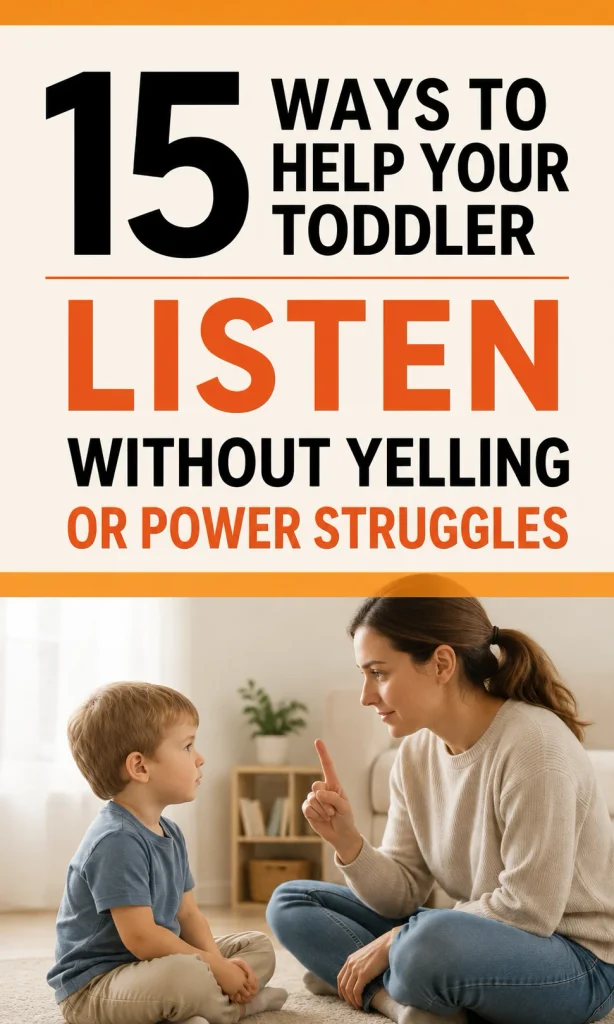
As an Amazon Associate, Intelligent Mother earns from qualifying purchases.
Mom's Everyday Favorites
Thoughtful finds for busy days, family life, and a little time for yourself.