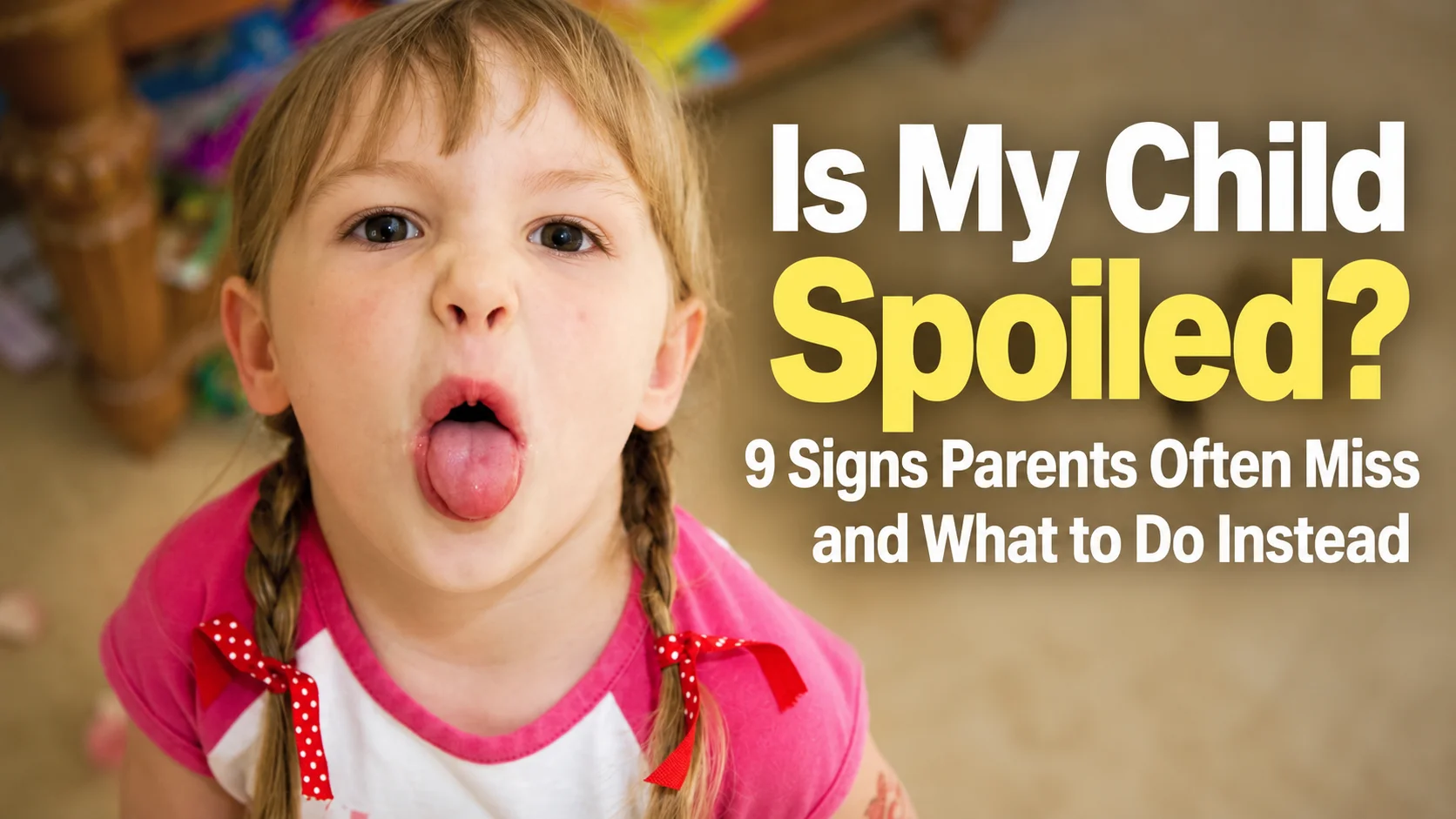
Is My Child Spoiled? 9 Signs Parents Often Miss and What to Do Instead
After rushing around getting clothes ready and packing everything for the picnic I had imagined would be filled with laughter, beautiful pictures of flowers, a cool stream with crystal-clear water, and all those warm, picture-perfect family moments, I had just one thing left to do: help my child choose the right shoes for the day.
“Wear your sneakers or these boots.”
“No. I’m wearing the blue sandals.”
I looked down at the turquoise fabric sandals Grandma had given my child the week before. They had been staring at those sandals for two whole hours before finally slipping them onto their little pink feet. They genuinely loved and treasured that gift.
I knew.
“But we’re going to be walking on grass, and we might even go into the stream.”
“I know.”
“The sandals will get wet.”
“That’s okay.”
“Your feet will get wet.”
“I’ll be fine.”
“The sandals will get dirty.”
“I’ll wash them.”
I took a deep breath, my face probably looking like a strange combination of the Virgin Mary and Satan.
The picnic hadn’t even started, but our first argument of the day was officially underway.
After about seven minutes of negotiations that even the United Nations probably would have preferred to stay out of, I finally said:
“Fine. Just this once.”
And just like that, peace returned to the house. I exhaled. My child was happy. Everyone survived.
Until about thirty seconds later, when a very uncomfortable thought popped into my head:
Wait. What did I just teach my child?
Maybe I had just taught my child that “no” actually means:
“Keep asking until Mom gets tired.”
There is a question I think most parents have asked themselves at some point, even if only inside their own heads:
“Am I spoiling my child?”
It usually comes after something very small.
Your child cries because you won’t buy the thing they want. You give in. Your child is happy. The whole thing is over.
I think that is a question worth pausing over.
Because “spoiled child” is such an easy label to use.
We see a demanding child and say:
“They’re spoiled.”
We see a child who won’t share:
“Selfish.”
We see a child talking back:
“Rude.”
But children are more complicated than those labels.
A child may get angry because they haven’t yet developed the ability to regulate their emotions. A child may not want to share because they are at a perfectly normal stage of developing a sense of self. A child may say “no” because they are testing how much control they have over their own lives.
And somehow, a child can be deeply loved without being spoiled at all.
So before asking:
“Is my child spoiled?”
Maybe we should ask a different question:
“What is my child learning from the way our whole family responds to what they want?”
That is where the real story begins.
1. Your child isn’t just disappointed by “no.” They believe “no” can be negotiated forever.
A child says:
“Mom, I want this.”
“No, we’re not buying it today.”
“But why?”
“I know you like it. But not today.”
“But I’ll be good.”
“The answer is still no.”
“But Mom!”
And the negotiation goes on. Not because the child is bad.
They’re testing.
If I keep going, what will happen? If Mom changes her mind the fifth time, the child learns something that actually makes perfect sense:
Persistence works.
That’s why the problem isn’t one tantrum.
It’s the repeated pattern.
You can acknowledge the feeling: “I know you’re disappointed.”
Without changing the boundary: “But we’re still not buying it.”
Both things can be true at the same time.
Accepting a child’s feelings does not mean giving them everything they want.
2. Your child often expects special treatment
There is a big difference between:
“I want your attention.”
and:
“I think I should come before everyone else.”
A child wanting their parents’ attention is completely normal.
But if a child regularly believes:
- Other people should give way to them;
- Rules apply to everyone else but not to them;
- Other people should wait for them, but they don’t have to wait;
- Siblings should share with them, but they don’t have to share;
then we may be looking at something closer to entitlement than a simple need for love and attention.
And entitlement doesn’t necessarily begin with an expensive toy. It can begin with one very small thought: “I’m more important than everyone else.”
3. Your child says “thank you,” but may not understand what they’re actually thankful for
I don’t think the goal of teaching gratitude is to create children who say “thank you” on cue like little machines.
What’s more valuable is helping children notice:
“Someone else did something for me.”
Mom woke up early to make breakfast.
Dad fixed the bicycle.
Their sibling gave up a seat.
Grandma called to check on them.
A friend shared a piece of their snack.
Gratitude begins with noticing what other people contribute.
And sometimes, instead of saying:
“Say thank you.”
we can ask:
“Did you notice what Grandma did for you?”
A question can teach more than a command.
4. Your child wants the freedom to choose, but not the responsibility that comes with it
“I want to decide for myself!”
Okay.
But choosing for yourself always comes with a companion:
Responsibility.
You want to choose your own clothes?
Great. You can put them away when you’re finished.
You want to pack your own backpack?
Great. If you forget a notebook, we can figure out what to do about it together.
You want a pet?
Wonderful.
But part of taking care of it belongs to you.
Independence isn’t:
“I get to do whatever I want.”
Independence is:
“I can handle the things that belong to me.”
That’s an important distinction for parents to remember.
5. Your child can barely wait for anything
Children don’t need to sit perfectly still in a restaurant for twenty minutes like tiny Zen masters.
But if every want is satisfied immediately, they have very few opportunities to practice waiting.
“I want to watch.”
“Give me a minute.”
“Right now!”
“You can wait, or you can choose something else to do while you wait.”
Moments like these don’t seem particularly important.
But they build an important skill:
I can want something without needing to have it immediately.
It’s a skill even adults spend their whole lives practicing.
6. Your child acts as though other people don’t have needs of their own
Interrupting.
Taking their sibling’s things.
Turning the music up while someone is sleeping.
Talking while someone else is speaking.
Taking something without asking.
…
These behaviors can happen with plenty of children.
So don’t rush to a conclusion.
What we need to watch is this:
After being reminded, does your child begin to notice how their behavior affects other people?
That’s the important part.
A child who is still learning empathy is not a miniature adult.
We don’t need to demand perfect social awareness.
But we can start with one very simple question:
“How do you think your sister felt when you did that?”
Not to shame the child.
But to help them begin looking beyond themselves.
7. Every time your child struggles, an adult immediately steps in to rescue them
This may be one of the hardest traps of love to recognize.
Forgot their homework?
We bring it to school.
Can’t get dressed?
We dress them.
Had an argument with a friend?
We solve it.
They’re disappointed?
We immediately find something else to make them feel better.
We don’t do these things because we want to raise helpless children.
We do them because it’s:
Faster.
Easier.
And sometimes, less painful to watch.
But if we always step in before our child gets the chance to try, they may never discover:
“Oh. I can do this.”
Sometimes loving our children means helping.
Sometimes loving them means staying close…
but not doing it for them.
8. Your child turns every good thing into a transaction
“If I clean my room, what do I get?”
“If I read a book, what will you buy me?”
Rewards can be useful.
But a family isn’t a company where every action comes with a paycheck.
Some things we do simply because:
“We live together.”
Your child puts away the cup they just used.
Not because they earned a reward.
But because the cup is theirs to take care of.
Your child helps their sibling.
Not because they get paid.
But because that sibling is part of the family.
That’s how responsibility begins to mean something.
Not:
“What do I get for doing this?”
But eventually:
“I do this because I’m part of this family.”
9. The whole family starts changing its behavior to avoid upsetting one child
This is the sign I want parents to think about the longest.
“Don’t make them do it. They’ll cry.”
“Just buy it for them. Otherwise we’ll be here all day.”
“Let me do it. It’ll be faster.”
“Don’t bring that up in front of them.”
“If they don’t like it, forget it.”
Once?
Probably fine.
Ten times?
Still probably fine.
But if the whole family gradually develops an unspoken rule:
“Everyone has to adjust so this child doesn’t get upset.”
the child may learn something very powerful:
“My discomfort has power.”
That’s not what we intended to teach.
We want our children to know:
“I hear you.”
“I understand that you’re disappointed.”
“I’m still here.”
And at the same time:
“Not everything is going to change just because you don’t like it.”
That’s a difficult lesson.
But it’s also an important one.
Before You Decide Your Child Is “Spoiled,” Pause Here
A child who cries when they are told no is not automatically spoiled.
A child who doesn’t want to share a toy is not automatically entitled.
A child who needs help from their parents is not weak.
A child who has lots of toys is not automatically a spoiled child.
And a mother who hugs her child when they cry is not spoiling them.
There is a big difference between:
comforting a child
and
removing every discomfort from a child’s life.
We can comfort a child without solving every problem for them.
We can love our children deeply while still setting boundaries.
We can say “no” without becoming cold or harsh parents.
And we can give our children plenty while still teaching them that they are not the center of the entire world.
So What If You Recognize Some of These Signs?
Don’t panic.
And don’t announce:
“Starting today, everything is changing!”
I’ve learned that overly ambitious parenting plans tend to die somewhere between Wednesday night’s dinner and a child crying because they didn’t get a second scoop of ice cream.
Start with a few small changes.
Hold one boundary you genuinely want to hold.
Don’t say “no” if you already know you’ll change your mind three minutes later.
Give your child responsibilities that belong to them.
Not to “teach discipline.”
But to give them a chance to feel:
“I can do this.”
Let small disappointments exist.
Not every sad feeling needs to become a problem we have to fix.
Don’t rush to rescue.
Try asking:
“Which way do you want to try first?”
Teach gratitude by helping your child notice other people.
Not only by saying:
“Say thank you.”
And above all, aim for consistency rather than perfection.
You will still have days when you give in.
I certainly will.
Some days we’re simply too tired.
Some days, the second cookie really isn’t worth starting World War III in the living room.
What matters isn’t whether we’ve never given in.
What matters is:
What is the overall pattern of our family teaching our child?
Maybe the question isn’t:
“Is my child spoiled?”
Maybe the better question is:
“What is my child learning about wanting something, not getting it, and still being able to love the people around them?”
Because in the end, we’re not raising children who always get what they want.
We’re not raising children who are simply accustomed to being told no, either.
We’re trying to raise a person who can step into the world with something incredibly valuable:
Knowing they matter, while understanding that other people matter too.
Knowing they can ask.
But also knowing how to wait.
Knowing they have choices.
But also knowing how to take responsibility.
Knowing how to feel disappointed.
But not needing to tear everything apart because they are disappointed.
And knowing that sometimes the answer is:
“No, sweetheart.”
…
But on the other side of that “no,” there is still a mother standing there.
Still loving them.
Still seeing them.
And still believing that they can grow through the very small things they don’t want to learn today.