Not Every Day Has to Be a Sunny Day: Teaching Kids to Embrace Life’s Ups and Downs
One afternoon, your child comes home looking upset.
At school, they weren’t picked for the team. Their best friend sat with someone else at lunch. The picture they had spent the whole morning drawing got smudged. These things may seem small to us, but to a child, they can take up the whole sky.
“Mom, I didn’t have a good day.”
Most of us know what to do next. We offer a hug, a little encouragement, a favorite snack, or the familiar promise: “It’s okay. Tomorrow will be better.”
We want to see our children smile again. If we could, we’d erase whatever made them sad in the first place.
I understand that feeling. As a mom, even the smallest hint of disappointment on my child’s face can make me want to rush in and fix everything. I want my child’s life to feel like one long sunny afternoon, with no unexpected rain to interrupt the fun.
But then I started wondering: If I always try to make my child happy the moment sadness appears, when will they learn how to live with their own difficult feelings?
Maybe we’ve misunderstood what happiness really means.
Happiness doesn’t mean feeling cheerful every day. And a happy childhood isn’t one without tears.
Sometimes, the greatest gift we can give our children isn’t a life where everything goes smoothly. It’s the ability to move through the difficult days without losing faith in themselves or in life.
As an Amazon Associate, Intelligent Mother earns from qualifying purchases.
Mom's Everyday Favorites
Thoughtful finds for busy days, family life, and a little time for yourself.

1. Why Do We Find It So Hard to Let Our Children Be Sad?
Picture a familiar scene.
Your child is building a tower with wooden blocks. Carefully, they place the final block on top. The tower wobbles, leans to one side, and comes crashing down.
Your child stares at the pile on the floor. Their lower lip starts to tremble. Then comes the crying.
“I keep trying, but I can’t do it!”
We might immediately sit down and rebuild the tower together. We might tell them they’ll do better next time. Some of us may even pick up the blocks and put them back in place so our child doesn’t have to feel disappointed again.
It all comes from love.
But here’s a question worth sitting with: Are we helping our child work through disappointment, or are we trying to get rid of that feeling because we can’t bear to watch it? A BEAUTY FIND Moisturizing cream for face and body with ceramides and hyaluronic acid.
CeraVe Moisturizing Cream
Our children’s sadness can make us feel helpless. We want to fix it quickly, almost like wiping a stain off a shirt.
But feelings aren’t stains.
A sad child doesn’t mean we’ve failed as parents. A crying child doesn’t always need us to find an immediate solution. Some feelings simply need to be heard before they can begin to settle.
I think this calls for a small but meaningful shift in how we parent. Instead of asking, “How can I make my child stop feeling sad?” we might ask, “What is my child going through, and how can I be here for them?”
The questions sound similar, but they lead us in different directions.
One is about changing a child’s feelings.
The other is about helping a child understand that those feelings are welcome, even when they’re uncomfortable.
2. A Good Life Is Not a Life Without Rain
Imagine two gardens.
One has sunshine every day. The other has a mixture of bright mornings, cloudy afternoons, and occasional rain.
The first garden might look easier to care for. No muddy ground, no gloomy afternoons, no rushing to bring the plants inside when a storm rolls in. But without rain, the soil eventually dries out and the plants begin to wither.
A garden needs different things to grow.
So do we.
We often divide emotions into two simple categories: happiness is good, sadness is bad; confidence is good, fear is bad; winning is good, losing is bad.
But life doesn’t fit neatly into those boxes.
Disappointment can show us that something matters deeply to us. Jealousy may reveal a desire we haven’t learned how to express. Fear can alert us to danger. Sadness may appear when we’ve lost something we love.
Feelings aren’t always comfortable, but they can tell us something about what’s happening inside us. A BEAUTY FIND A niacinamide serum for a simple everyday skincare routine.
The Ordinary Niacinamide 10% + Zinc 1%
That doesn’t mean every painful experience is necessary, or that hardship automatically makes children stronger. A child who is being bullied, neglected, or exposed to an unsafe environment doesn’t need another lesson in resilience. They need protection.
But ordinary, age-appropriate disappointments can give children opportunities to practice waiting, trying again, adjusting to change, and asking for help.
The American Psychological Association explains that emotional regulation develops gradually throughout childhood. It is shaped by children’s growing cognitive and language abilities, as well as the environment and support around them. Children aren’t born knowing how to manage every difficult feeling just because an adult tells them to calm down.
Perhaps, then, our job isn’t to create a childhood without rain.
It’s to give our children enough safety, support, and skills to feel less frightened when the rain comes.
3. Let the Feeling Stay Before You Try to Fix the Problem
There’s a habit many adults have: We offer advice before the other person has even finished telling the story.
Your child says their friends didn’t play with them today.
“Why don’t you ask someone else tomorrow?”
Your child says they weren’t picked for the soccer team.
“Don’t worry. Just practice more.”
Your child cries because their favorite toy broke.
“I’ll buy you a new one.”
We’re quick. Sometimes so quick that the solution arrives before our child has even figured out what they’re feeling.
Try something different.
When your child says, “Nobody wanted to play with me today,” hold off on fixing the situation. As an Amazon Associate, Intelligent Mother earns from qualifying purchases. Thoughtful picks related to this article.Helpful products to explore
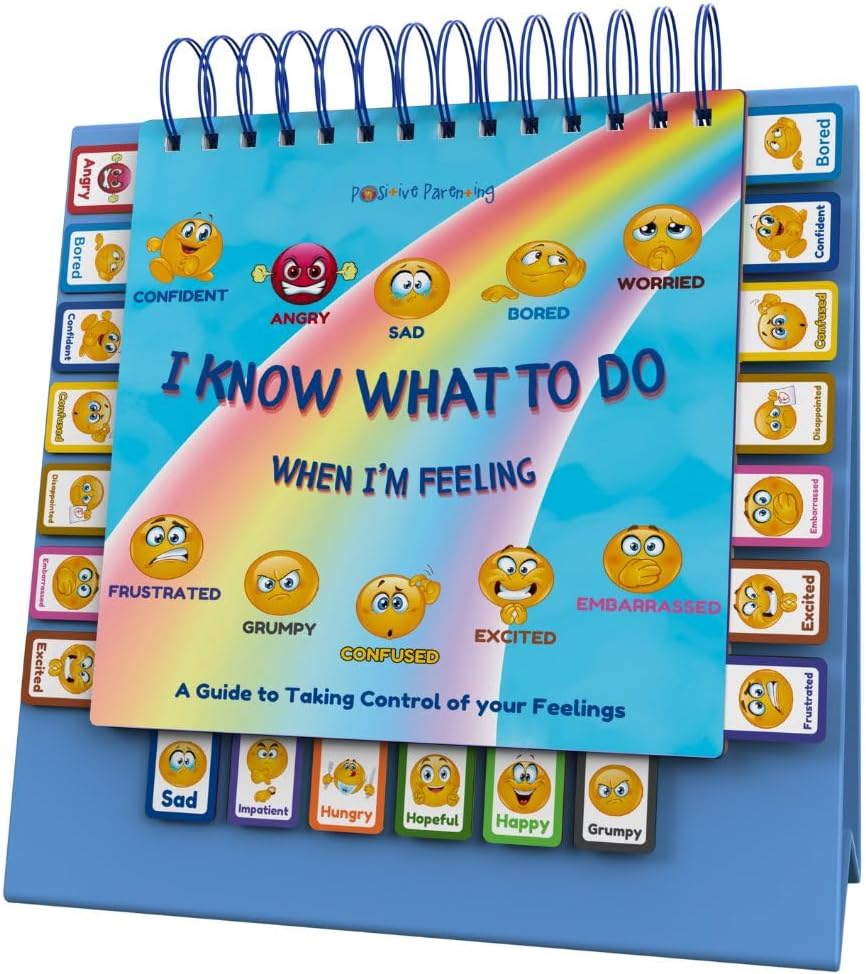
You might sit beside them and say:
“Sounds like today was a pretty lonely day.”
Or:
“You were really hoping to play with your friends, weren’t you?”
Then wait.
Maybe your child will tell you more. Maybe they’ll cry. Maybe they’ll simply lean against you for a while. A BEAUTY FIND A hydrating essence for a moisture-focused skincare routine.
COSRX Advanced Snail 96 Mucin Power Essence
You don’t have to fill every silence with words.
The CDC’s guidance on emotion coaching encourages parents to notice children’s feelings, connect with them, help them name those feelings, and then work toward solutions together. That order is a helpful reminder that being heard is part of learning to manage emotions.
I like to imagine two people sitting together under a porch while the rain falls outside.
The person sitting beside you doesn’t need to control the weather. They don’t need to explain why it’s raining, either. Their presence is enough to remind you that you aren’t standing in the rain alone.
Sometimes, that’s all motherhood needs to be.
We don’t always need to have the answer. Some days, our children simply need someone willing to sit beside them without rushing to turn their sadness into something else.
4. Teach Children to Understand Their Feelings, Not Be Ruled by Them
There’s an important difference between accepting a feeling and allowing that feeling to control every action.
Your child is allowed to feel angry. They are not allowed to hit their sibling.
They’re allowed to feel disappointed. They’re not allowed to throw things at someone.
They’re allowed to feel sad. That doesn’t mean everyone around them must do whatever they ask just to make the sadness disappear.
Feelings deserve to be acknowledged. Behavior still needs boundaries.
This is something children learn little by little.
Instead of saying, “Stop being angry,” try:
“I know you’re angry because your brother took your toy. But I won’t let you hit him.”
Instead of saying, “There’s nothing to be afraid of,” try:
“I can see that the dark room feels scary. I’m here. We can turn on the light and take a look together.”
These words won’t make difficult feelings disappear immediately. They help children connect a feeling to what’s causing it and begin to see that they have other ways to respond. A BEAUTY FIND Washable mascara for everyday makeup looks.
Maybelline Lash Sensational Sky High Washable Mascara
There’s also a perspective I find worth reflecting on: We can feel anger without becoming the anger. We can feel sadness without letting it define our entire sense of who we are.
For young children, this idea needs to become something they can actually experience. As an Amazon Associate, Intelligent Mother earns from qualifying purchases. Thoughtful finds for busy days, family life, and a little time for yourself.Mom's Everyday Favorites


When your child says, “I’m the worst because I lost the game,” help them separate two things:
“You lost the game today. That doesn’t make you a bad kid.”
When they say, “I can’t do anything right,” help them remember something they worked hard on, even if the result wasn’t what they hoped for.
Losing a game is an event. It isn’t an identity.
A feeling is an experience. It isn’t the whole person.
And that’s a much more valuable lesson than simply asking children to stay happy.
5. Give Children Room to Experience Small Disappointments
A parent’s love can sometimes feel like an umbrella that opens a little too early.
We notice one raindrop and immediately cover our child. We don’t want them to get wet, feel cold, or become uncomfortable.
But if the umbrella is always open before a child even notices the rain, they may have fewer chances to learn what to do when no one is standing beside them with one.
That doesn’t mean we should put the umbrella away and leave children to figure everything out alone. They still need protection. But not every uncomfortable feeling is dangerous, and not every disappointment needs an adult to solve it for them.
There are small experiences we can let children work through, with the right amount of support.
When they lose a game
Don’t rush to change the rules so they can win. Acknowledge that losing doesn’t feel good. Once they’ve had a chance to settle down, you might ask, “What would you like to try differently next time?”
When plans change
The trip to the park gets canceled because of rain. Your child has every right to feel disappointed after looking forward to it all week. Let them talk about that before suggesting another plan. A quiet afternoon reading by the window might become a lovely memory, too, but there’s no need to expect them to enjoy it immediately. A BEAUTY FIND Daily facial moisturizer with ceramide-3 and niacinamide.
La Roche-Posay Toleriane Double Repair Face Moisturizer
When they aren’t chosen
If your child doesn’t get picked for a team or doesn’t get the role they wanted, resist the urge to tell them they’re better than the other kids. Help them understand that not being chosen this time doesn’t determine their worth.
When they make a mistake
They spill water, ruin a craft project, or forget something they were supposed to do. Instead of getting angry or immediately doing everything for them, help them figure out how to make things right. They may feel bad about the mistake, but they can still take responsibility and try again.
The important thing is not to turn these experiences into tests of endurance.
We don’t need to create disappointment to make our children stronger. And we shouldn’t treat crying, fear, or asking for help as signs of weakness.
The goal isn’t to make children handle everything on their own.
It’s to help them discover, little by little, that they can feel disappointed, ask for support, try another approach, and keep going.
6. Let Your Child See You Having a Rainy Day
I used to think being a mom meant keeping everything together.
Even when work wasn’t going well, the house was a mess, or I was so tired that I wanted nothing more than to sit quietly for a while, I felt I had to act as though everything was normal in front of my child.
But children notice more than we think.
They see how we react when we spill a glass of water. They hear the tone in our voices when plans change. They recognize the look on Mom’s face after a difficult day.
So why pretend that grown-ups don’t have rainy days?
You can say:
“I’m feeling a little tired today. I’m going to rest for a bit, and then we can play.”
“I’m disappointed because work didn’t go the way I hoped. I need a little time to think.” A BEAUTY FIND Moisturizing cream for face and body with ceramides and hyaluronic acid.CeraVe Moisturizing Cream
“I just raised my voice at you. I’m sorry. I was angry, but I shouldn’t have spoken to you that way.”
These words don’t make parents less worthy of respect. They show children that feelings can be recognized, expressed, and managed.
More importantly, children see that making a mistake isn’t the end of the story. Adults can apologize, make things right, and begin again.
I don’t want my child to believe that being a grown-up means never feeling sad, never getting angry, and never failing.
I want them to understand that growing up means learning to recognize what we’re feeling, taking responsibility for our actions, and finding a way forward.
Perhaps that’s one of the most valuable lessons we can teach simply by living our lives.
7. Help Children Notice the Sunshine Without Denying the Rain
There’s a kind of optimism that makes me pause.
It’s the kind that immediately looks for something positive to replace whatever went wrong.
Your child is sad because the trip was canceled.
“But staying home can be fun, too!”
They’re disappointed because they weren’t chosen.
“Don’t worry. You’re still better than lots of other kids!”
A friend hurt their feelings.
“Just forget about that friend. Lots of people love you!”
These words may come from a good place. But sometimes, they make children feel that they need to cheer up quickly instead of being allowed to feel sad about what just happened.
Optimism isn’t about painting everything yellow.
It’s about being able to notice something good without pretending that nothing painful happened. A BEAUTY FIND A niacinamide serum for a simple everyday skincare routine.The Ordinary Niacinamide 10% + Zinc 1%
If the trip is canceled, we can acknowledge how much our child was looking forward to it. Then, when they’re ready, we can think about what tomorrow might bring.
If they lose a game, we don’t have to pretend it doesn’t matter. We can look at what happened together and decide whether they want to try again.
If a friend hurts them, we don’t need to push them to forgive immediately. First, we can help them understand why they feel hurt, how to protect themselves, and when to ask an adult for help.
Something difficult can exist alongside something good.
The two don’t have to cancel each other out.
That’s a more balanced way of looking at life, and children can begin learning it through ordinary conversations with their parents.
8. We Cannot Promise a Sunny Life. We Can Help Them Find Their Way.
There’s a paradox in parenting: The more we love our children, the more we want to control the things that might hurt them.
We choose their schools, toys, food, friends, and after-school activities. We try to prepare everything so they can have a wonderful childhood.
But life isn’t a room where we can shut the door and keep every unexpected gust of wind outside.
There will be times when our children are rejected. Times when they make mistakes. Times when a friend no longer wants to play with them. Times when they have to say goodbye to something they love. A BEAUTY FIND A hydrating essence for a moisture-focused skincare routine.COSRX Advanced Snail 96 Mucin Power Essence
No one can stand beside them through every one of those moments.
And perhaps we shouldn’t try to.
Instead of building a road without obstacles, we can help our children learn when to pause, when to keep trying, and when to ask for help.
Instead of promising that everything will always be okay, we can let them know they don’t have to pretend to be okay when things aren’t okay.
That’s not a promise of a life without sadness.
It’s preparation for a real one.
A Final Thought: Let the Rain Be Part of the Story
One day, our children will grow up and leave this home.
There will be mornings when they wake up full of hope. And there will be evenings when they come home after a day that didn’t go the way they wanted.
I can’t promise that life will always be gentle with them. I can’t stand beside them to solve every disappointment, stop every tear, or open an umbrella whenever the sky turns gray.
But I hope they’ll remember that they don’t need to feel ashamed of being sad, hate themselves for failing, or pretend to be strong when they need a helping hand. A BEAUTY FIND Washable mascara for everyday makeup looks.Maybelline Lash Sensational Sky High Washable Mascara
I hope they’ll learn to sit with their feelings, reach for support when they need it, and recognize new possibilities when one door closes. As an Amazon Associate, Intelligent Mother earns from qualifying purchases. Thoughtful picks related to this article.Helpful products to explore

Because a garden doesn’t become beautiful through sunshine alone.
And a life isn’t made whole through happy days alone.
We don’t have to raise children who expect every day to be sunny. We can raise children who know how to live, grow, and find their way through the rain.
As an Amazon Associate, Intelligent Mother earns from qualifying purchases.
Mom's Everyday Favorites
Thoughtful finds for busy days, family life, and a little time for yourself.