
Why Does My Child Listen to Everyone Except Me?
Maybe what looks like “not listening” is more complicated than it seems.
I have asked myself this question more times than I would like to admit: Why can my four-year-old listen to everyone else, but the moment I say something, everything turns into a battle?
Her teacher says, “Time to clean up,” and she cleans up. Grandma says, “Come eat,” and she comes to the table. Dad says, “Turn off the TV,” and there may be a little negotiating, but eventually the TV goes off.
Then I say, “Please put your toys away,” and suddenly I feel like I am negotiating with a tiny lawyer who has no intention of settling.
I ask once.
Nothing.
I ask again.
Still nothing.
By the third time, my voice is already getting louder.
“Did you hear me?”
Finally, my child looks up.
“No!”
Just one word. But somehow, that one word can carry the weight of an entire long day.
At that point, I am no longer thinking about the toys scattered across the floor. I am thinking:
Why won’t my child listen to me?
And underneath that question is another one that hurts a little more:
Why does it feel like my voice matters to everyone except my own child?
Maybe You’ve Been in That Room, Too
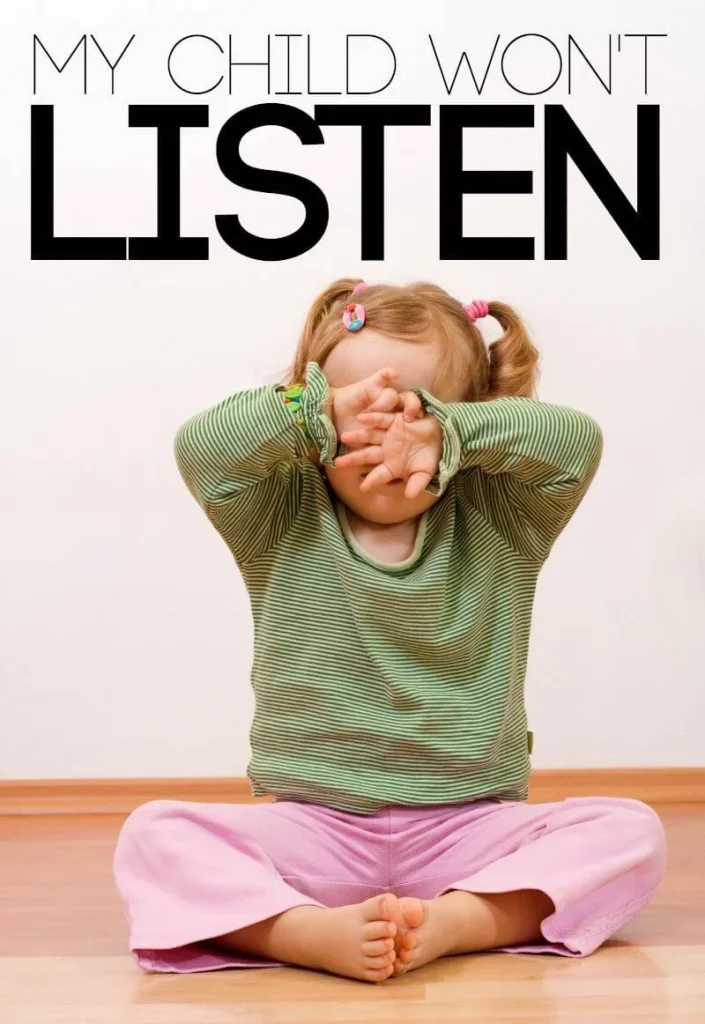
I have watched my child at school and sometimes wondered if I was looking at the same kid who lives in my house.
The teacher tells me my child listens well, follows directions, waits for a turn, and helps clean up. Grandma comes over and says, “Come eat,” and five minutes later everyone is sitting at the table. Dad says it is bedtime. There may be some negotiating, but eventually the pajamas go on.
Then I say:
“Time for a bath.”
“No.”
“Put your toys away.”
“I’m playing.”
“Time for bed.”
“I’m not tired.”
I ask once, then twice, then three times. By the fourth time, I don’t even like the sound of my own voice anymore.
And that is when a thought starts creeping in:
My child knows how to listen. My child just doesn’t want to listen to me.
But the more I think about it, the more I wonder if there is a better question:
Why can the same child behave so differently with different people?
“Not Listening” Can Mean More Than We Think
I have heard this explanation many times in conversations about parenting:
“Your child behaves that way because they feel safe with you.”
I understand why that idea feels comforting. It makes me think that maybe all those tears, protests, and big reactions do not automatically mean I am doing everything wrong.
But I also think we need to be careful with that explanation.
A child who is not listening may be tired. They may be hungry. They may have had a long day at school. They may be struggling to stop an activity they love and switch to something they do not want to do. They may be testing a boundary. They may have learned that Mom will ask five times before anything really happens.
Or maybe the way I give an instruction is simply different from the way the teacher gives one.
It is also possible that the relationship between my child and me makes it easier for my child to let the biggest feelings come out around me.
The important thing is this:
The same behavior on the outside does not always come from the same thing on the inside.
That is why I don’t want to rush to call my child difficult or defiant.
I want to look a little closer.
At School, My Child May Be Working With a Completely Different Set of Rules
I picture my child sitting in the classroom.
The teacher says, “Five more minutes, and then we are going to clean up.”
My child knows what is coming. The other children are getting ready, too. The teacher is nearby. The next activity has already been explained.
Maybe my child does not like it. Maybe they still want to play. But the whole room is helping them understand that it is time to move on.
Then my child comes home.
The TV is on. I am making dinner. My phone is buzzing on the counter. Maybe the baby is crying. My child is right in the middle of a game they do not want to stop.
And from the kitchen, I say:
“Time to put the toys away.”
Same child. Same basic request.
Completely different situation.
A four-year-old is still developing the ability to manage impulses, emotions, attention, and transitions. Knowing how to do something does not mean a child can calmly do it on command in every situation.
Sometimes there is a difference between “My child knows how to do this” and “My child can do this right now.”
That difference matters.
But There Is Something Else Worth Understanding
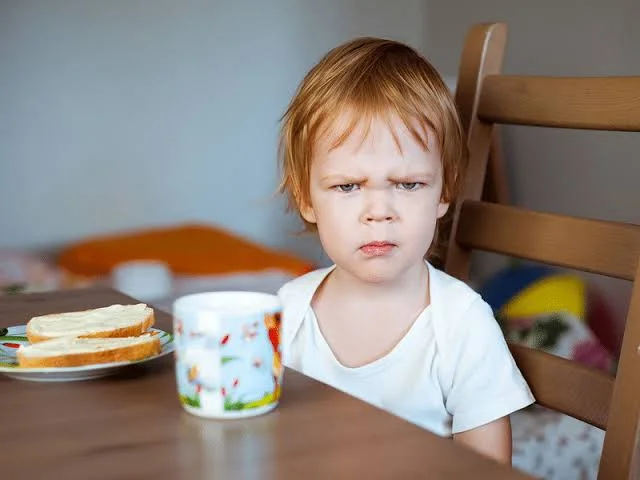
Sometimes I wonder if my child simply lets more of those big emotions out when we are together.
A close relationship is not a free pass for difficult behavior. Not every tantrum is proof that a child feels securely attached to Mom.
But our closest relationships do play a role in how children learn to handle emotions.
A meta-analysis of 72 studies involving children and adolescents found a relationship between parent-child attachment and children’s emotion regulation and coping. Children with more secure attachment tended to show better emotion regulation and more adaptive ways of coping.
Another review also describes attachment relationships as an important context in which children develop and use ways of managing their emotions.
That research helps me look at the child who falls apart the moment they walk through the front door a little differently.
Children do not necessarily bring the exact same version of themselves into every room. At school, my child may spend the day holding things together. With other adults, my child may follow the rules because the environment is different. At home, with the person they are closest to, some of the feelings they held in all day may finally spill out.
Sometimes home is where the backpack finally comes off.
But I don’t want to turn that idea into a simple parenting slogan.
Not every child who behaves badly with Mom is doing it because they feel secure with Mom.
There can be many reasons. And that is exactly why I think we need to look at the whole picture.
Understanding What Is Happening Doesn’t Mean I Have to Put Up With Everything
This is where parenting advice can sometimes get confusing.
It is easy to read something like:
“Your child feels safe enough with you to express their emotions.”
when everything is going well.
It feels very different when I have just walked in from work, I am trying to get dinner on the table, and my child has thrown the same spoon onto the floor for the third time.
I pick it up. My child throws it down again.
I say, “Don’t do that.”
My child screams, “No!”
If someone standing nearby said, “Remember, your child feels safe with you,” I would understand what they were trying to say.
But the spoon is still on the floor. And I still have to deal with what is happening.
Because understanding a behavior does not mean accepting the behavior.
I can understand that my child is overwhelmed and still stop them from hitting someone. I can understand that my child does not want to go to bed and still take them to bed. I can understand that my child is exhausted and still hold the boundary.
Understanding my child does not make the boundary disappear. It simply helps me hold the boundary without turning every difficult moment into a battle.
Connection Does Not Mean There Are No Boundaries
My child can feel, “Mom understands me,” and at the same time need to learn, “When Mom says something, she means it.”
Those two things can exist together.
If my child screams, “I don’t want a bath!” I don’t have to say, “Okay, no bath tonight,” just to prove that I understand the feeling.
I also don’t need to yell louder to prove that I am the adult.
I can say, “You don’t want a bath. I know. But it is still time for a bath.”
I acknowledge the feeling. I hold the boundary. And I do not need to give a ten-minute lecture about either one.
This has become increasingly important to me:
I don’t have to choose between being close to my child and being the parent.
I can be both.
So What Do I Actually Do When My Child Isn’t Listening?

After enough evenings of repeating myself, I realized something almost funny.
Talking more does not necessarily make my child listen better.
There have been nights when I could have given an entire speech from the kitchen.
“Put your toys away.”
“Did you hear me?”
“How many times do I have to ask?”
“You always do this.”
“Do you act like this at school?”
“Does your teacher have to ask you five times?”
By the end, my original request is buried under so many words that even I have forgotten what I was asking for.
So I started trying something different.
I Get Closer Before I Give the Instruction
Instead of yelling from the kitchen, “Put your toys away!” I walk over to my child. I sit down nearby and wait until my child looks at me.
Then I say, “Five more minutes, and then we are going to put the toys away.”
Sometimes, simply stepping into my child’s world before asking them to leave it makes a difference.
Not always. But sometimes.
I Say Less
Instead of turning one simple request into a running commentary, I try to keep it clear:
“It is time to put the toys away.”
If my child still does not move, I might say, “Do you want to put the cars away first or the books?”
Short. Clear. Something my child can actually do.
I Separate the Feeling From the Boundary
My child is allowed to be angry. My child is allowed to be disappointed. My child is allowed to hate my decision.
I can say, “You really don’t want to stop playing. I know. You’re upset.”
Then:
“But it is still time to go.”
I do not have to erase my child’s uncomfortable feelings before I hold the boundary.
My job is not to make every difficult feeling disappear. Sometimes my job is simply to stay there while my child learns how to move through it.
I Give My Child a Little Room to Choose
I used to ask, “Do you want to take a bath?”
Then I would be surprised when the answer was:
“No.”
I had accidentally opened a negotiation I never intended to have.
Now I might ask, “Do you want the blue pajamas or the gray ones?”
Or:
“Do you want to brush your teeth before pajamas or after?”
The boundary is still there. But inside that boundary, my child gets a small piece of control.
And that small piece can matter.
And I Try Not to Turn Every Refusal Into a Power Struggle
This may be the hardest one.
Because when my child ignores me, it is very easy to take it personally.
I say, “Put your shoes on.”
My child does not move.
And suddenly I think:
My child doesn’t respect me.
My child refuses to get dressed.
I think:
Why does everything with me have to become a battle?
My child yells, “No!”
And somehow my brain translates it into:
I have no authority here.
But a young child’s “No” usually does not carry all of those meanings.
Sometimes “No” simply means, “I don’t want to stop.”
Or, “I’m tired.”
Or, “I don’t know how to switch to something else yet.”
Or, “I want to decide this myself.”
Or simply:
“I’m four.”
That does not mean I ignore the behavior. It simply means I do not have to turn every refusal into a contest over who has more power.
Then I Started Asking Myself a Harder Question
Do I actually need my child to listen, or do I need to feel respected?
Those are not always the same thing.
I say, “Put your toys away.”
My child does not.
I ask again.
Still nothing.
By the fourth time, maybe the toys are no longer what is making me angry.
Maybe I am thinking:
Why does nobody listen to me?
And suddenly, a plastic toy car sitting in the middle of the living room is carrying the emotional weight of my entire day.
That is when my emotions become part of the situation, too.
Research on parental emotion regulation has found links between parents’ difficulties regulating their emotions and children’s psychological adjustment. But these are statistical associations, not evidence that one moment of losing my temper will directly cause a problem for my child.
So before I say, “My child never listens to me,” sometimes I need to stop for a second and ask:
What am I actually angry about?
The answer is not always the toys.
Maybe My Child Isn’t a Different Child After All
Maybe the environment is different.
At school, there is structure.
At home, there is more freedom.
At school, everyone is moving toward the same activity.
At home, my child has to stop playing and come eat.
At school, the teacher gives an instruction in a room built around routines.
At home, I am stirring a pot of pasta while giving an instruction.
And sometimes my child has already used up a good portion of their self-control before they even walk through the front door.
There is another possibility I do not want to forget.
Maybe at home, my child simply does not have to hold everything inside anymore.
That does not mean every difficult behavior is a sign of secure attachment. It does not mean I should smile when my child screams in my face. It does not mean I have to accept unsafe or disrespectful behavior.
It simply means I should be careful about using my child’s behavior in one setting to define who my child is.
The child I see at school is still my child.
And the child crying on the kitchen floor at home is, too.
There Is the Child I See at School.
And there is the child I see at home.
Both are my child.
The child at school may sit quietly, raise a hand, wait for a turn, and put the crayons away when the teacher asks.
The child at home may lie on the floor and cry because I gave them the red cup instead of the blue one.
That does not automatically mean one child is “good” and the other is “bad.”
Maybe they are simply two versions of the same little person growing up, responding to two very different environments.
And maybe my job is not to turn my child into someone who always listens.
Maybe my job is to help my child slowly learn something harder:
Your feelings can be understood.
The boundary can still exist.
And you can be sad or angry without losing your connection to the people you love.
The Shoes Are Still in the Middle of the Living Room
This time, I walk over.
I do not yell from the kitchen.
I sit down.
“It’s time to take your shoes off.”
My child frowns.
“I don’t want to.”
I take a breath.
“I know. You don’t want to.”
A pause.
“But we still need to take them off.”
My child looks at me.
There is no magic. No sudden transformation. No movie scene where the child smiles, says sorry, and runs off to clean the entire room.
Just two small hands beginning to untie the shoelaces.
Slowly.
Reluctantly.
But beginning.
And maybe that is what I was looking for all along.
Not a child who always listens.
But a child who can slowly learn that I can understand the feeling and still hold the boundary.
And a mother who can learn that her child does not have to agree with her for their relationship to be okay.
There will be days when my child listens. There will be days when the word “no” appears twelve times before breakfast. There will be days when I stay calm, and there will be days when I don’t.
But tomorrow will still come.
And maybe parenting is not about finding the perfect sentence that makes a child instantly obey.
Maybe it is about learning how to stay beside your child in the moments when they still do not know how to stand beside themselves.