17 Simple Montessori Ideas for Everyday Parenting
You don’t need a perfect Montessori playroom. Sometimes, the best place to start is right in the middle of everyday family life.
As an Amazon Associate, Intelligent Mother earns from qualifying purchases.
Mom's Everyday Favorites
Thoughtful finds for busy days, family life, and a little time for yourself.
A Child Who Just Wants to Do What the Grown-Ups Do
Tommy could spend hours playing with gardening tools. A little shovel, a rake, a hammer. He loved planting things, watering the garden, scooping sand, and doing the kinds of jobs he saw adults doing. His small hands seemed endlessly busy whenever he had something real to work on.
But put a book of letters in front of him, and the picture changed.
His enthusiasm disappeared. He became frustrated, resisted, and sometimes came close to tears.
John Holt tells Tommy’s story in How Children Learn. I’ve found myself thinking about that little boy more than once. He could patiently work with dirt, tools, and tasks that required careful movements, yet struggled with the letters adults believed he needed to learn.
Perhaps Tommy didn’t need another lesson. Perhaps he wanted to take part in something meaningful, use his hands, and discover how the world worked for himself.
Adults often see what a child cannot do yet. We notice the water spilled across the table, the laundry folded into an uneven little pile, or the leaves that somehow end up everywhere except the bowl. Wanting things to be quicker, cleaner, and more orderly, we step in and do the job ourselves. A BEAUTY FIND Moisturizing cream for face and body with ceramides and hyaluronic acid.
CeraVe Moisturizing Cream
We cook while our children watch. We clean while they are sent off to play. We prepare nearly everything for them, then wonder why they haven’t learned to do these simple things on their own.
The Montessori approach has made me look at those ordinary moments differently. Children don’t only need to be taught how to live. They also need opportunities to take part in living, to do meaningful work, and to contribute to the world they already belong to.
That doesn’t mean buying a room full of wooden learning materials, replacing all your furniture, or turning your home into a miniature classroom. It might begin with a coat hook your child can reach, a small water pitcher, a basket of towels to fold, or a plant on the balcony.
Here are 17 simple ways to bring that spirit into everyday family life.
What Does Montessori at Home Really Mean?
When people hear “Montessori,” certain images often come to mind: low wooden shelves, simple toys, neatly arranged materials, and children quietly working on their own.
Those things can be part of a Montessori environment, but they aren’t the whole story.
At its heart, the Montessori approach encourages children to develop independence through a thoughtfully prepared environment, purposeful activities, and guidance from adults who know when to step in and when to step back.
Children are given meaningful choices within clear, safe boundaries. Their concentration is respected, and they are allowed to learn at a pace that makes sense for their development. A BEAUTY FIND A niacinamide serum for a simple everyday skincare routine.
The Ordinary Niacinamide 10% + Zinc 1%
At home, this can be much simpler than it sounds. Parents observe their children, notice what they are curious about, make small changes to the environment, and give them opportunities to practice.
The ideas below are Montessori-inspired ways to bring more independence and participation into family life. You don’t need to try all of them, and not every activity will suit every child or every age.
17 Simple Ways to Bring Montessori Into Everyday Life
1. Put Everyday Items Within Your Child’s Reach
Try looking around your home from your child’s height.
The coat is hanging too high. The shoes are tucked inside a cabinet they can’t open. The hand towel sits on a shelf that requires a little tiptoe and a lot of determination.
These details may seem small, but they can make a child depend on an adult for things they might gradually learn to do alone.
You don’t need to redesign the whole house. A low hook, a shoe basket near the door, or a drawer for your child’s everyday belongings can make a real difference.
Start with one task your child often needs help with. When the environment becomes easier to use, your child has more chances to try independently instead of waiting for someone to step in.
2. Give Everything a Consistent Place
It’s hard for children to put things away when those things seem to move to a different home every day.
Choose a regular spot for shoes, backpacks, coats, books, and frequently used toys. For younger children, simple picture labels on baskets or shelves can help. Older children can take part in deciding where their belongings should go.
The goal isn’t to make your home look like a perfectly organized store. With children around, that might be a rather ambitious dream.
The point is to help children understand where things belong and how to find them again.
Over time, putting something away can become part of using it, rather than a separate job that begins only after Mom has asked six times.
3. Display Fewer Toys at a Time
A shelf packed with toys doesn’t necessarily give children more opportunities to play.
Sometimes, they move from one toy to another, take everything out, and settle into absolutely nothing. Too many choices can make it harder to decide what they actually want to do.
Try keeping a manageable selection of toys where your child can see and reach them. Store the rest and rotate them when your child’s interests begin to change.
You don’t need a strict rotation schedule. Pay attention to what your child enjoys and what has been sitting untouched for weeks.
A simple set of blocks that gets used again and again may offer more opportunities for exploration than a room full of new toys waiting to be discovered.
4. Let Your Child Help Prepare Meals
The kitchen is full of little jobs children can take part in.
Depending on their age and abilities, they might wash vegetables, pick lettuce leaves, peel a banana, stir batter, or put napkins on the table.
At first, a few leaves may end up on the floor. Flour might travel farther than expected. Preparing dinner may take longer than it normally would.
But look at it from your child’s point of view. They are no longer standing outside the activity, watching the adults do everything. They are helping prepare a meal the family will actually eat.
Choose tasks that suit your child’s abilities, use age-appropriate tools, and supervise closely. Anything involving knives, hot surfaces, or electrical appliances needs adult control.
And try not to turn a little kitchen helper into a cooking-show contestant. The goal isn’t a perfect result. It’s participation.
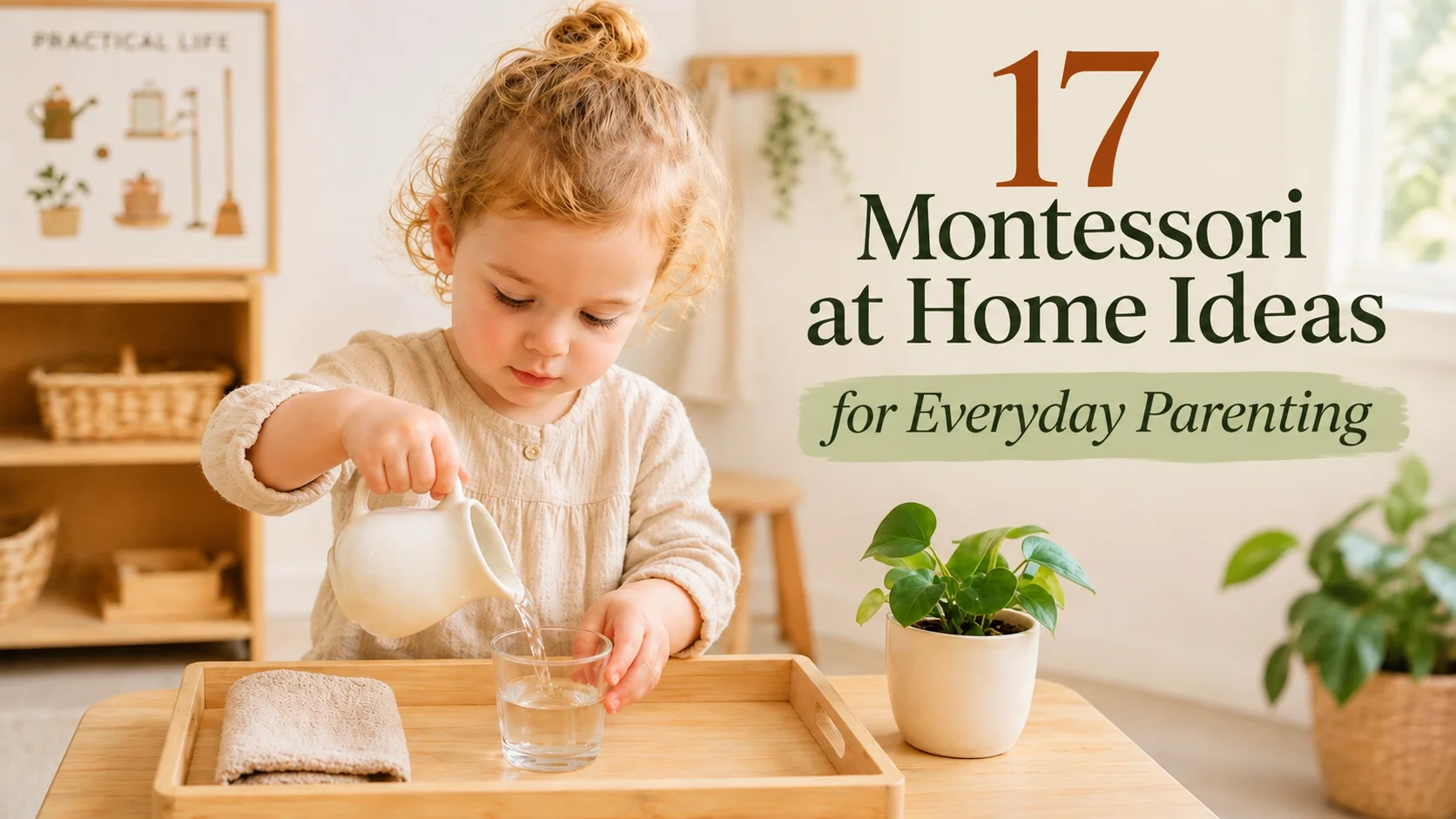
5. Give Your Child a Chance to Pour Their Own Water
A small pitcher, a suitable cup, and a towel nearby can make a surprisingly useful learning setup.
When your child is ready, invite them to pour a little water into their own cup. Show them slowly how to hold the pitcher, tilt it gently, and set it down again.
Then let them have a turn.
The first attempt might send water across the table. The next might involve holding the pitcher at an angle that would make a professional bartender nervous. That’s part of learning.
Through practice, children get opportunities to notice how much water is coming out, adjust their movements, and develop better control.
Start with a small amount of water and an easy-to-clean surface. Choose a cup and pitcher that are appropriate for your child’s age and abilities. If your child isn’t ready for glass, there’s no need to use it.
And when the water spills, the towel is right there for a reason.
6. Let Your Child Help Clean Up
A little water on the table. Paper scraps on the floor. Soil scattered around a plant pot.
Adults are often quick to clean everything up because we want the house to look normal again. But when it’s safe and appropriate, you can invite your child to help.
Hand them a small cloth and show them how to wipe the table, or let them use a child-sized broom and dustpan to collect the paper scraps.
Don’t expect the first attempt to leave everything spotless. You may still need to go over the area afterward.
What matters is that children begin to understand the connection between their actions and caring for a shared space. When water spills, we wipe it up. When paper falls, we pick it up.
It’s a very ordinary lesson in responsibility. No long lecture required.
7. Involve Your Child in Laundry
The pile of clean laundry waiting to be folded can become a small opportunity for your child to help.
Younger children might put dirty clothes in the hamper or match socks that are easy to recognize. As they grow, they can sort clothes, fold small towels, and put their own belongings away.
Don’t hand a young child an entire mountain of laundry and expect them to manage it like a grown-up. Break the task into small, manageable steps.
A towel may not be folded straight. A pair of socks may end up with the wrong partner. That’s okay. Children need time to notice, experiment, and improve their skills.
And who knows? One day, your child might find the missing sock before you even ask.
8. Create a Space for Independent Dressing
Getting dressed is a wonderful everyday opportunity for children to practice independence.
You might set aside a low drawer with a few outfits suitable for the weather. For younger children, choose clothes that are easy to put on, with stretchy waistbands or simple fastenings.
Don’t begin with a shirt full of tiny buttons if your child is still working out how to get both arms through the sleeves.
Let them try one step at a time. If they get stuck, demonstrate or offer a little help rather than taking over the entire task.
Of course, there will be mornings when everyone needs to leave on time and you have to help. That’s perfectly fine. Use the less rushed moments of the day to give your child room to practice. As an Amazon Associate, Intelligent Mother earns from qualifying purchases. Thoughtful finds for busy days, family life, and a little time for yourself.Mom's Everyday Favorites


Independence takes time. Some days, it also takes a surprising amount of patience from the person waiting by the door.
9. Demonstrate Slowly Instead of Overexplaining
Sometimes adults use a lot of words when showing children how to do something simple. A BEAUTY FIND A hydrating essence for a moisture-focused skincare routine.
COSRX Advanced Snail 96 Mucin Power Essence
“Pick this up. Not like that. Tilt the pitcher a little. Careful, you’re spilling it!”
All those reminders may make it harder for a child to focus on the actual movement.
Try demonstrating the task slowly instead. If you’re showing your child how to pour water, hold the pitcher with both hands, tilt it gently, pour a small amount, and set it down.
Then give your child a turn.
Allow time to watch and try. If your child needs help, they can ask for it or show you where they’re getting stuck.
Children don’t always need another explanation. Some skills become much clearer when little hands get the chance to practice.
10. Let Your Child Care for a Plant
A small plant can give children plenty to notice.
They might spot a new leaf, discover that the soil feels dry, or watch the plant change over several days. You can show them how to check the soil and add an appropriate amount of water.
Choose an easy-to-care-for plant, put it somewhere safe, and practice the routine together.
Don’t hand a young child full responsibility for keeping a plant alive. Adults still need to check that it isn’t forgotten or overwatered.
The lovely part is that children get to care for something living and begin to understand that living things need attention over time.
11. Respect Your Child’s Concentration
There’s something adults often do without noticing: interrupting a child just as they become deeply involved in an activity.
“What are you building?”
“Why don’t you try this piece?”
“Let me show you a faster way!”
Those questions usually come from a place of love. But if your child is focused and the activity is safe, try watching quietly for a little longer.
Don’t rush to fix the project, finish it for them, or suggest a different game simply because you think they’ve been doing the same thing for too long.
The Montessori approach places great value on children’s concentration. Time without unnecessary interruptions gives them room to experiment, notice problems, and work out solutions.
Let your child finish when they’re ready, rather than always deciding when the activity should end.
12. Offer Real Choices Within Clear Boundaries
Children often want a say in the things that affect them. That doesn’t mean parents need to let them make every decision.
You might offer two suitable shirts, let them choose which book to read before bed, or ask whether they’d like to water the plants before or after dinner.
The important part is that both choices are genuinely acceptable.
If the weather is cold, you’re still responsible for making sure your child is dressed warmly enough. If it’s bedtime, your child might choose the book, but that doesn’t mean they get to decide whether bedtime happens at all.
Small choices give children opportunities to practice decision-making within boundaries that are safe and appropriate for their age.
13. Teach Courtesy Through Everyday Interactions
Children learn to say thank you, ask permission, wait their turn, and respect others through the way people treat one another every day.
You can model this by saying, “Thank you for helping me,” “May I borrow your pencil?” or “Let’s wait until Grandma has finished speaking.”
Ordinary family moments can become opportunities to practice courtesy. You might also play out simple situations together.
But try not to turn good manners into a performance. A child may not always be ready to say thank you on the spot. What matters is that they gradually understand respect through the way we treat one another, not simply memorize the right words.
14. Try Simple Sorting Activities
You can place a few small bowls and a collection of objects with different colors, shapes, or sizes on a tray.
Your child might sort large buttons, wooden blocks, or other safe objects by color, size, or shape.
Another idea is to mix different shapes of pasta and invite your child to find the matching pieces.
Don’t rush to give them the sorting rule. Watch how they organize things first. They may come up with a group you hadn’t thought of.
For younger children, avoid small objects that could pose a choking risk. Choose materials that are appropriate for their age and supervise the activity.
15. Add a Child-Safe Mirror
A securely installed, child-safe mirror at an appropriate height can give children another way to practice self-care.
They can look at their face after eating, check whether their hair needs fixing, or see if their clothes are on the right way. You might keep a soft cloth nearby so they can wipe their face when needed.
These little routines help children become more aware of their bodies and their own needs.
Choose a mirror that won’t shatter easily and make sure it’s firmly secured. You don’t need to create an elaborate self-care station. A suitable mirror is enough to give your child another chance to do something independently.
16. Give Your Child Time to Repeat an Activity
Some children can spend a surprisingly long time pouring water from one container to another, lining up wooden blocks, or repeating a movement that seems to have no particular purpose.
Adults may wonder why they’re still doing the same simple thing.
But repetition can be an important part of how children explore and practice. They may be working on controlling their movements, noticing what happens, or discovering what changes when they try something differently.
If the activity is safe and doesn’t interfere with something essential, give them a little more time.
This doesn’t mean children can do whatever they want regardless of the situation. Families still have meals, bedtime, and other responsibilities. But when possible, give your child a warning before it’s time to move on rather than suddenly asking them to stop.
17. Create a Quiet Space Where Your Child Can Rest
Children don’t always want to talk or join another activity.
A small corner with a soft cushion, a few books, or a familiar comfort item can give your child a pleasant place to rest when they’re tired or need some quiet.
Let them know they can use the space whenever they want. It shouldn’t be a place for punishment, isolation, or forcing a child to sit alone until they stop crying.
If your child is upset, you still need to stay attentive and offer support when needed. A quiet corner doesn’t replace the presence of a caring adult, especially for younger children.
Its purpose is simply to give your child a comfortable place to pause and gradually notice when they need a break.
How to Start Montessori at Home Without Feeling Overwhelmed
After reading these 17 ideas, you might feel tempted to change half the house. A lower shelf here, a self-serve station there, a child-sized kitchen set, and a whole collection of practical life activities.
But I think it’s better to start much smaller.
Pay attention to an ordinary day in your child’s life. Is there something they keep trying to do that adults often stop them from doing? Is there a household task they could take part in, but you’ve never thought to invite them?
Choose just one thing.
If your child wants to pour their own water, prepare a small pitcher. If they enjoy helping clear the table, give them one manageable job. If they can never find their shoes, try placing a basket somewhere they can easily reach. A BEAUTY FIND Washable mascara for everyday makeup looks.
Maybelline Lash Sensational Sky High Washable Mascara
Demonstrate when needed. Keep safety boundaries in place. And accept that the first attempts may not look particularly impressive.
Don’t be discouraged if an activity doesn’t suit your child, either. One child may love watering plants, while another prefers sorting objects. Some children are ready to dress themselves early; others need more time.
Montessori isn’t a competition between families. It’s certainly not a measure of whether you’re a good enough parent.
A Home Where Children Get to Take Part
I still think about Tommy’s little hands in the story John Holt shared.
That boy wasn’t short on curiosity or the ability to learn. He was drawn to a kind of learning adults sometimes overlook: touching, experimenting, and doing something that felt real and meaningful to him.
There may be children like Tommy in our own homes.
A child who wants to hold the cloth and wipe the table. A child who insists on watering the plants, even though the water seems to find its way everywhere else. A child who wants to help prepare dinner, even if it adds twenty minutes to the evening.
We can choose to do everything ourselves and save a little time. Or we can make room for our children to take part, give them a small responsibility, and be patient while they figure things out. A BEAUTY FIND Daily facial moisturizer with ceramide-3 and niacinamide.
La Roche-Posay Toleriane Double Repair Face Moisturizer
The towel may still be crooked. The cup may not be full. The plant may still need an adult to look after it.
That’s okay.
One day, those little tasks won’t require quite so much help. And along the way, children begin to discover that they are capable of contributing to the family.
Perhaps that’s one of the loveliest things we can offer them: not just preparing a good world for them to enter someday, but opening the door and letting them take part in the world right now.
Note: Tommy’s story is reported by John Holt in his book. The practical examples in this article are original suggestions inspired by Montessori principles. They are not all formal Montessori exercises, nor are they guaranteed to work the same way for every child.
As an Amazon Associate, Intelligent Mother earns from qualifying purchases.
Mom's Everyday Favorites
Thoughtful finds for busy days, family life, and a little time for yourself.