How to Nurture Love and Sharing Between Siblings
7:18 p.m.
“You had it first!”
“No, I had it first!”
Two voices rise from the living room, getting louder by the second. You are standing in the kitchen, still holding the spoon in your hand. The rice cooker has just switched to “Keep Warm.” You close your eyes for a second.
Here we go again.
A toy. A piece of cake. A spot on the sofa. Such small things, and yet, to these two children right now, they matter as if the whole world is sitting in their hands.
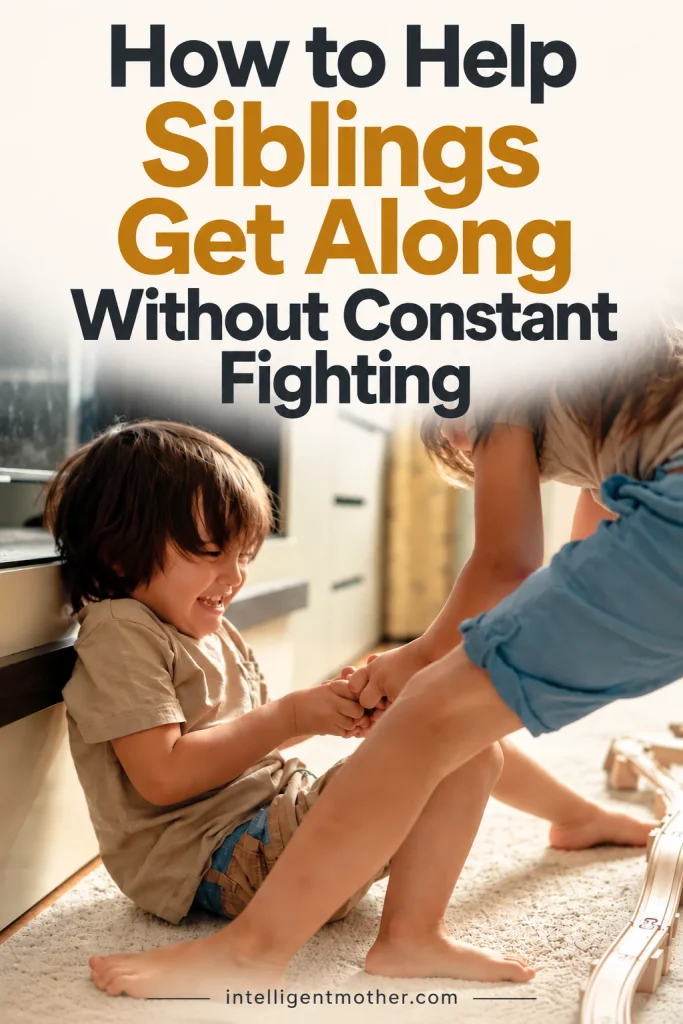
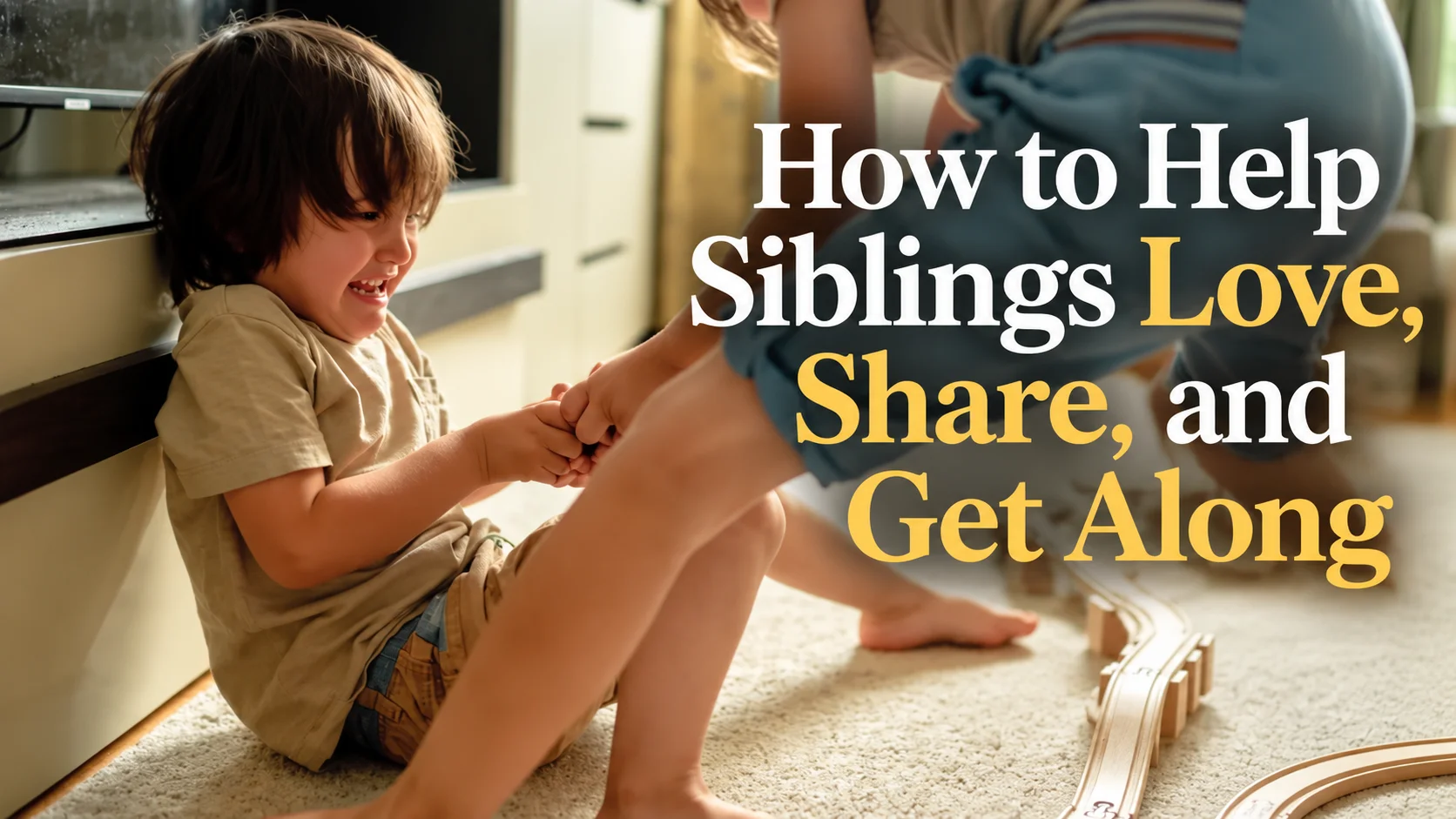
You walk into the living room. One child is clutching the toy against their chest. The other stands with folded arms, lips pressed tightly together, tears already rolling down their cheeks.
And in that moment, you may find yourself thinking:
“When will they learn to take turns?”
“When will they learn to love each other?”
But perhaps we are asking a slightly different question.
Children are not born knowing how to share. They have to learn. They have to learn that other people have feelings too. That their little brother or sister can feel hurt. That an older sibling can feel left out. They have to learn to wait, to take turns, and eventually, to feel happy when someone else is happy.
And most importantly, they don’t learn these things from long lectures about kindness. They learn them from what they experience every day.
Children Don’t Learn Love by Hearing Us Talk About Love
You can tell your child a hundred times, “You have to love your sister.” “You need to share with your brother.” “You’re the older one. You should be kinder to your little sister.”
But hearing those words doesn’t suddenly make a child more caring. Concepts like empathy, sharing, and considering another person’s feelings are still developing throughout the early years.
The ability to see a situation from someone else’s point of view develops gradually. Children need countless small experiences before they fully understand something that seems obvious to adults: other people have an emotional world inside them too, just like they do.
So when a child grabs a toy from their sibling, it doesn’t necessarily mean, “My child is selfish.” Sometimes it simply means, “I want it right now.” The ability to stop and think, “But my brother wants to play too,” is still being built.
That is why the tiny arguments happening in your living room today can become some of the biggest lessons your children carry into tomorrow.
8 Ways to Build a Stronger Sibling Bond
1. Don’t Make Children Share Everything
This may sound backwards.
But if you want children to genuinely learn how to share, sometimes you have to let them have things that are theirs.
Imagine that you’re sitting on the sofa. Someone walks over, takes the phone from your hand, and says, “Dad, share with me.”
You hand it over.
A few minutes later, they take your coffee.
“Share, Dad.”
Then your laptop.
“Share.”
You probably wouldn’t feel like you were learning to be generous. You’d feel like someone was taking your things.
Children can feel the same way.
A child needs to understand, “This is mine,” before they can truly experience the next step: “I can choose to let someone else use it.”
Instead of always saying, “You have to share,” try something like:
“You’re playing with that right now, and your sister wants a turn. Do you want to play a little longer, or are you ready to let her have a turn?”
It’s a small question, but it changes something important.
You are not taking away the child’s choice. You are giving them a chance to practice generosity by choosing it themselves.
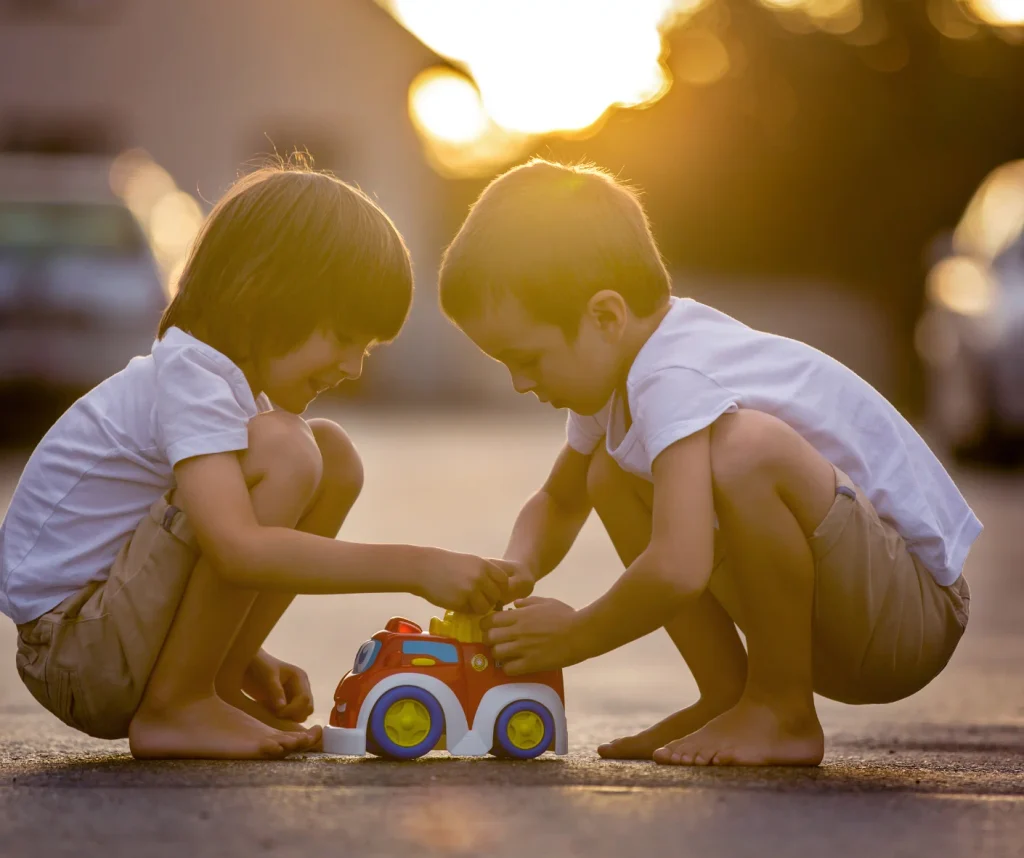
2. Don’t Turn the Older Child Into a Second Parent
“You’re the big brother. You need to give in.”
“You’re older. You should understand.”
“She’s little. Just let her have it.”
These words are incredibly easy to say, especially at the end of a long day when your patience is already running low.
But try looking at the situation from the older child’s side.
They’re still a child too.
They still want to be held. They still want to be the one who gets something first sometimes. They still want a day when they don’t have to be the one who understands everything.
If every argument ends with “You’re older, so you have to give in,” the child may learn a very different lesson from the one you intended:
“My sibling matters more than I do.”
Instead, try acknowledging both children’s feelings.
“I know you really want to play with this. And I know your sister wants it too. You both want the same thing. Let’s figure it out together.”
This doesn’t mean everything has to be divided equally every time. It means both children’s feelings are allowed to exist.
And that is the beginning of learning fairness.
3. Help Your Children Notice Each Other’s Feelings
This is one of the smallest things you can do, and yet it can make a surprisingly big difference.
When your younger child starts crying, instead of simply saying, “Look, your sister is crying,” help the older child slow down and notice what is happening.
“Look at her face. How do you think she feels?”
When your son is upset:
“Why do you think your brother is sad?”
When your daughter is laughing:
“Did you see her smile? What do you think made her so happy?”
You’re helping your child develop an important skill: noticing other people’s emotions.
Not because children should always make everyone else happy.
But because they gradually need to understand:
“I’m not the only person in this room who has feelings.”
And that is where empathy begins to grow.
4. Notice the Tiny Moments When Your Child Is Kind
There are good things happening between siblings all day long that we often don’t notice.
Your younger child drops a crayon. The older one bends down and picks it up.
You could simply say, “Thank you.”
But sometimes, stop for another second.
“I just saw you pick that up for your sister. You noticed that she needed help.”
Or perhaps your younger child breaks a cookie in half and gives a piece to their brother.
“You saved some for him.”
Don’t only say, “Good job!”
Name what the child actually did.
“You thought about your brother.”
“You noticed that she was sad.”
“You waited for your turn.”
This helps children understand exactly what kindness looks like in real life. And behaviors that are noticed and understood are easier to repeat.
5. Give Your Children Things They Have to Do Together
Sibling relationships aren’t built only through conversations about kindness.
They are built through shared experiences.
Let them make cookies together. Build a blanket fort. Water the plants. Search for the missing sock. Help clean the table, even if the table somehow ends up looking worse than before.
That’s okay.
The goal isn’t a cleaner house.
The goal is to give them memories that say:
“We did this together.”
Shared experiences create something that reminders and lectures can’t create:
the feeling that they are on the same team.
6. Don’t Only Pay Attention When They’re Fighting
This is an easy trap for parents to fall into.
We often pay attention to the sibling relationship when something goes wrong.
“Don’t hit your brother!”
“Don’t grab that!”
“You have to share!”
But love isn’t built mainly during moments of conflict.
It’s built in hundreds of tiny moments nobody thinks to count.
A hug before bedtime.
“Hey, you’re home!”
A cookie broken in half.
Pulling the blanket over a sleeping sibling.
Laughing together in the living room.
So if you want your children to feel closer to one another, create more moments of happiness that don’t have a lesson attached to them.
Don’t turn every game into a teaching opportunity.
Sometimes children simply need to laugh together.
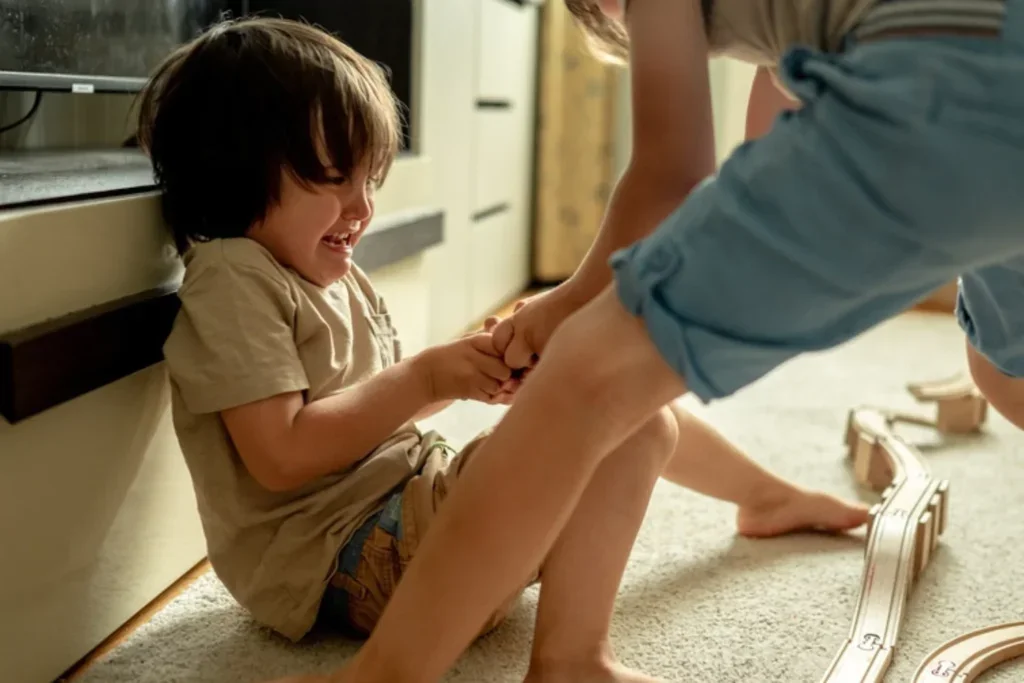
7. Let Your Children See How You Treat Other People
This may be the hardest lesson of all.
Because children hear what we say.
But they watch what we do.
They notice how you speak to their grandparents. They notice how you react when your partner spills a glass of water. They notice whether you apologize after losing your temper. They notice whether you share willingly or simply demand that everyone else share.
And one day, you may hear your child say:
“It’s okay. You can go first.”
That sentence may not have come from a lesson you once taught.
It may have come from hundreds of moments when your child watched you say:
“It’s okay. I’ll help.”
“You can have mine.”
“I’m sorry. I was a little frustrated.”
Children learn to care for other people partly by experiencing what it feels like to be cared for themselves.
8. Don’t Try to Make Your Children “Always Love Each Other”
Siblings will fight.
There will be days when they don’t want to play together. There will be times when one child shuts the bedroom door and says:
“You’re not allowed in!”
There will be arguments over a toy that seems completely unimportant to you.
And that doesn’t mean their relationship is failing.
A close relationship isn’t a relationship without conflict.
What matters more is that children gradually learn how to move through conflict without hurting each other.
They learn to say, “You made me angry,” instead of hitting.
They learn to say, “I’m not ready to let you use it yet,” instead of snatching it away.
They learn to say, “When I’m finished, you can have a turn,” instead of screaming.
These skills take time.
A lot of time.
There Is Something I Want Parents to Remember
One day, you won’t hear two little voices arguing over a toy anymore.
The sofa will be quieter. The living room will be tidier. You won’t have to walk out of the kitchen to separate two children pulling on the same little toy car.
And maybe you’ll feel relieved.
But perhaps, one evening, you’ll find that old toy car sitting in the corner of a closet and suddenly remember:
They used to fight over this.
The years of having young children can be loud. Messy. Exhausting. There are evenings when you just wish everyone would stop calling, “Mom!” “Mom!” “Mom!” long enough for you to sit down by yourself for five minutes.
But those same years are quietly shaping a relationship between people who will still have each other long after you no longer have to say, “Stop fighting with your brother.”
So perhaps the goal isn’t to raise children who never fight over anything.
Maybe the goal is to raise children who understand that:
The person beside them has a heart too.
That they can pause.
Notice.
Care.
Apologize.
Break their cookie in half and give some away.
And understand that sharing love doesn’t mean having less of it.
Because in the end, what we want to give our children isn’t a childhood completely free of arguments.
It’s a childhood in which, even in the middle of those arguments, they still know that they belong to each other.
A Small Reminder for Parents
If your children are fighting over a toy again tonight, you don’t have to turn the moment into a perfect parenting lesson.
You can simply sit down. Take a breath. Look at both of them and say:
“I know you both want the same toy. Let’s figure this out together.”
They may still argue.
One of them may still cry.
You may have to say the same thing tomorrow.
And the day after that.
That’s okay.
Children don’t learn how to love other people in one evening. They learn it through thousands of small moments.
One day, those moments will become part of who they are.
And you may look back and realize that the love between them was never built in the big, perfect moments.
It was built here.
In the living room.
At 7:18 p.m.
Over a toy that neither of them will remember years from now.
But perhaps they will remember something else:
They grew up knowing they were never alone.